How to Generate 132 Newsletter Ideas
 I’ve got a guest post here from one of Infusionsoft’s brightest personalities – Judi Miller. You may know her as the voice of Infusionsoft’s training webinars, or just from her numerous contributions to the Infusionsoft ecosystem at large. Suffice to say, Judi has been around the block with Infusionsoft a time or two, and consistently finds ways to go above and beyond to help the customers she works with not only understand the software, but also grow their businesses in ways they didn’t expect. This week I asked her to put on her creative cap and show off how she helps customers who get stuck thinking of topics for their regular newsletter.
And by the end of this article you’ll have 132 new ideas for your newsletter topics. I promise.
Raindrops on roses and whiskers on kittens…
 Can you name the famous musical that those lyrics are from?
Did you say The Sound Of Music? Ding Ding Ding… You are correct!
Now can you come up with 5 alternate titles?
Make a list of animals that have whiskers.
What marketing strategies would you employ if Sound of Music was being released today?
Those are all examples of brainstorming. It’s great exercise for your brain. And it can be an awesome way to get new, fresh ideas.
TV and movie writers often sit in a room and brainstorm ideas for hours. That’s one of the ways they get their new and exciting episodes and screenplays started. (Here’s one writer describing their techniques)
You too can do this too, and generate new and engaging ideas, and creative ways to provide value to your audience.
So I know you are thinking: “When is she going to get on with Newsletters…”
Well first, I’ve got a hard truth for you. Here ya go…are you ready….
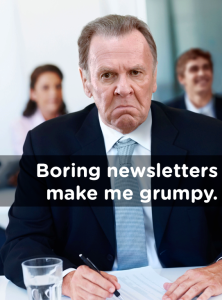 Most newsletters are BORINGGGGGGGG!!
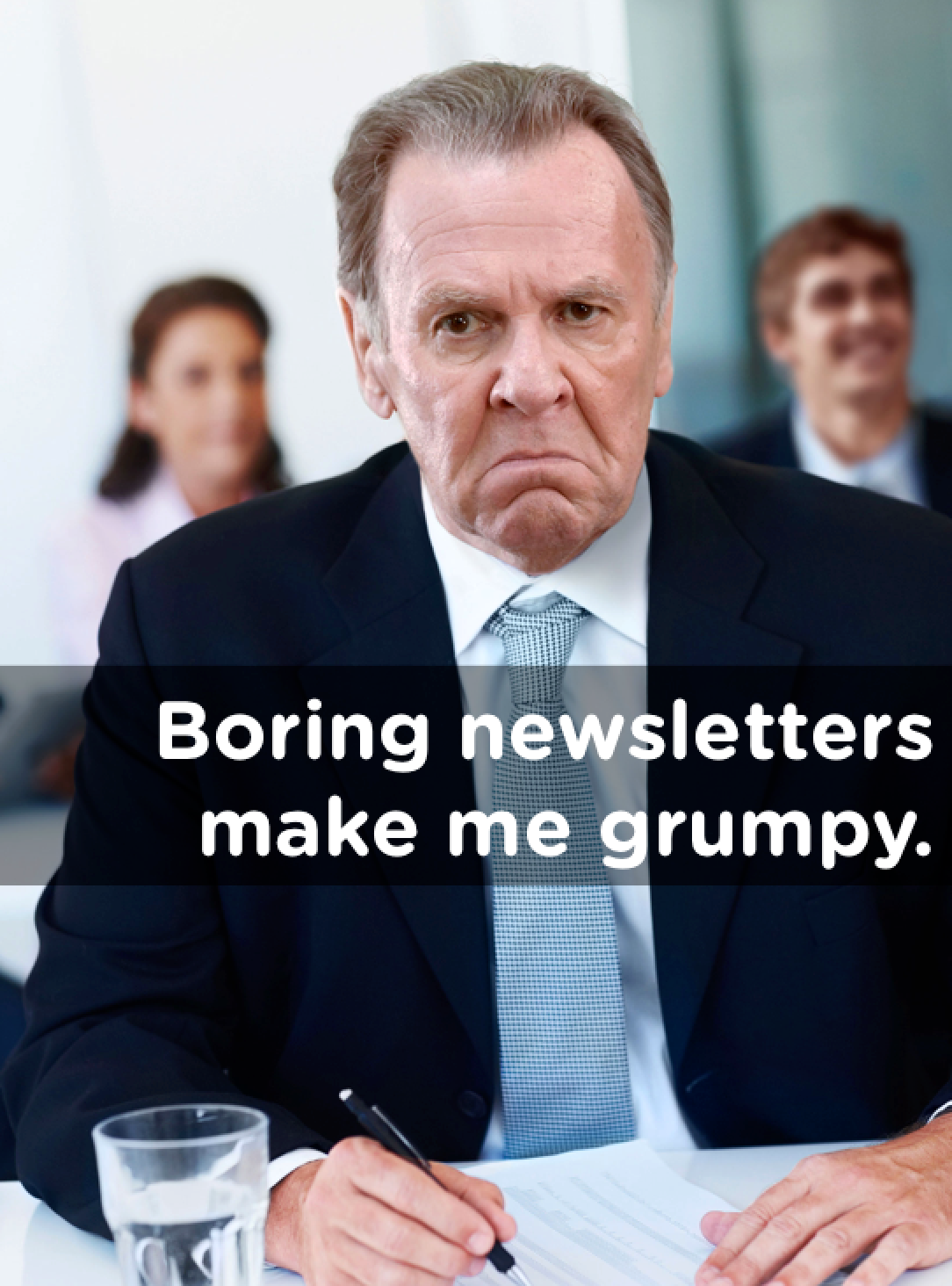
It’s true. Most of the newsletters that I’ve seen or that I receive are packed with two things: articles and promotions. And sometimes they don’t even tell the reader why those articles matter. Here are the questions you need to be asking yourself:
- Do my customers and prospects really read my newsletters?
- Do they enjoy reading them?
- How would they respond if I just stopped sending them? Would they line up and ask where I went? Would they even notice?
- Do they look forward to my newsletters each month?
- Do they open it up and read it? ALL of it?
- Do I give them ideas, information, make them better, or do anything other than push my product? Do they engage and actually enjoy my monthly voice?
These can be tough questions. And sometimes the answers aren’t fun. So, if your answer is a big fat “No”, or a dull “I dunno”, then I guess that’s it right? There’s nothing you can do at all? Right?
WRONG ANSWER.
If you send a regular newsletter, it can be much more than just a delivery method for information. Each month your newsletter can be encouraging, funny, engaging, inspiring and welcoming. It can create a rich and meaningful relationship between you and your subscribers. I know how corny this sounds, but I’ve seen it!
You can be the source of something they want to share in a mom’s group, a morning huddle at an office, with their friends at happy hour, or out to their social networks. Your newsletter can be something that makes their day. Or their week!
So here’s an idea, if you feel that your newsletters have gone a bit stale, try this:
Create a theme for one month. This is where brainstorming will be helpful. How about something… super! (Maybe, in honor of a new superheros movie. But you can skip the latest Fantastic Four movie, yuk. )
Then, work within that theme. Let’s see, September 2015….Are you SUPER?
(Editor’s note: A common method is one called Starbursting– it’s a method based on asking questions rather than generating answers. Use What, Why, Who, Where, When and How to start questions about your business, using your theme. I.E. Why is our product super? How do we create a super experience? Who do we think is super?)
Now, start to think of how you can use super in all the different parts of your newsletter. Or, for a series of newsletters. Maybe you start out with a definition.
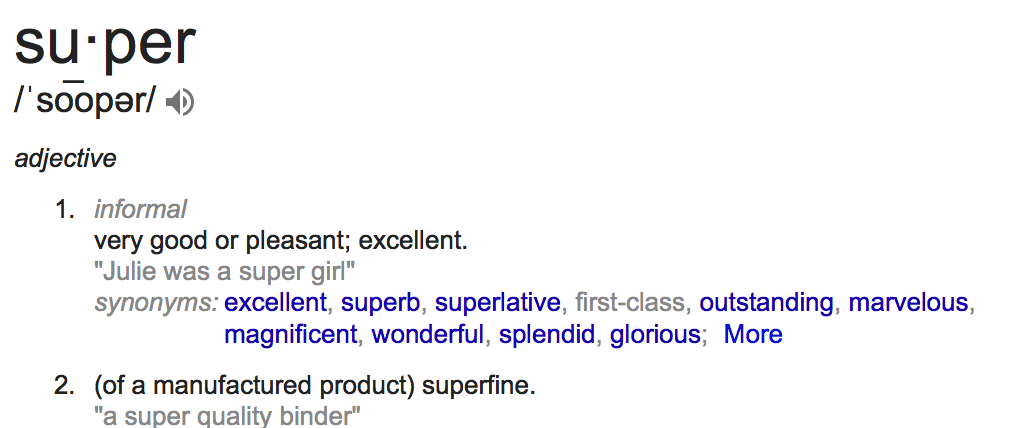 Super: adj 1. very good or pleasant, excellent
You could… list ten reasons your customers are super. Profile one, or a few of your employees as if they were super heroes.
You can have so much fun with this word. Depending on what industry you’re in, you may be able to come up with creative ways to incorporate your theme.
- For a family dental office you can have a “Super Flosser Challenge” – and profile a flosser of the month.
- For a traditional office you can have “Super Service Award” for someone who went above and beyond.
- You can outline super creative uses for your product – or a collection of super results your customers have shared.
- If you’re a nutritionist, or diet coach, you could do super foods for your health. Or for your memory. Or for your new and trendy diet.
- Maybe include a super testimonial from your super customer about a super employee. (Too much super?)
As an entrepreneur, you probably already are accustomed to using the resources around you. Well, if you’ve got a family, why not make it an activity a family can do at the dinner table. Brainstorming is about getting ideas out, and not about judging the ideas. So really, anyone can contribute. And then later, if you want to dismiss some things that’s totally fine. But let’s get it on the list first.
There are tons of brainstorming articles out there, and many different methods, but one common theme is that you can’t stop to judge the ideas as they come.
 Once you settle on a theme for your newsletter, you will find inspiration everywhere. And then, you’ll start to notice your new possible themes too. A bakery delivery truck might make you think ‘fresh’, and that’ll be your new theme.
You could be out running and you’ll think of a theme with customers running from their problems.
Perhaps you’re at a movie theater and it strikes you, your next theme will be “I can’t believe it’s not…” while eating buttered popcorn.
Or maybe an avocado tree will make you think about customer service.
Once your creative juices start flowing, you will not only enjoy writing your monthly newsletter, but your prospects and customers will begin engaging with you more, sharing your newletters more, and your relationships with strengthen. Oh, and higher engagement and stronger relationships are two pretty promising indicators for a uptick in sales too. Sounds supercalifragilicious to me! (Shoot, wrong Julie Andrews movie!)
P.S. To jumpstart your creative process you might start with a list someone else has already put together.
- Like this list of 75 suggestions
- Or this list of 24 ideas
- And how about 33 more just to round it out
(Editor’s note: 75+24+33=132)
Let us know how you generate newsletter content in the comments below!