Customer Experience, Keap, Tips and Tricks
Editor’s note: It’s my pleasure to welcome back a good friend of mine, and today’s guest author – Thomas Jones. Thomas was the head of my department at Infusionsoft for a while, and before that, he was the director of the Technical Support team at Infusionsoft.
We all know what it’s like; you’re cruising along, working on some pretty cool stuff.
A tag here-
A link-click goal there-
KAPOW – Decision diamond configured
Then it happens. You get stuck, an error code pops up, or a something strange happens. What do you do?
You call support.
(I’ll readily acknowledge my bias here. I spent exactly 5 years with Infusionsoft and even spent some of that time running the support team. Having given you that disclaimer, I think Infusionsoft has some of the best support in the world.)
Even with a great support team, you’ll always have a rough experience on occasion. I wanted to give you five things you can do to give yourself the best shot at getting a great experience every time.
1. Be prepared to talk about the result you’re looking for.
Notice, I didn’t say, “Know what you’re trying to do.” Even though they’re close, they aren’t the same. I saw it all of the time; someone calls in and asks how to do something. The support person tells them, but it doesn’t produce the result the customer was looking for. The question was asked and answered, but the customer was still frustrated because they didn’t get what they needed. Do you see the difference? Sometimes the thing you’re asking to do won’t produce the outcome you’re trying to achieve.
2. Do your best to see if you can replicate the issue you’re having.
This isn’t always applicable, but when you have the ability, arm the support rep with as much ammunition to attack the problem as you can. If you’re getting an error, see if you can replicate it and save a screenshot or screencast. (You can download tools like Loom for Chrome, or jing from techsmith to create free recordings of your desktop as you retrace your steps.) The support rep absolutely wants to help you with your problem. Anything you can give them will help that happen more quickly. A note of caution, if you think something bad may have happened; don’t do this step. Just write down the things you did leading up to it. You don’t want to compound any potential issues.
(Editor’s note: It can also be helpful to do some basic trouble shooting on your own: Can you repeat the issue? Does the issue happen in more than one browser? If it’s only in one browser, can you try clearing your cache and cookies to see if that fixes it? I know how basic these things seem, but if you test these before you get on the phone/chat with support you’ll have a little more background ready to go.)
 3. Treat the rep with respect.
You’re a business calling into a place of business, keep that in mind. One of my first experiences at Infusionsoft was listening to the Director of Support getting on a call and telling a customer that we’d cut him loose if he kept berating our support rep. It left a really strong impression on me. The support reps are doing their best and are going to make mistakes on occasion. As frustrated as you might get on occasion, remember it’s rarely a matter of always and never. Meaning, they don’t always suck or never know what they’re talking about. You’d be surprised how far mutual respect will go.
4. Make powerful requests.
One of the biggest problems in life is unspoken requests and assumed commitments. I could write an entire blog post on just this one, but I’ll give you an overview. Think about the difference between two people closing a conversation with, “Will you let me know what you find out?” and “Will you let me know by end of business tomorrow what you find out?” Too often we’re afraid of pushing, so we hope they know how important this is. Phrase your request so the only possible responses are yes, no, an alternative (I can’t have it by then, but how about XXX), a commit to commit (I can’t don’t know when I can have that for you, but I’ll let you know by tomorrow by 10 when I can have that for you).
Don’t leave it open ended.
(Editor’s Note: After you open a support ticket there is usually an automated email that is sent setting expectations for when they’ll get back to you, this automated email doesn’t necessarily reflect the conversation you just had. So if the messaging there is different than what the rep just told you, don’t panic. Automation isn’t always perfect.)
5. Don’t assume the answer you got was correct.
Please don’t misunderstand me. I’m not saying you should assume the answer you get is wrong. I’m simply saying, if it feels like the answer isn’t right or it doesn’t make sense, then don’t be afraid to keep looking for answers. Ask your peers, join a group, call back in, do something. I almost didn’t put this one because it’s so easy to turn this into a negative. It’s not. We all know Infusionsoft is capable of so much. There’s nobody who knows everything. I can tell you that nobody is going to think anything about you asking for a second opinion.
There you go. It always stinks when you have to call support. Not because they stink or it happens all of the time, but because it means you have to stop what you’re doing and make a call or log into the chat line. When you do have to do that, give yourself the best shot at having a great experience.
Oh, and if you invest in high quality education you may find that you wind up with fewer support inquiries altogether. Now if only we knew someone with some awesome Infusionsoft training courses…
Would love to hear any additional tips or tricks you’ve picked up along the way!

Customer Experience, Marketing, Small Business
Marketing automation is a powerful way to help businesses scale processes that would otherwise require additional headcount, or an inordinate amount of time. In fact, that’s true about automation in general; not just marketing automation.
When I ran my first business, installing draft beer systems in Lansing, Michigan; well, I didn’t do the best job. You may have heard this story before, but the point is that I wasn’t very efficient. I did the things I did, and when I wanted my business to grow, I hustled harder instead of trying to improve my processes. I didn’t know that tools like Infusionsoft existed. I didn’t know that marketing automation was a thing.
Even if I had known, I still would have been resistant.
And here’s why:
Most people treat automation as a way to remove themselves from their businesses. And I don’t think that’s the best use of automation at all.
Let me explain.
Yes, automation is a way to make systems and processes happen more easily.
It’s a way to ensure that things happen in a certain order, or a certain cadence, or with a level of consistency that would be impossible to create if you were solely depending on human assets. And the nature of introducing automation into these processes means that you’re likely no longer spending as much time on it yourself; which, means that you might have more time available.
It’s that reality that creates the dangerous idea that automation removes you from your business. The truth is, it can; but it doesn’t have to. It can also put MORE of you into your business.
Let me make my case: Marketing automation can remove you from your business. And if done poorly, it can create a cold and robotic experience.
But when done the right way, it can create a really effective and personal customer path; one that reflects exactly what you’d like your customers to experience. And it can do it with uniform consistency. (If you’re looking for a full and comprehensive Infusionsoft Review, this is by far the best one I’ve seen.)
This is true for two big reasons:
- You’re designing the automation, so you get to create what you want your customers to experience. That means you’re just doing more of what you would have done anyway, and hopefully that gives you some peace of mind.
- The second reason is that automation frees you up to do the things you are best at, or the things you enjoy. I have a stack of 16 thank you cards here for people who have bought the IS Starter Kit this week; and I fully recognize that I could outsource this and have someone else write them – but I have automated enough of my business that I have the luxury of choosing to write these myself. Now, I don’t have the best handwriting, but the fact is I enjoy writing out the name and address, I like seeing where people are from, and I like writing a unique message to everyone who buys. It makes me feel a little more connected. So, I’ll probably continue to do this for as long as I can.
My point is this:
Automation should create the confidence that your customers are experiencing what you intended.
It should increase the freedom for you to choose how you spend your time.
If this resonates with you, or you still do something silly like writing thank you cards by hand just because you can, I’d love to hear it. Or, if you feel differently and think I missed the mark, I’d love to hear that too.
What should I automate?
If you’re on board with the idea of automation but aren’t sure where it would fit – we’ve built a course specifically designed to help you identify opportunities in the customer journey where we’ve seen automation solve problems and create momentum.
Customer Experience, Small Business
Running a business for the last year has changed me in a number of ways. (In fact, that should probably be a blog post of its own in the near future.)
Anyway, if you run your own business, then I’m sure you can relate. There’s something about building and managing a brand that affects the way you look at other businesses. You start to think “Oh, that was really smart” and “Um, I’m not sure I would have done that the same way”.
Actually, I’m not even sure that running your own business is a prerequisite for that – all you have to do is pay attention to how you interact with other businesses and then consider how that can help you in your day-to-day role; whether that’s as an entrepreneur or not. Sounds simple enough, right?
Well, it is simple. But the reality is that most people see these lessons, and they just choose not to do anything with the information. Here’s what I mean: We’ve all had a bad customer experience before. You know, where things just didn’t go as you expected, and you didn’t feel valued. And we’ve all had a great customer experience before – the kind where you WANT them to give you a survey so that you can rave about it to someone. The trick here, and what I think a lot of people overlook, is taking that experience and figuring out what you can take away from it.
Yeah, it’s one extra step. But it’s that simple step that prevents 90% of people from taking their day-to-day interactions, and drawing direct benefit from them that they can pass on to their customers and to their prospects.
Let me illustrate with an example:
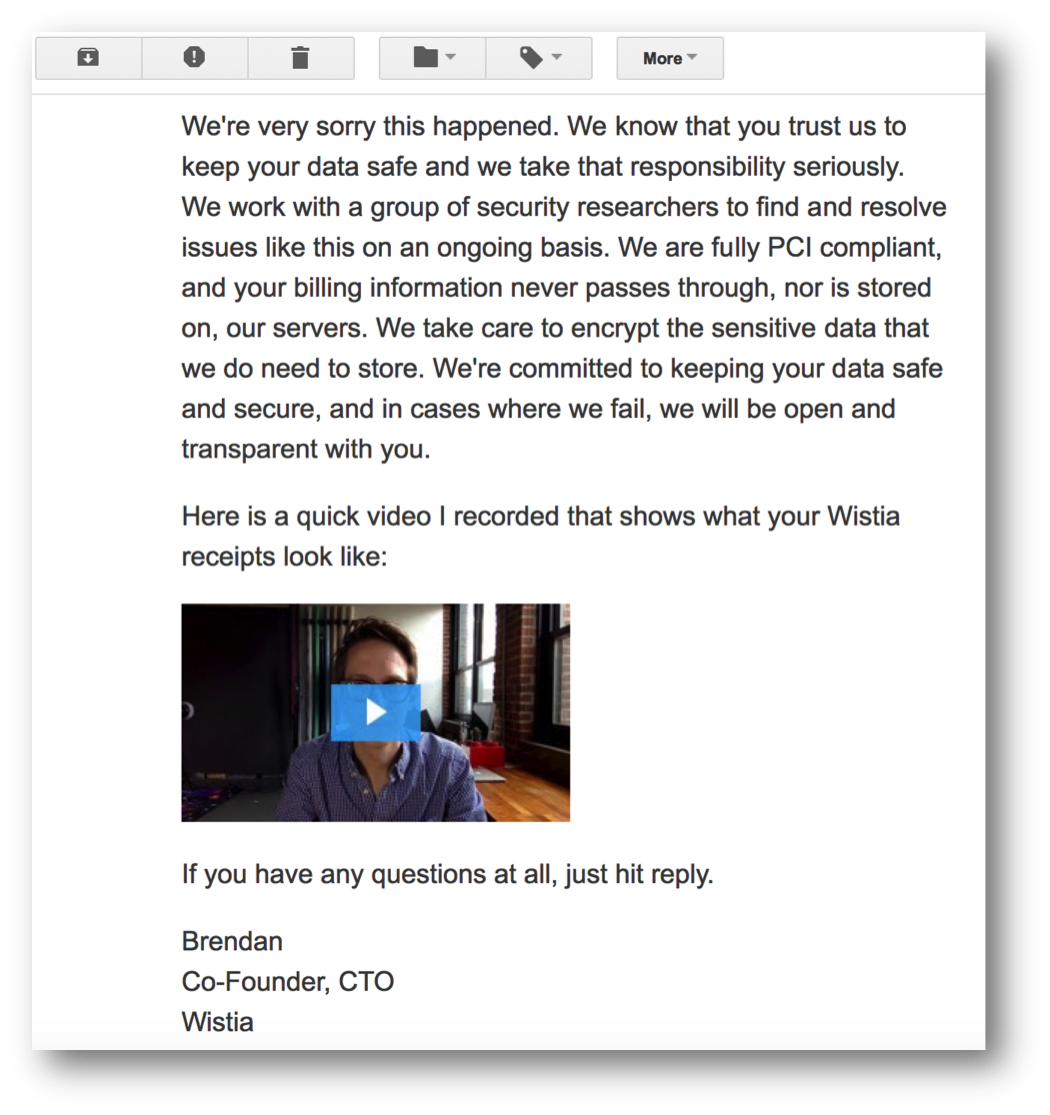
On June 13th I received an email from Brendan, the CTO at Wistia. Wistia is the video hosting service I use for all my videos, and for the past year they’ve been really solid. I recommend them pretty regularly. So, I get this email, and it’s an apology. It turns out that a customer had made them aware of a security vulnerability in their application that could allow a logged-in Wistia account owner to view other customers’ receipts or invoices.
They go on to say: “We deployed a fix for the issue within 30 minutes of learning about it. While we have no reason to believe that anyone intentionally accessed your receipts, we don’t know definitively that they were not accessed, which is why we’re writing to you now.”
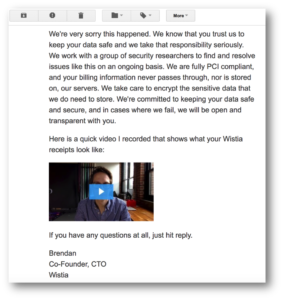
That’s it. There was an issue. It was reported. They fixed it. And now they’re letting me know. Heck, they even included a brief 30 second video explaining the issue and apologizing again. (See the video)
So, Wistia had a security vulnerability, great. Why am I raving about it?
Well, I’m not raving about the vulnerability. I’m raving about the way they handled it. The Customer Experience they created. You see, if they hadn’t sent an email notifying me, I probably never would have even known that the issue had existed, or that it had been resolved. My life would have been pretty much unchanged.
But sending the email did a couple of things: It brought an issue to my attention. And yes, that issue wasn’t a fun one, but by bringing up a tough subject, and doing it delicately, and with empathy – they’ve fortified their relationship with me; and demonstrated that I can trust them. They took ownership of their mistake, educated me on what they were doing about it, and issued a genuine apology.
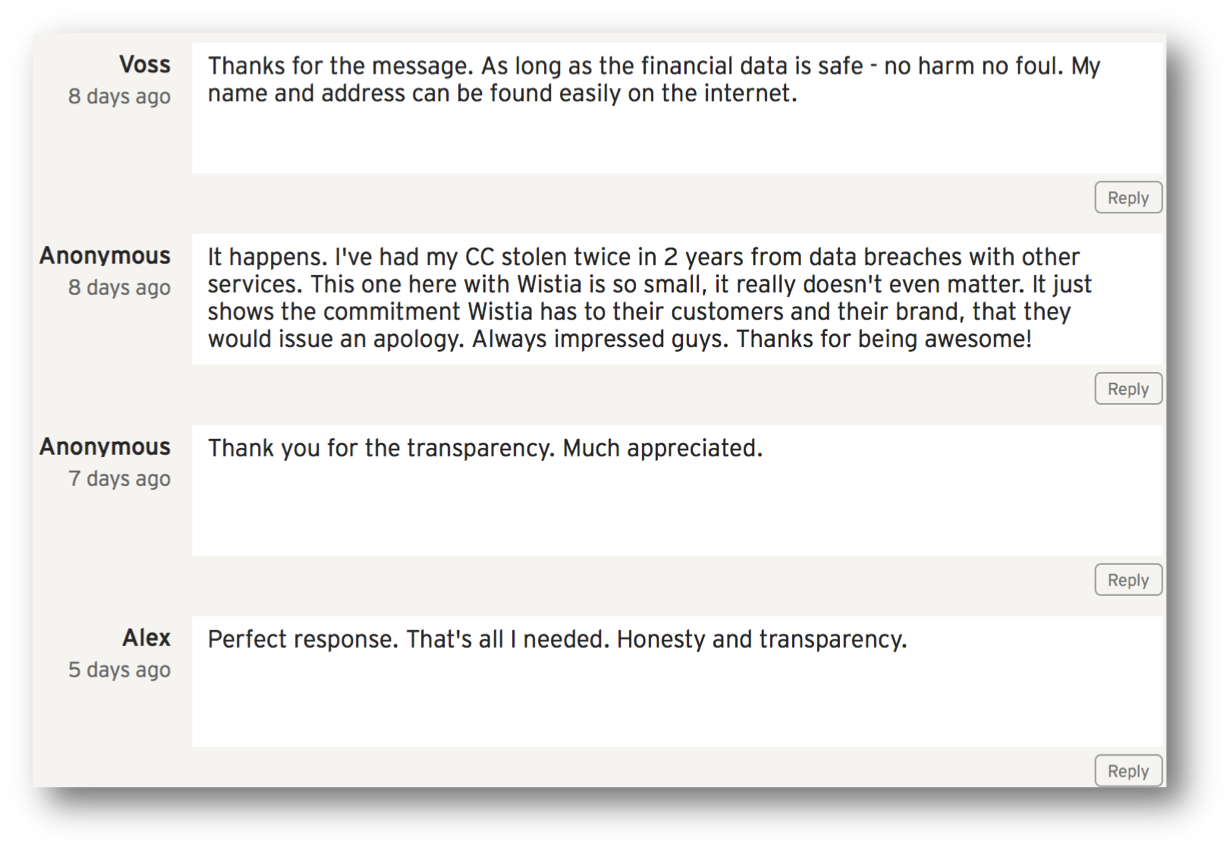
That’s good enough for me. Heck, look at the comments that their other users left on that video. People loved the transparency and care that Wistia demonstrated. This mistake may have actually made their customers love them more.
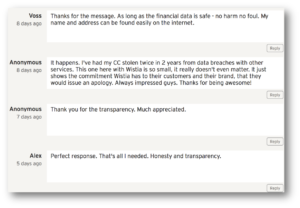 So, I felt pretty good about the whole interaction – but remember, that’s not enough for me. I looked at this situation again to what I could take away for Monkeypod, and here’s the customer experience lesson:
People are more likely to forgive you when you make a mistake if you own it, are authentic, and give a meaningful apology. I don’t have a plan for making any mistakes that merit an apology anytime soon, but I am happy to say that now I do have a plan for how I’ll handle it if I do. Because hey, there’s a reasonable chance that some day I will. And the way Wistia handled this is a template for how I like to think I’d respond to a similar situation.
How about you? Any interactions lately (good or bad), that you can harvest lessons from for your own business?
Customer Experience, Guest Posts
 This post was written by my friend and colleague Thomas Jones. Thomas and I first met at Infusionsoft when he became the director over the consulting team I was on, and while I never reported directly to him; I got to know him because we shared a cubicle wall. Because of our proximity, he was forced to listen to me on the phone for 6 hours a day. I know what you’re thinking; is it fair to say that this was the subconscious reason behind any good ideas he had during that period? Maybe, maybe not. But definitely probably.
Anyway, Thomas is awesome. He and I connected quickly because we both shared an obsession for creating intentional customer experiences. Try as I might, I can’t take credit for today’s gem – an article where Thomas shares his perspective on cracking the code to customer success.
The Secret to Cracking the Code to Customer Success
I suspect there are billions of dollars spent every year by organizations attempting to figure out what customer success looks like, and how to help their customers actually achieve it. I think we can all agree there’s no silver bullet. Nobody can wave a magic wand and declare they have the answer.
“Three log-ins a week. That’s customer success.”
“Processing 7 orders a day. That’s customer success.”
“An NPS of 30. That’s customer success.”
It seems as if it should be really easy. I mean, can’t we just call our customers and ask? Surely that would tell us what success looks like, right? Maybe. However, if it were that simple I likely wouldn’t be typing this, and my catchy subject line and stylish picture wouldn’t have grabbed your attention.
While there isn’t a silver bullet, I do believe there’s a dusty, cobweb covered door over in the corner of the room we can open to get us all headed down the correct path. Right above the door, a dimly lit sign reads:
The Customer Experience
Everything in life falls into one of two buckets: intentional or unintentional. That’s it. The forces are shifting and it’s time to walk through the doorway and focus on getting really intentional about the experience we want our customers to have every time. I know it sounds simple; it’s not. Trust me. If it were, we’d all be doing it and we’re not. Recall the famous quote from Red Sanders, “Winning isn’t everything, it’s the only thing.” (I know, I thought it was Vince Lombardi, too). Modified for this article, “Customer Experience isn’t everything, it’s the only thing!”
Consider a business you enjoy frequenting. If you think about it, the reason you love giving them your hard earned dollars is because they make sure you have a great EXPERIENCE every time. In fact, on the off chance you don’t, you probably make excuses as to why it wasn’t perfect this time. Walt Disney once said:
“Think of the process as a railroad engine. If the engine does not run properly, it does not matter how friendly the conductor acts or how attractive the cars look, the train will still not move and the passengers will not pay their fares. Process is the engine of Quality Service.” *
Building repeatable processes designed to deliver an intentional experience for the customer is the only way to drive customer success. It may not be a silver bullet, but I can tell you stepping through this door will be the smartest thing you’ve ever done in your business.
Here are two questions you can ask as you get to work on the solution:
- What is my customer expecting will happen next as a result of this interaction (phone call, page view, email, purchase, etc)? In other words, “What am I promising them?”
- How sure am I it’s going to happen?
In my experience, the answer to both of these questions is usually something to the effect of, “I don’t know” or “It depends.”
At every step in your customers’ journey with you, you need to know the answer to the first question. As important, the answer to the second must always be “100%.” If you think this isn’t possible, measure the distance between garbage cans at Disneyland. Trust me when I tell you it it’s rarely more than 30 steps. When someone buys a Churro, it’s wrapped in a piece of wax paper. When they get done eating it (the interaction), the person will need a place to throw the paper away (what will happen next). Disney determined most people won’t walk more than 30 steps to throw something away, so they make sure there’s always a garbage can within 30 steps.*
While the analytical person inside me feels it would be more efficient if they were 60 steps apart, that’s not what’s important to Disney. What’s important to Disney is the experience for me as a customer. That’s the key to customer success: Design an experience ensuring your customers leave with what they were promised, EVERY TIME. Get maniacal about it.
This post was originally published on LinkedIn here.
*Help Scout (2016) How Disney creates magical experiences (and a 70% return rate). Available at: https://www.helpscout.net/blog/disney-customer-experience/ (Accessed: 31 March 2016).
Customer Experience, Marketing, Small Business
So, it’s the end of the year, and I’m back in Michigan visiting my family. I hope you’re enjoying some time with yours as well, if that’s the type of thing you’re into. So, 2015 has been a pretty busy year for me. Most notably I left my job at Infusionsoft, moved to San Diego, and started Monkeypod Marketing.
Pretty much any time I talk to someone that I haven’t seen in a while, I end up answering a few questions about how Monkeypod is going. I don’t mind it one bit because the truth is that it’s going really well. I’ve done some things that I’m really proud of, and the feedback has been really overwhelmingly positive. It hasn’t necessarily taken the shape or direction that I thought it would, but it’s growing every day. Every single one of my virtual courses I’ve launched has been really well received.
Except one.
This brings me to the title of this post, my first flop. You see, I’ve now launched a handful of courses. The CB: Trilogy covers the campaign builder in a comprehensive way; LCM: Real Life is the bridge between Lifecycle Marketing strategy, and the actual campaigns that execute it; and the Ecommerce Pod is a linear approach to understanding and configuring the Infusionsoft ecommerce section. And then there’s the Mini Pod Tips Series, which didn’t make the splash I hoped it would. And I think I know why.
I’m not above admitting when something didn’t go exactly to plan. I’m not perfect, despite what my mom might tell you. In fact, I’ve already taken away some really important lessons from this flop and my hope is that by being transparent about it you can take away something too.
So, I’ve been building and launching courses, right? Well, my courses vary a little in price. They range from $70-80 to $150 or so. And I started thinking “If someone doesn’t know anything about me, asking them to spend $70 might be a little steep.”
So back in August or so I got the bright idea that I needed to have an entry level product, something inexpensive that also allowed people to get to know me, and gave them a taste of what Monkeypod is all about. (Yeah, kind of like tripwire marketing)
So I started to design what that might look like, and the reality is that there are so many different types of Infusionsoft users. For example, some of you reading this are brand new to Infusionsoft, some are veteran users; some of you are solopreneurs who do everything yourself, and some are marketing managers for companies with a few dozen employees. So how could I possible design something that was appealing to everyone?
Well, that’s where the idea of a “Tips Series” came in, so I’d have something for everyone. I put together 20 small, digestible tips and recorded videos explaining and outlining them. Some of thees tips are strategic, some are feature oriented, and some are just “did you know it could do this cool thing”. I spent a lot of time and energy compiling, planning, recording and editing the tips series – and it turned out exactly the way I wanted. The videos are pretty polished and the content is rock solid.
I wanted to make it really accessible, so as to reach a broad audience, so I decided to give away the first 8. Why 8? Because why not. Then, I figured after the 8 videos, once everyone has gotten a feel for who I am and how awesome these tips are, I’d present people with the chance to buy 12 more for $20, so it’d work out to be about $1 per tip. What a steal, right?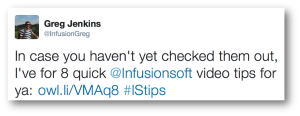
Well, I launched it. Promoted it on my social channels, and even put some money into some Facebook ads behind it and people loved the first 8.
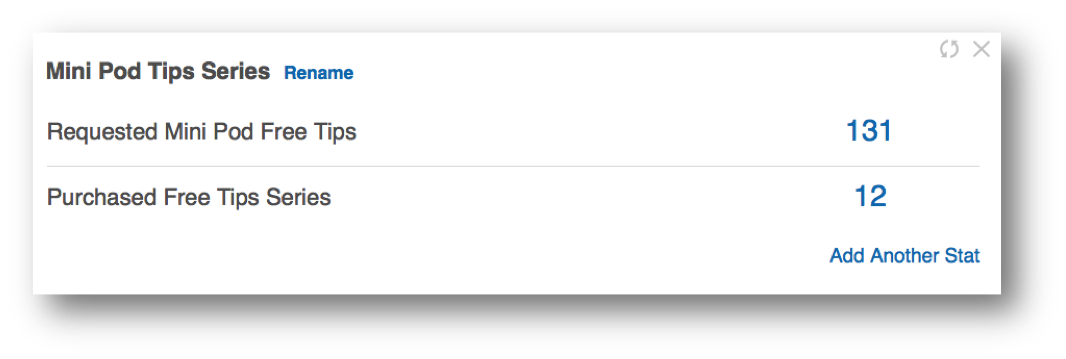
But no one was taking the offer for the next twelve videos. Like, seriously, no one.
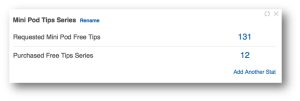
I remember really clearly that 96 people had signed up for the free 8 before I had one person decide to buy the next twelve. Now I know every industry has their own benchmarks for what they consider to be successful conversion rates; but I’m pretty sure that 1% isn’t what we’re going for.
So I did some homework. I reached out to some people who had taken the 8 tips to try and understand what they liked, or what they didn’t; and also why they decided not to grab the next twelve. And here’s what I learned – nearly every single person had found the first 8 tips valuable. Maybe not every single tip, but there was something for everyone. The problem wasn’t that they weren’t valuable, the problem was that they didn’t solve a need. They didn’t address an issue.
I had created the course for the wrong reason.
You see, all of my other courses were successful because they were solving a direct pain point.
“The campaign builder is hard to learn, and I want to get more out of it.”
Boom, CB: Trilogy.
“Lifecycle Marketing is a good strategy, but I don’t quite know how to actually do it.”
Oh, hello there LCM: Real Life.
“I need to start selling, and there isn’t a linear progression for configuring the Ecommerce section.”
Ask and ye shall receive, Ecommerce Pod.
But the Mini Pod Tips Series, besides being a mouthful on it’s own, had ended up being pretty self-serving. I created a course to introduce myself, and yeah, to demonstrate value. Those are things that I wanted. Not things that people were asking for. I don’t think anyone was sitting around at home thinking to themselves “Man, I wish I had some tips.”
Which is a shame, because the tips series is actually really valuable. I just did a poor job of positioning it. So, I’ve gone back to the drawing board on it, and I made a few changes to the way the campaign functions as well, and things have changed a little; but my real take-away is that I need to stay focused on solving problems. Although, the tweaks have helped too, roughly 30% of the last 35 have ended up taking the offer to buy the extra 12.
 So, all this to say – figure out what problem you’re solving. Stay focused on providing value in a space that needs value. And yes, let your customers tell you what they want (and I’m listening, I’ve got a list of courses I still plan to create). Of course it is a balancing act, we’ve all heard the quote attributed (maybe inaccurately?) to Henry Ford “If I had asked them what they wanted, they would have said faster horses.”
Well, the problem in this case was not that I wasn’t listening, it’s that my courses were had been well received because they were designed to meet a need. Sometimes this need is stated explicitly and sometimes it won’t be.
Oh, and if things don’t go according to plan, make sure you extract a lesson from it (and maybe a blog post too).
Would love to hear about any tough lessons you’ve learned this year in the comments below! Happy holidays everyone, thanks for reading.

Customer Experience, Small Business, Tips and Tricks
Just the other day a friend published an article based on some nurture advice that I’ve given, and I realized that with as strongly as I feel about nurturing your leads, I still hadn’t written a post for my own blog about nurture.
I’ve written for a few other blogs, like that of the Australian Businesswoman’s Network, and PureChat, but I hadn’t taken the time to craft something on the ole Monkeypod domain.
Well, nurture is a really complex subject. And there are plenty of angles from which you can approach it. Eventually I’ll address as many as I can, but today I wanted to talk about one specific lead nurture myth I’ve seen circulating in the small business community.
Nurture Myth #1: Your nurture process has to take place over a long period of time.
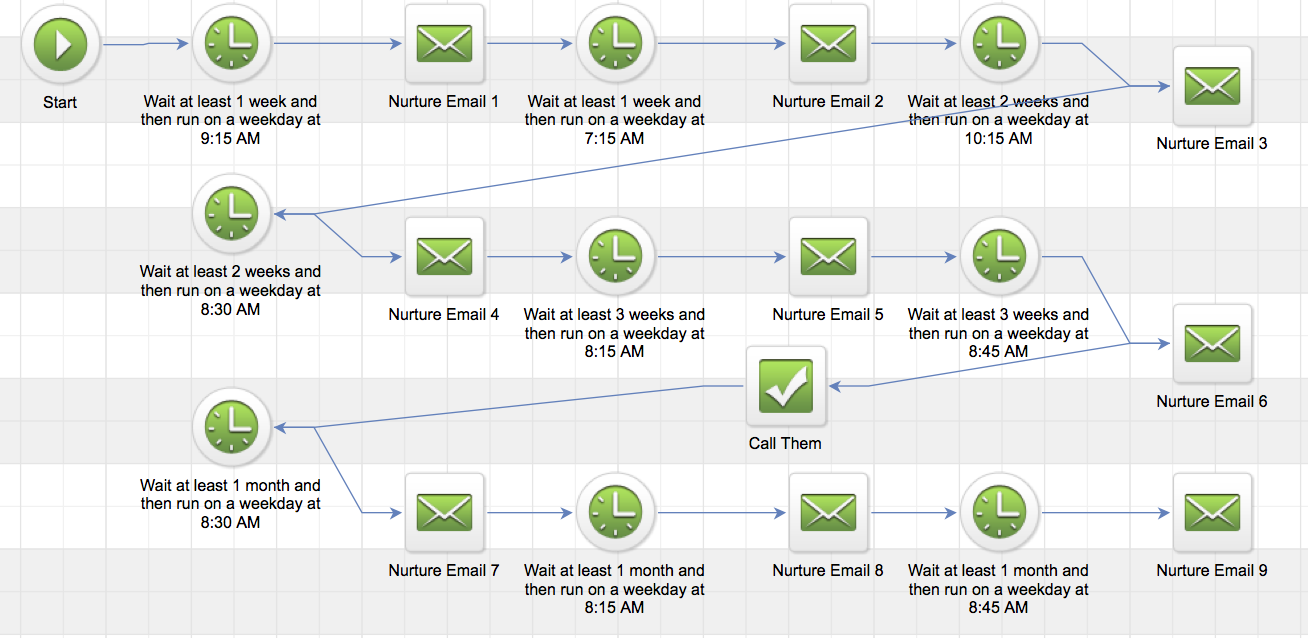
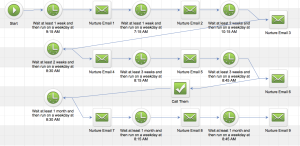
When people think about nurture they almost always think about a drip sequence of some kind. Something that follows up with leads over a period of weeks, months or even years. And yes, that’s usually how it works. Nurture exists because someone expressed interest in your product or service; and if they aren’t ready to buy today we need to have a process in place that follows up with them so that when they are ready, we’re the brand on the top of their mind.
This makes total sense if you’re selling something requires a lot of information and deliberation before someone makes a purchase. Like, real estate for example.
But the reason that this is a problem is because not all businesses have a long buying cycle. Plenty of businesses have a very quick and transactional sales process. And unfortunately these businesses tend to recognize that their business model is different, so they assume that nurture can’t (or won’t) really play a role in their Lifecycle Marketing strategy.
But it can. And it should. Nurture exists no matter the length of your buying cycle.
(Disclaimer: If you ever came to Infusionsoft University while I was running it, this story may sound familiar.)
In January of 2012 I moved to Arizona, and prior to moving I had lived in Lansing, Michigan, where I ran a business servicing and installing draft beer dispense systems. Like, installing and cleaning draft beer lines for bars, restaurants and country clubs. And because of the nature of my job I was in and out of a lot of bars on a daily basis. My job took me to a lot of bars, some of which I’d probably never have patronized on my own, but because I got to see these charming little hole-in-the-wall dives so regularly, they kind of grew on me.
So when I moved to Tempe there was a dive looking bar around the corner from where I lived. So my girlfriend and I decided to check it out. So we pulled into the parking lot, and we actually bottomed out as we pulled in. Now, I drive an SUV, so to have us scrape the bottom of our car as we’re pulling into this parking lot was a little unusual. But, “No matter” I thought. We were in the parking lot, may as well park.
 As we went to park, I noticed there was some shattered glass in the “spot” in which I intended to park, so we readjusted, and we parked further back along the side of the building. (I say “spot” because the parking lot had no real discernible lines of any kind) As we got out of our car, I noticed that there was an empty lot behind the bar, and through the chain-link fence I could see several big black garbage bags. This was 2012 and Sara and I were avid fans of the TV show Dexter, so I made a mental note of the garbage bags just in case.
The entry was had one of those two door entrances, where you step into like a small alcove, and then open another door into the actual bar. So, as we step into the first one, I notice there’s a Cinco de Mayo poster hanging up. I remember thinking to myself “Wow, 4 months early. That’s some really solid commitment. But, this is Phoenix afterall, so maybe its a bigger deal down here than it was in Michigan. Oh, wait, that says 2011. It’s not 4 months early, it’s 8 months late…”
Yup, they had a poster in their entryway that was advertising holiday specials from 8 months prior. Doesn’t exactly send the message that they’re on top of this stuff.
Then as we opened the second door and stepped into the actual restaurant Sara and I were both stopped in our tracks by a very pronounced and specific odor. It was one I quickly recognized as urinal cakes.
Which is not a terribly unusual odor when you are in the men’s room. But for this to be the first and strongest thing that we both smelled the moment we stepped into their restaurant was more than a little unsettling.
We looked at one another, walked outside, got in our car, and drove away.
Here’s the moral of the story: This whole process took place in less than 90 seconds. We pulled in, we parked. We walked into the restaurant’s entry way, and opened the next door, and then we never made it any further.
Prankster’s might have excellent food. They might have an awesome beer list. Or any other number of redeeming qualities. But for us, it didn’t matter. We never made it that far. Between the ill-maintained parking lot, the visible trash out back, the outdated poster and the overpowering odor, there were too many strikes against them in the simple process of entering the restaurant.
I’d challenge you to look at your buying process. Nurture exists even in the most mundane ways. It could be the music playing while folks are in line at your store. It could be the color scheme of your website. Or the number of clicks it takes to get where I want to go. Put yourself in your prospects shoes and see what hurdles they have to clear to become a customer. How can you make this process more fluid?
Nurture is the single most cost effective way to grow your business. It’s all about doing more with what you already have. (Oooh, tweet that.)
Here’s a free download with 11 questions to help guide your nurture.
Now, I use Infusionsoft to run my marketing campaigns and carry out my nurture. You don’t have to use Infusionsoft, but you should use something. If you’re looking for a comprehensive Infusionsoft review, this is the best one I’ve seen.