Guest Posts, Marketing, Small Business
 If you’ve ever met Dave Sherman, you probably noticed that he’s a genuine people-person. He’s a talented networker – but he doesn’t do it solely to be strategic, he does it because he loves people. He has a magnetic personality, one that naturally says “Come talk to me”. So, when I asked Dave to contribute to my blog, it only makes sense that he chose to write about attracting people to your business.
Attract More Prospects Today
If I were to ask a small business owner what he needs most in his business, more sales would probably be the most popular answer. However if he truly wants to grow a successful business, he needs to spend less time focusing on more sales and more time focusing on more prospects.
One of the most powerful ways to attract more prospects to a business is by creating lead magnets. Lead magnets focus on the idea of attracting people toward your business by providing them with value added information that can benefit prospects.
If you are like most small business owners, you tell everybody about the features of your business. How long you been in business, where you are located, who your best clients are, why you are so wonderful, etc.
Unfortunately, that is not what your prospects want to be hearing.
They want to hear how your business will directly benefit them.
Most people agree with this. You’re probably reading it, and saying “Yeah, that makes sense”, or maybe even “Duh”. But the reality is that acknowledging it, and executing on it are quite different.
When it comes to creating successful lead magnets, you need to focus on topics that will directly benefit your prospects. You need to focus on things like how they can avoid common mistakes, avoid competitor frustrations, achieve underlying goals, etc.
But how? That’s the million dollar question, right?
Based on those three topics, here are three templates you can use to generate a powerful lead magnet that will attract lots of interest from your prospects.
Avoiding Common Mistakes
- Three mistakes most people make when___________________________.
- Do you make these three mistakes when__________________________?
- Three common _________________ mistakes you don’t know you’re making.
Avoiding Competitor Frustrations
- Three questions to ask your ______________________________ before hiring them.
- The three biggest problems with________________________________.
- Three important things to consider when_________________________________.
Achieving Underlying Goals
- Three things you absolutely need to know about___________________________.
- Three keys to fixing your _____________________________ problem.
- Three proven techniques to better_____________________________.
There are dozens of ways to generate a lead magnet – and as simple as it sounds, you may start with what your prospects are already asking. What questions do you answer on a regular basis? If you were in your prospects shoes, what would you want to know? What are the most common objections people have?
Remember, you’re the expert in your field. Your prospects want the knowledge that is in your head, you just have to be willing to put it out there!
People want to be guided by someone who knows what they are talking about, but small businesses are often to humble to really embrace this. Sometimes we get too close to the knowledge we have, so close that we can even forget that it’s valuable, and unique. You are an expert, and people want your guidance. Take the information that you have – turn it into a lead magnet – and share it with the people that want it.
By incorporating powerful lead magnets into your small business marketing, you will start generating much more interest in your business which will lead to more prospects in your funnel.
Always remember that people don’t care about your business. They only care about what your business will do for them.

Guest Posts, Marketing, Small Business, Tips and Tricks

Paul Sokol, Data Scientist, Infusionsoft
Back in the saddle this week is my friend, and Infusionsoft’s campaign builder Mad Scientist. For a more thorough introduction check out one of his other posts on the Monkeypod Blog. Ladies and gentlemen, the man, the myth, the hair, Paul Sokol.
The Teenage Mutant Ninja Turtles Email Marketing Pet Peeves
As a child, I remember reading about the “pet peeves” of the different ninja turtles in a book I had about the movie. This was a new term for me so I asked my mom about it and she explained “its stuff you don’t like”.
Nothing to do with your pets. Strange term but alright.
For the rest of my life, I’ve always thought about the ninja turtles whenever I saw the term “pet peeves”. So, when Greg asked me to write about my email marketing pet peeves, naturally I thought about those four turtle dudes.
Today, I’d like to have some fun and offer some actionable insights based on fictional characters. Think of it like fan non-fiction for your small business.
Here is what I believe would be the pet peeves of each ninja turtle if they used email today:
I’m going to start with my favorite ninja turtle because its my blog post and you can’t tell me what to do. Side-note: He’s the reason my favorite color is purple 🙂
 Donatello is the smart nerdy guy. He definitely understands the value of good working systems and how things interact with each other. This means he would definitely not enjoy too little too late transactional messages
A “too little too late” transactional message is when the company follows up WAAAY to long after they should have for some interaction.
A common offender is when restaurants have a little card for you to join their email list for monthly offers and such when you are paying the bill. Then you completely forget about it. Then, months later, you get an email that thanks you for joining the list.
“Um, what? Oh yeah, I ate there in March…”
This is bad for a few reasons. First, it puts you at much higher risk for spam. If someone doesn’t remember signing up because you waited too long, you aren’t a welcome visitor in their inbox. Spam button activate!
Next, this actually is demonstrating your lack of concern for the inbox relationship. If I owned a restaurant, I’d be unreasonable about adding all new emails that I got every night after closing. By waiting too long, it reduces the impact of your welcome message. And if you wait for much too long, it basically conveys the message, “Oh yeah, you gave us your email huh? Well, here you go I guess…”
Doesn’t leave you with a warm and fuzzy feeling at all.
Lastly, it actually puts your lack of systems front and center for your customers to see. As a consumer, I’d expect to be added to the list within a week at the most. By waiting too long, it just shows that you really don’t have your shiz in gear behind the scenes. So what does that mean is going on behind-the-scenes in the kitchen…
I know I used a restaurant example this whole time but this is something to avoid for any business. I can’t tell you how many times I’ve signed up for a newsletter, never received a confirmation email, then months later I get something that I don’t recognize. Know what happens then? I unsubscribe and mark as spam.
 Raphael was the hot head; the guy with a temper. Really, he’s a super unique guy and expects to be treated as such. This is why being treated the same regardless of inbox interaction would be his biggest pet peeve.
Here is what I mean: In this day and age, with how advanced email marketing technology is, there is simply NO EXCUSE to treat everyone the same. For every email, there are (primarily) three outcomes. First, someone can never open the email. Second, they could open the email but never click through. Third, they could open the email AND click.
Why should you treat those three types of people the exact same? You shouldn’t. And that’s the point.
In fact, consumers today are hyperconnected and expect to be paid attention to. If you have an important email going out that someone really needs to read, you would be remiss to assume they have read it. Its easy enough to track open rates, so if they need to know this information, re-send it but ONLY to those who didn’t open. If you really want to let people know you care about the inbox relationship, address the fact they didn’t open the email. Don’t be creepy and big brother-ish about it, but by being authentic and up front about it can only bolster the relationship.
Here is one final example that, I hope, will drive the point home. Let’s say you create an event on Facebook and invite a bunch of friends. Then, lets say after a week you have a group of people who said they are going, a group who said maybe, and a group who said they couldn’t go. Would you really send the same message to all three of those groups? When you aren’t paying attention to inbox behavior, this is exactly what you are doing.
 Michaelangelo was the cool guy. The laid back party dude. Just because he is a chill guy that doesn’t mean you can assume his interest which is why I believe his biggest email pet peeve would be assumed opt-in just because you are on the list.
Doing launches and promotions are great. They get important products and services into the hands of customers that can benefit from it. Quite often, introducing new products/services can be done to your exist email list.
There is nothing wrong with that. The problem is when you ASSUME they are interested.
If you have a whole email series ready to go, just because someone is on your list doesn’t mean you can assume their interest. Meaning, you can’t just start hammering them with emails without putting yourself at a severe spam risk and, more importantly, hurting the existing relationship.
Even worse, sometimes I’ve seen people do a reverse opt-in. Someone will send an email that effectively says, “Hey I’ve got this launch coming up and you’re going to be getting those emails. If you aren’t interested, click here”.
I can understand why someone might want to do that, but from the recipients standpoint its the wrong side of the coin. Rather than assume interest, tell people about it and have them take some action to choose to receive it.
You know who does this? Some more elite A-list marketers out there. Frank Kern is selling stuff all the time, but if you aren’t clicking and opting into his new stuff, you’d never know. Its all behind the scenes stuff. He NEVER assumes you are interested in what he has to offer even though you are on his list. And I’m pretty sure Michaelangelo would appreciate that 🙂
 Leonardo was the fearless leader. He got things going and kept everyone safe. When it comes to email, the subject line can definitely be thought of as a message leader which is why I’m pretty sure he would be against useless preheaders.
Most email clients will show a small snippet of the email’s body after the subject line. A preview of the content.
You know what’s annoying? Seeing the dreaded “Can’t read this email. View in Browser” as the email preview. Giving people a different way to read the email is not a bad tactic. Its a good one. But its not the best way to leverage that exclusive preheader real estate.
I tend to think of things in terms of classic direct marketing. The subject line is the headline. You know what the preheader is? The sub-headline. The whole point of those two elements are to get the viewer reading further.
Use your email preheader as an extra nudge to get people to even open the email. Just like direct mail, if nobody opens it, it doesn’t matter how good the content is.
The preheader should further bolster the promise of the subject line while still remaining intriguing enough to get people to open and read.
This one tactic alone can boost open rates dramatically when done right. So why not make Leo proud and give it a shot?
What do you think? Can you relate to some of these? Let me know what you think in the comments below, cowabunga!
Guest Posts, Small Business, Tips and Tricks, Uncategorized
 Small businesses often struggle with knowing how to grow their team; especially without compromising what they deliver, or what they stand for. If you’re an entrepreneur, you’ve probably poured yourself into your business, and you probably take an immense amount of pride in your company. As you should. It’s that fact that makes hiring people who reflect your brand so important.
When it comes to finding talent, hiring, and growing companies, Lauren Hodgson is in her element. Lauren is a good friend of mine, and I asked her to share some of the wisdom she’s collected throughout her career, which included helping Infusionsoft grow from 200 to 600 employees, in the hopes that it’ll help your team grow.
3 Keys to Designing a Employment Branding Foundation
If you’ve ever been fishing you probably had to select what bait you wanted to use. And depending on how much you know about fishing, you may know that you should select your bait carefully, as it can attract different fish. If you’re fishing for salmon in lake Michigan you’re going to use a very different bait than if you’re fishing for yellow fin tuna off the coast of San Diego.
Let’s take it one step further: If you were a fisherman, wouldn’t you prefer that fish swam right up to your boat? Life would be a little easier if they were just jumping onto the deck instead of you having to seek them out. Of course. By attracting fish to your boat, you’re able to get a larger selection in less time. This saves you time and gets you more of what you want.
You likely already apply this principle to your business with your marketing & lead generation. It’s called inbound marketing. Good news! You can apply it to your hiring, too. In fact, when you do, you’ll find more of the right people for your business. More of the right people is a brilliant thing.
When you apply this principle to hiring, it’s called employment branding. It’s one of my favorite things in the world. It does the hiring for you. When you build an attraction machine, it brings in the right people who want to be a part of what you are creating. Plus, the better you are at proactively attracting people, the easier it is to find (& captivate them) when you need to hire. Employment branding is the magnetic force that helps you constantly fill the pipeline with people who are champions of you and your business. And those are the types of people you want on your team.
Here’s the kicker. It’s a proactive strategy, not a quick fix. Once you do it, though, you’ve got a machine humming in the background, doing the work for you.
By creating this attraction machine, you spend less time sifting bad resumes, asking unnatural interview questions, and crossing your fingers that interviewees are going to work out. This work goes side by side with your current marketing – it’s actually extension of it. In fact, the 3 biggest things you can do for your employment brand are things that should already be doing for your business. This work will attract customers, partners, and employees alike.
Quick recap: You invest the time upfront, it’s work you should already be doing, and it gets you more of the right people for your business.
Here are the top 3 things that create a strong foundation for your employment brand, getting the right people knocking down your door:
#1 Get super clear on who you are and what you stand for
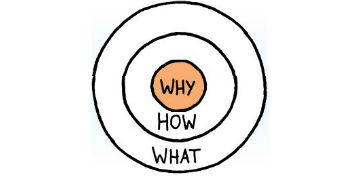
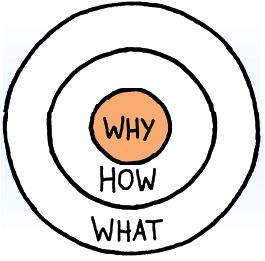 But, seriously. SUPER CLEAR. When people interact with you (in person, on your website, etc.), you want them, in less than 30 seconds, to know what you stand for- your purpose. Not what you do, but why you do it. Tap into why you started. What problem are you trying to solve? What dent do you want to make? What do you want to be known for? The answer to these questions should be jumping off your website.
If you haven’t spent the time on deliberately articulating this or if you need a refresher, you may like the HBR article with the great Jim Collins on Building Your Company’s Vision. Clarity on your vision and purpose is the #1 thing in attracting the right people to you. Great people connect to purpose – they want to be working for something larger and they want that something larger to align with what they care about.
#2 Align every inch of the business to your purpose
Once you are crystal clear on why your company exists, you want every piece of your business to be a mirrored reflection of that existence. It should be evident in how your business behaves – your business model, client interactions, partnership pay structure, how you choose Partnership A over Partnership B, community involvement, website messaging, etc. Align everything to it because these decisions, these consistent behaviors over time, become your culture. Your culture is what attracts certain people and detracts others. Your company culture already exists (even if it’s just you!) – the goal is to intentionally design it in such a way that it is effective in driving what you want. One of the  truest principles of culture, represented in a model by Ann Rhoades, former Chief People Officer of Southwest Airlines, is this:
“Leaders drive the values, values then drive the behaviors, the behaviors drive the culture, and the culture ultimately defines the performance.”
Your leadership dictates the culture. Be intentional about how you operate the business. When it aligns – living, breathing, and sleeping it’s most integral form of its existence – the right people can’t help but notice.
#3 Your people are your brand ambassadors
Your employees, including you, are your brand ambassadors. If you don’t have employees yet, think of your vendors, customers, investors, and partners as your ambassadors. Set and share the vision with them. When you’ve got the right people on your team, give them ownership, let them co-create the plan, and they will multiply your efforts way past what you alone can do. When your people have purpose, autonomy, & mastery in their work with you, it creates a multiplying affect that ripples throughout their life and in networks, communities, and people far past your own. This is the employment brand spreading organically. It’s also where you’ll generate employee referrals, hire recommendations, and make coffee connections, matching up you with amazing people to join your team. These “leads” are coming from your network of champions for your business, so they’ll likely be more qualified. More of the right people; it’s the beauty of word of mouth in action.
You are able to create a company that is simply irresistible to work for by focusing intently on the core of who you want your business to be in the world. This work generates the most authentically fitting people that want to be a part of what you are creating. Nothing overcomes a poor fit. Be clear on what you stand for, align your business to it, engage and empower your people to be your champions. This is the foundation of having an employment brand that is constantly filling the pipeline of people who want to partner up and do the amazing work you set out to do.
About the Author: Lauren Hodgson
 I am a big believer that when we get clear on what we stand for and partner with others that stand for the same, we can create some pretty rad shit. As an Employment Brand Strategist, I help teams share the mission that they’re on and help them create a machine that magnetically attracts the right people to join their mission. I believe in fit because we are a better world when people can contribute their full selves. Plus, status quo is for the birds. In the past I led the hiring for a fast-growing tech company, Infusionsoft, growing it from 220-650 employees in 3 years. I’ve also led in the space of people development and culture at lululemon athletica and Apple. I am all about exceptional leadership, strategically designed company culture, and living into dreams. In late 2015, I start a new journey, traveling parts of the world for about a year with Peter, my husband and partner-in-adventure.

Guest Posts, Keap, Tips and Tricks

Reyna Bovee, Certified Partner Trainer, Infusionsoft
I’ve got a blog post this week from Reyna Bovee, another friend of mine from inside the walls over at Infusionsoft. Reyna Bovee is a Trainer for Infusionsoft’s Certified Partners. She trains on advanced Infusionsoft elements and some fun ninja tricks. It’s safe to say that, like many of us, she totally geeks out on Infusionsoft.
Outside of the software, she’s pretty cool as well. She’s a sucker for inspirational Pinterest quotes and festivals (mostly because of the funnel cake). And she loves traveling, too. She boasts that she’ll take you up on a travel offer anywhere (I say challenge her).
Reyna uses Infusionsoft in her everyday life as she supports her husband and family with their entrepreneurial dream – a blooming home remodeling company. She handles the Infusionsoft end of things, and any other marketing pieces, which keeps her Infusionsoft and Marketing chops polished so that her trainings always shine.
Ladder vs Linear Sales Pipelines
A sales pipeline is a way to organize opportunities through a sales process. So, if you have a process that your prospects go through before they buy, and if it involves manual interaction, you might be well suited to build a pipeline to help support this. And Infusionsoft’s sales opportunity module is just the tool to make it happen.
This is different than regular ole’ campaign builder automation.
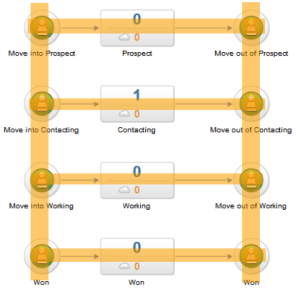
Ladder Pipeline
Sale Pipeline Opportunities require manual work to move from stage to stage. In other words, sales pipeline is best used with sales reps who have to physically touch their customers (maybe not literally).
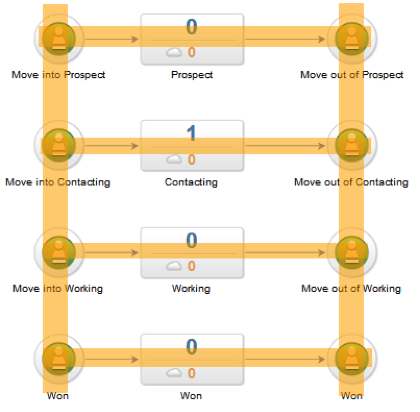
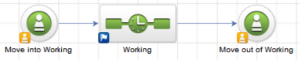
These two images are the same exact pipelines, we just rearranged them inside of campaign builder.
They look like they operate the same, but there is one missing link that you need to know.

Linear Pipeline
Cutting to the chase, ladder style is going to slay linear style every time.
If you’re shocked and feeling like you have been misled this whole time, dry your eyes, dear.
Let’s get down to the logic to ease your tears.
Here’s a super basic, ideal sales pipeline:
New Opportunity > Contacting > Working > Won > Lost.
Ideally, our customers hit each stage in order, according to plan.
Ha. Yeah, right. This is what actually happens.
- We get request for a Free Consultation. (Prospect Stage)
- After a few rounds of phone tag, we finally get in touch with that customer. (Contacting Stage)
- We start working the opportunity like no one’s business. (Working Stage)
But then! Gasp! They fall off the map. What to do…
- Rewind. We start phone tag again. Dang it! (Contacting Stage)
See what happened there?
The customer went backwards.
Does this happen in real life? Oh, heck yeah.
Let’s see how Campaign Builder performance view handles such interference.
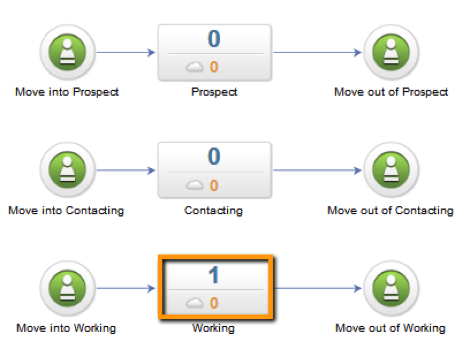
Step 3: We start working the opportunity like no one’s business. (Working)
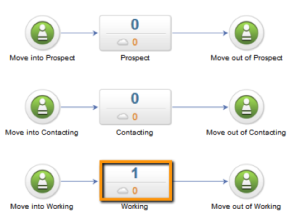 Ladder: So far so good… |
 Linear: All good over here too.. |
The two above images are saying the same thing. You’re right – no difference.
But wait – oh, just wait.
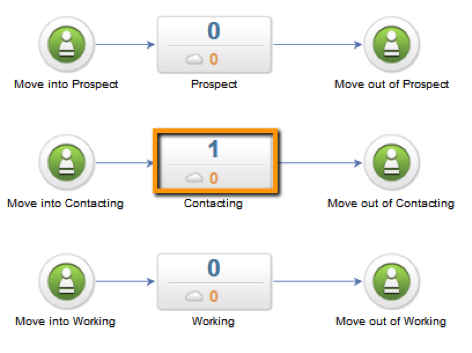
Step 4: Rewind. We start phone tag again. Dang it! (Contacting Stage)
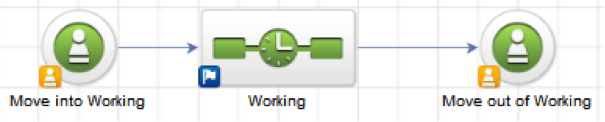
The ladder stage handles it just fine. Because in moving them back a stage, we move them out of working (which stops that sequence) and into contacting (which starts that one).
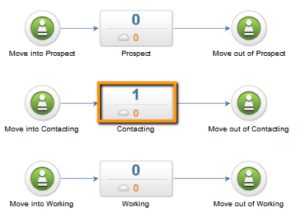
Ladder: Rewind, no problem.
But life’s not quite as easy over in linear land.
If you move them back into a previous stage, they’ll go back to that stage, but they also stay in their current stage. So now that contact is in the same pipeline in multiple stages. This can cause serious confusion and mixed up reporting.

Linear: Oops…
Yikes. Problem.
If we move a prospect backwards in a sales pipeline using the linear model, the opportunity record gets stuck in two different sequences.
This gives you entirely inaccurate reporting. It makes life harder for the sales rep. And it can certainly create some confusion for the prospect too.
However, when you build in ladder format, you don’t end up with any of those issues.
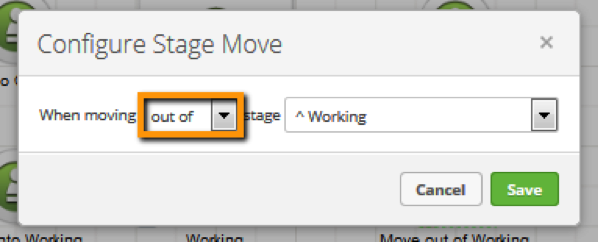
The key difference here: Using the “Move Out Of” Opportunity Goal setting.
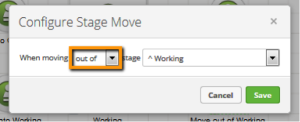
Each stage of the ladder style pipeline has a “Move Into” and a “Move Out Of” Goal at either end.
Easy-peasy lemon breezy. You just learned a new party trick. The key to configuring your sales pipeline is to remember that the pipeline is an accountability tool for an otherwise  manual process. Any automation you introduce should be there to supplement what your reps should already be doing. (Tweet that!) And, if you build your stages with bookend goals (into and out of) then you’ll have a nicely contained, easy to manage, reporting friendly, sales process.
Oh, and if you want to save yourself a little time getting things set up, start with the Sales Pipeline Starter Kit from the Infusionsoft campaign marketplace.
And now you’re smarter than the gent down the block. I’d love to hear your thoughts in the comments below!
Guest Posts, Keap, Tips and Tricks
Hey all, my good friend Paul Sokol or PLS consulting is back with another post this week, and predictably, it’s a good one.
When I was first hired at Infusionsoft I remember being impressed by Paul’s knowledge and professionalism as he helped small business owners get started with the software, then I remember being even more impressed as I learned that he’d only been hired a few months before me. As I did then, I continue to learn from him every chance I get.
3 Things (Most) Infusionsoft Users Get Wrong
Ahoy hoy everyone! Its your favorite mad scientist guest back with another post 🙂
Greg and I were chatting on the interwebs and he tossed out the idea for a post on the 3 things most Infusionsoft users get wrong. Now, wrong is a strong judgement because REALLY, even if you commit the automation sins below, its not so bad. Rather these are simple adjustments we can make to get better results.
Thing the First: Brick Wall Thank You Pages
Submitting a web form is exhilarating. Think about it, you are interacting with someone or some company digitally. After you hit “Submit” it gets exciting…
…what’s on the other side?
And then BOOM!
A static page with nowhere to go.
This is one of the leakiest, yet simple to fix, things I see. The thank you page someone sees upon submitting should further guide the relationship. Here are a couple things you can do:
* Drive people to your Facebook page
* Give them a ‘click to tweet’ link (Use this tool)
* Drive them to a sales page or order form
* Drive them back to your blog
The whole idea is you don’t want to waste the momentum achieved from a form submission. Guide them to the next logical place.
Strategically, you could drive them to their inbox too if they were opting in for some lead magnet. This is a great example of  guiding the person. This one trick alone can boost lead magnet redemption rates.
For an example of this tactic in action, check out the “Free Resource” campaign in the Marketplace.
Thing the Second: Misusing Opportunities
I probably sound like a broken record to all my friends, but seriously, Opportunities in Infusionsoft are one of the most powerful tools in the whole program. The reason why most people don’t use it more is because the configuration and workflow isn’t the most intuitive. And so, Opportunities are misused all over the place 🙁
Here is the general idea. An Opportunity is merely a manual accountability tool that hooks into a User’s calendar. Opportunities exist to track a process. An end-user simply has to indicate what they did, what they plan to do, and by when. The User’s calendar will have an event based on that “by when”. Everything else is designed to support those functions.
Once someone understands this general workflow, they can begin to use Opportunities to manage a pipeline. If it is a sales pipeline, there is an extra layer of functionality that makes selling a breeze.
Usually, people are using Opportunities to track a sales process. To make this as easy as possible, Infusionsoft created the “Sales Pipeline Starter Kit”. This provides you with the basic process stages, training on how to setup your dashboard and how to work an opportunity.
Check it out here.
Thing the Third: Misusing Tags
Back in the dark days, before Campaign Builder, there was this thing called “legacy”. Its functionality was still very powerful, but not as easy to setup. As a result, the community adopted the habit of using Tags for tracking basically anything.
However, there is a downside to this tactic: it can legitimately slow down your app’s performance. Too many tags on too many people simply takes longer for the database to query.
A great example of this is link click tracking. In legacy, the notion of a Link Click goal didn’t exist, so you had to tag any links  you wanted to track. This habit is often brought over into the Campaign Builder.
Realize that you can use Link Click goals to track activity and then use Campaign Goal reporting to see the behaviors. Yes, you could do the same thing by tagging a link and then just searching for people with that tag, but its not necessary.
I also realize that there are certain circumstances that require applying a tag to control a campaign. These functional tags should be removed once they have done their job. Again, this is to keep the database fast and lean. The good news is we don’t lose any reporting 🙂
So there you have it. Three things you can do today to boost your use of Infusionsoft. Let me know what you think in the comments!
Guest Posts, Marketing, Small Business, Tips and Tricks
 I’ve got a guest post here from one of Infusionsoft’s brightest personalities – Judi Miller. You may know her as the voice of Infusionsoft’s training webinars, or just from her numerous contributions to the Infusionsoft ecosystem at large. Suffice to say, Judi has been around the block with Infusionsoft a time or two, and consistently finds ways to go above and beyond to help the customers she works with not only understand the software, but also grow their businesses in ways they didn’t expect. This week I asked her to put on her creative cap and show off how she helps customers who get stuck thinking of topics for their regular newsletter.
And by the end of this article you’ll have 132 new ideas for your newsletter topics. I promise.
Raindrops on roses and whiskers on kittens…
 Can you name the famous musical that those lyrics are from?
Did you say The Sound Of Music? Ding Ding Ding… You are correct!
Now can you come up with 5 alternate titles?
Make a list of animals that have whiskers.
What marketing strategies would you employ if Sound of Music was being released today?
Those are all examples of brainstorming. It’s great exercise for your brain. And it can be an awesome way to get new, fresh ideas.
TV and movie writers often sit in a room and brainstorm ideas for hours. That’s one of the ways they get their new and exciting episodes and screenplays started. (Here’s one writer describing their techniques)
You too can do this too, and generate new and engaging ideas, and creative ways to provide value to your audience.
So I know you are thinking: “When is she going to get on with Newsletters…”
Well first, I’ve got a hard truth for you. Here ya go…are you ready….
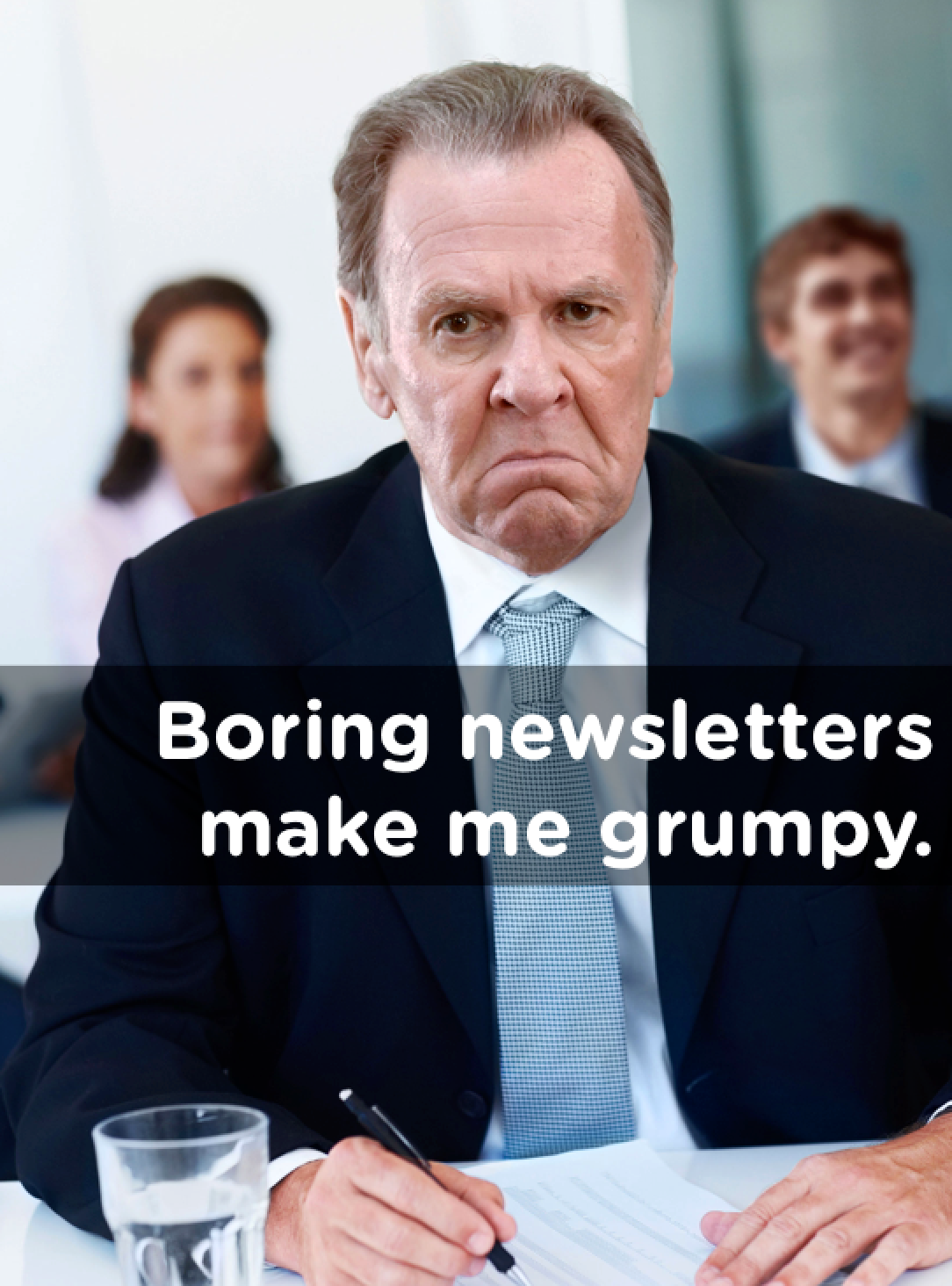
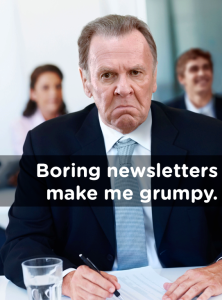 Most newsletters are BORINGGGGGGGG!!
It’s true. Most of the newsletters that I’ve seen or that I receive are packed with two things: articles and promotions. And sometimes they don’t even tell the reader why those articles matter. Here are the questions you need to be asking yourself:
- Do my customers and prospects really read my newsletters?
- Do they enjoy reading them?
- How would they respond if I just stopped sending them? Would they line up and ask where I went? Would they even notice?
- Do they look forward to my newsletters each month?
- Do they open it up and read it? ALL of it?
- Do I give them ideas, information, make them better, or do anything other than push my product? Do they engage and actually enjoy my monthly voice?
These can be tough questions. And sometimes the answers aren’t fun. So, if your answer is a big fat “No”, or a dull “I dunno”, then I guess that’s it right? There’s nothing you can do at all? Right?
WRONG ANSWER.
If you send a regular newsletter, it can be much more than just a delivery method for information. Each month your newsletter can be encouraging, funny, engaging, inspiring and welcoming. It can create a rich and meaningful relationship between you and your subscribers. I know how corny this sounds, but I’ve seen it!
You can be the source of something they want to share in a mom’s group, a morning huddle at an office, with their friends at happy hour, or out to their social networks. Your newsletter can be something that makes their day. Or their week!
So here’s an idea, if you feel that your newsletters have gone a bit stale, try this:
Create a theme for one month. This is where brainstorming will be helpful. How about something… super! (Maybe, in honor of a new superheros movie. But you can skip the latest Fantastic Four movie, yuk. )
Then, work within that theme. Let’s see, September 2015….Are you SUPER?
(Editor’s note: A common method is one called Starbursting– it’s a method based on asking questions rather than generating answers. Use What, Why, Who, Where, When and How to start questions about your business, using your theme. I.E. Why is our product super? How do we create a super experience? Who do we think is super?)
Now, start to think of how you can use super in all the different parts of your newsletter. Or, for a series of newsletters. Maybe you start out with a definition.
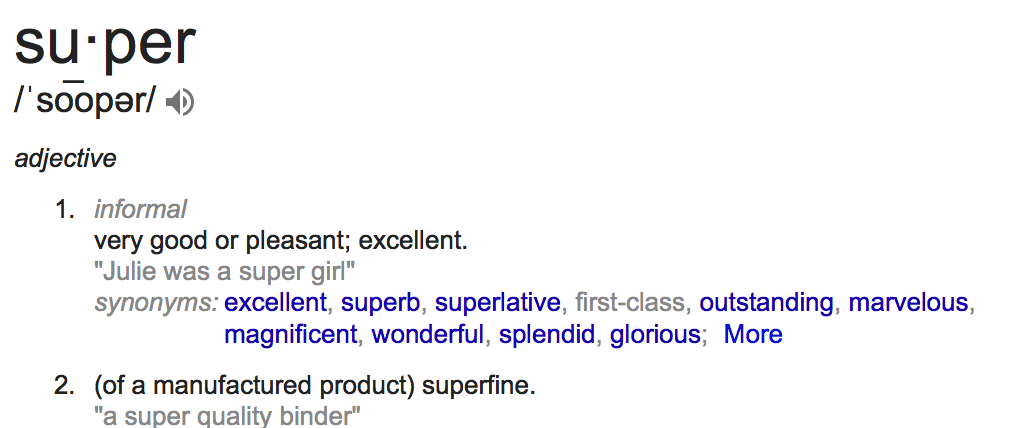
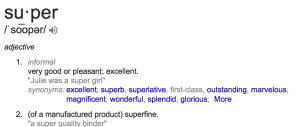 Super: adj 1. very good or pleasant, excellent
You could… list ten reasons your customers are super. Profile one, or a few of your employees as if they were super heroes.
You can have so much fun with this word. Depending on what industry you’re in, you may be able to come up with creative ways to incorporate your theme.
- For a family dental office you can have a “Super Flosser Challenge” – and profile a flosser of the month.
- For a traditional office you can have “Super Service Award” for someone who went above and beyond.
- You can outline super creative uses for your product – or a collection of super results your customers have shared.
- If you’re a nutritionist, or diet coach, you could do super foods for your health. Or for your memory. Or for your new and trendy diet.
- Maybe include a super testimonial from your super customer about a super employee. (Too much super?)
As an entrepreneur, you probably already are accustomed to using the resources around you. Well, if you’ve got a family, why not make it an activity a family can do at the dinner table. Brainstorming is about getting ideas out, and not about judging the ideas. So really, anyone can contribute. And then later, if you want to dismiss some things that’s totally fine. But let’s get it on the list first.
There are tons of brainstorming articles out there, and many different methods, but one common theme is that you can’t stop to judge the ideas as they come.
 Once you settle on a theme for your newsletter, you will find inspiration everywhere. And then, you’ll start to notice your new possible themes too. A bakery delivery truck might make you think ‘fresh’, and that’ll be your new theme.
You could be out running and you’ll think of a theme with customers running from their problems.
Perhaps you’re at a movie theater and it strikes you, your next theme will be “I can’t believe it’s not…” while eating buttered popcorn.
Or maybe an avocado tree will make you think about customer service.
Once your creative juices start flowing, you will not only enjoy writing your monthly newsletter, but your prospects and customers will begin engaging with you more, sharing your newletters more, and your relationships with strengthen. Oh, and higher engagement and stronger relationships are two pretty promising indicators for a uptick in sales too. Sounds supercalifragilicious to me! (Shoot, wrong Julie Andrews movie!)
P.S. To jumpstart your creative process you might start with a list someone else has already put together.
(Editor’s note: 75+24+33=132)
Let us know how you generate newsletter content in the comments below!

 If you’ve ever met Dave Sherman, you probably noticed that he’s a genuine people-person. He’s a talented networker – but he doesn’t do it solely to be strategic, he does it because he loves people. He has a magnetic personality, one that naturally says “Come talk to me”. So, when I asked Dave to contribute to my blog, it only makes sense that he chose to write about attracting people to your business.