Fundamentals of Nurture Automation

Fundamentals of Nurture Automation

Let’s talk about Nurture.

It’s not flashy. It’s not new. But it’s one of the most important parts of your sales and marketing ecosystem — and too many businesses skip it entirely.

Where does Nurture fit?

The short answer is: in the gaps.

You know those little moments between major milestones in your customer journey? The space after someone opts in but before they buy? Or between a discovery call and a proposal? That’s where Nurture lives. It’s the connective tissue that keeps people engaged, supported, and moving forward — instead of slipping through the cracks and disappearing altogether.

The role of a Nurture process is to systematically follow up, answer questions, remove friction, and make it easier for a lead to say yes when the time is right. It’s about progress. It’s about support. It’s about keeping the conversation going.

Why is Nurture valuable?

This part is huge. Because the leads you’re nurturing? You already have them.

You (or your marketing team) worked hard to generate traffic. You ran ads. You built landing pages. You created offers and lead magnets. And if you’re not actively nurturing those leads, then a chunk of them are just sitting there — slowly cooling off.

A well-built nurture process helps you improve the conversion rate of the leads you’re already getting. Which means better ROI on your ad spend. Better performance from your lead magnets. Better alignment between your marketing and sales efforts.

If you’re trying to grow without a nurture strategy, you’re just leaving money on the table.

How do I actually do it?

Good news: This part is straightforward — especially if you’re using an automation platform like Keap, ActiveCampaign, HighLevel, etc.

The basic idea is that you create an automated series of helpful, supportive touch-points (emails, texts, videos, etc.), and then you set it up to trigger when a contact might otherwise be at risk of going cold.

The nurture process keeps them warm. It provides resources. It addresses FAQs. It builds rapport and trust — so that when they’re ready to buy, they think of you.

Hopefully you’re reading along and nodding your head, and if you’re thinking “…but, what should I say?” — we’ve got you covered.

This short video will walk you through some of the actual content ideas that can make up a strong nurture campaign. Real examples. Clear guidance. Stuff you can implement today.

So we’ve given you ten nurture topics – that could be the material you need for a ten day nurture sequence – if you’re sending daily, but it also could be content that is spread across ten weeks, or ten months, depending on the cadence you decide.

Let’s review, those ten topics are:

  1. Welcome, Introduction Message
  2. Business Origin Story
  3. The Core Problem you Solve
  4. Case Study (or Testimonial)
  5. Common FAQs
  1. Behind the Scenes Look
  2. Quick Demonstration of Value
  3. Signature Service/Offering
  4. Best Practice/Industry Trend
  5. Invitation to Connect

And, you may have noticed that some of these topics could easily be used to generate a handful of nurture touch-points. Like, say you had more than one case study to share, or more than one FAQ to address, etc.

So don’t be afraid to take these topics and expand on them as you develop your nurture strategy – a rule of thumb is that it’s always better to have too much nurture than not enough.

Nurture: Next Steps

If you’ve made it this far, then let me encourage you to take action.

Either build a brand new nurture process from scratch — or revisit one you’ve already got and see how it could be stronger. Because even small improvements to your follow-up strategy can lead to big wins over time.

Nurture is one of the most efficient ways to grow — and once it’s set up, it works around the clock to help your leads take the next step.

Let’s stop letting good leads go cold. Start nurturing.

Automation Expanded

Nurture is one very clear and specific automation use case – but automation is infinitely versatile, if you know where to look If you aren’t sure where automation would fit – we’ve built a course specifically designed to help you identify those opportunities.


Smart Scaling with Keap’s Solution Launchpad

Smart Scaling with Keap’s Solution Launchpad

We all love when Keap rolls out new features, especially the ones that actually move the needle for small businesses.

As a caveat, this one might be predominantly for Keap partners, but I do think it’s important that everyone know tools like this are available.

At last year’s Keap user conference, Dr. Denise Dennis gave a killer presentation on scaling smarter with Keap’s Solution Launchpad tool. And since not everyone could be there in person, she kindly agreed to do a special replay just for the Monkeypod universe audience.

So if you missed it check out the video below—you’ll learn how Solution Launchpad can help you simplify automation, streamline delivery, and scale the way you serve people.

Good stuff, right? Dr. Denise walked through how Solution Launchpad works and why it matters, but we wanted to take it a step further. So Cameron sat down with her for a follow-up chat to unpack some of the key ideas, share more examples, and talk about how to actually put this into practice.

To wrap it up, the conversation between Cam and Dr. Denise Dennis unpacks the presentation and expands on use cases for Keap’s Solution Launchpad tool.

The main takeaway? Productizing your services is a game changer. Whether you’re an automation expert or a coach, having a clear, repeatable offering not only saves you time, but it helps you stand out as an expert in your field.

A lot of businesses get stuck trying to appeal to everyone, but as Dr. Denise shares, narrowing your focus and niching down lets you attract the right clients and charge what you’re worth.

If you serve small businesses then the advantage you get from using a tool like Solution Launchpad is the flexibility to customize things for different clients, while still creating a streamlined process that you can repeat again and again.

The bottom line: scaling smarter is all about working smarter, and having a system that helps you focus on what really moves the needle for your business and your clients. If you want to connect with Dr Denise, you can do that on her site here, or by joining us in the Monkeypod Membership.

What should I automate?

If you’re on board with the idea of automation but aren’t sure where it would fit – we’ve built a course specifically designed to help you identify opportunities in the customer journey where we’ve seen automation solve problems and create momentum.

Get More Done (with this Planning Framework)

Get More Done (with this Planning Framework)

If you run a small busniess, or work with small businesses, or are a human – then odds are you probably have seen a good idea that for one reason or another struggled to reach it’s potential.

And if you’ve ever found yourself unpacking that scenario, trying to figure out where a project went off the rails, then you’re a) in good company and b) reading the right blog post.

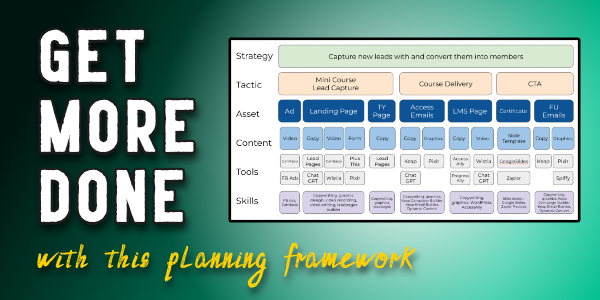
Allow me to introduce you to a planning framework designed for exactly this purpose:

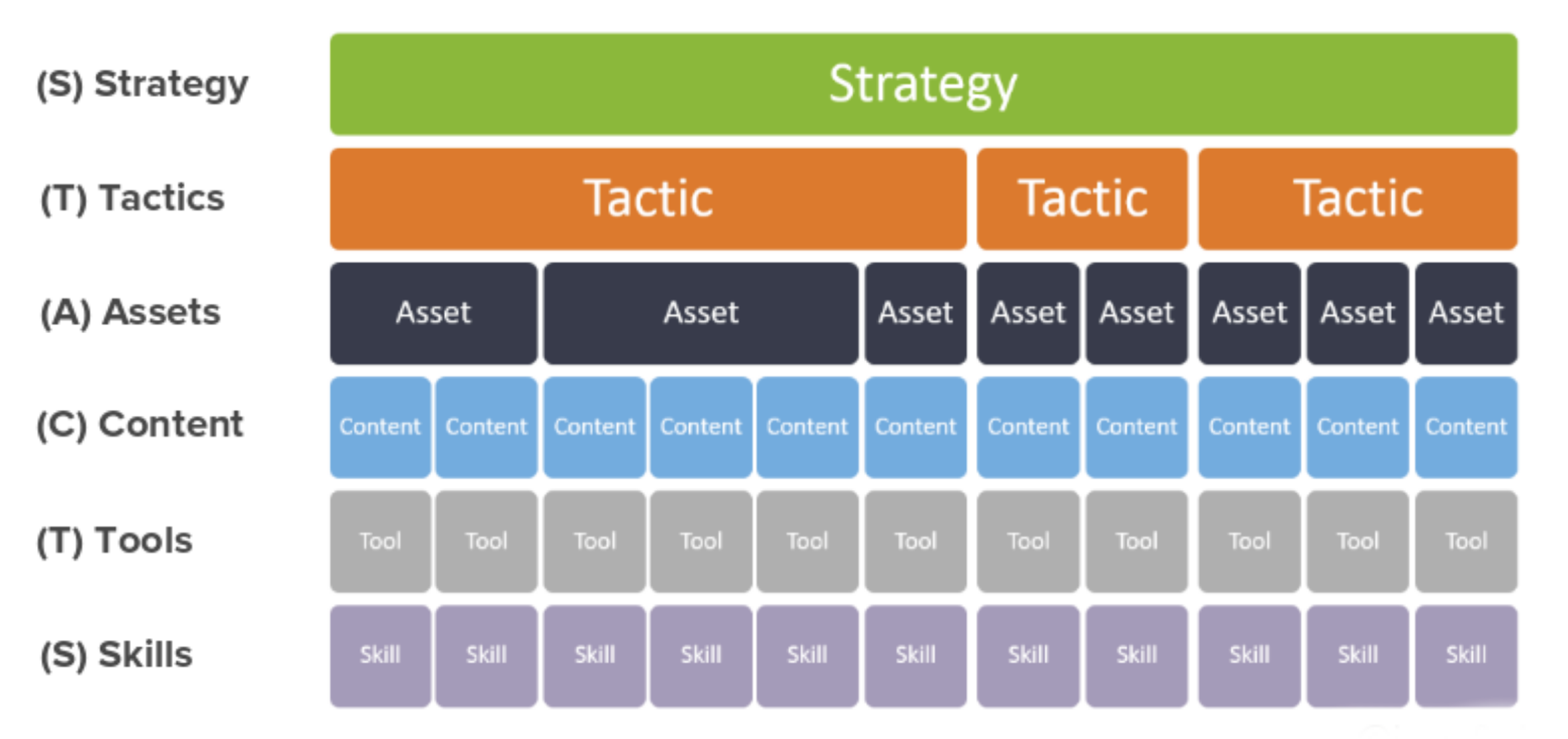
planning framework template

If you have designs and ambitions for your business, great – but those plans are only as impactful as our ability to bring them to life.

This framework takes an amorphous idea and helps give it structure. As you walk through the levels of detail, ranging from strategy to assets, content, tools, and skills; it prompts us to think through the detailed path we’ll take in order to launch this idea.

Here’s an example where we used this framework to launch a free online mini course:

One key takeaway I want to make sure you hear is that knowing exactly what needs to happen does not mean that you need to be the person who does everything.

Not everything that needs to be done needs to be done by you.

That’s actually one of my favorite reminders to give myself, so I’m happy to share it with you here.

It’s entirely possible that you will walk through this process and identify aspects of it where you are not equipped with the knowledge or skills (or appetite) to handle one of the requirements. That’s fine.

The goal of this planning tool isn’t to bury us with to-do tasks, it’s to illuminate the things that may have otherwise become stumbling blocks; so that we can make a plan (or find a connection) that helps them get done.

If you’re launching a project soon then give this framework a try and let us know how it goes.

And if you’d like a place to ask questions as you build, automate, and grow your business – then join us in the Monkeypod Membership community here.

The planning framework example in this video was drawn from a show-and-tell livestream we did where we broke down the detailed process we followed to launch the mini course – you can watch the full replay of that conversation here.

Avoid Email Jail: Expert Tips to Keep Your Messages Out of Spam

Avoid Email Jail: Expert Tips to Keep Your Messages Out of Spam

As business owners, we invest a lot of time and effort into crafting email copy that we hope will resonate with our audience, but it’s all moot if our messages never even make it to their inboxes.

Whether they’re rerouted to the dreaded spam folder or blocked entirely, landing in “Email Jail” can cause even the best campaigns to fizzle.

That’s why we were excited to sit down with Scott Hartley, author of Hit the Inbox: How to Avoid the Spam Folder and Grow Your Business with Email Marketing.

Scott joined us for a special guest interview to explain what’s really happening behind the scenes with your email deliverability—and what you can do to stay out of trouble with the big email providers like Google, Microsoft, and Yahoo.

What Exactly is “Email Jail”?

The major mailbox providers are cracking down on email marketers who don’t play by the rules. While most of us are familiar with the spam folder, you should also know that there’s a more severe penalty: emails being outright rejected without ever being delivered. Landing in “Email Jail” means your messages aren’t just going to junk—they’re being blocked completely.

How Do You End Up in Email Jail?

The top causes? High numbers of spam complaints and email bounces. The key is regular and diligent monitoring of your email performance, and audience engagement.

Even if people once opted in that doesn’t guarantee they still want to receive your emails, and sadly hitting “spam” is often easier than scrolling down to unsubscribe.

Email Jail Icon

Mailbox providers have a low threshhold for acceptable spam complaints—just one complaint for every 1,000 emails sent. Go beyond that, and you’re on their radar. If you hit three complaints per 1,000, you could be looking at serious trouble with your domain’s reputation.

The Power of List Hygiene

Okay, so we want to avoid spam complaints, right? How do we do that? Proper list hygiene.

In other words, stop sending emails to your entire list and get laser focused on those who are engaged. Regularly reviewing and cleaning up your list is essential to keeping your email campaigns healthy and your domain reputation intact.

This is a hard pill for most business owners to follow – we have invested time and money into building our list, so the idea of not taking full advantage of it seems counterintuitive (borderline offensive, even). But time and time again the data shows that the risks of emailing everyone just aren’t worth it.

A good rule is to only email people who have opened, clicked, or interacted with your messages in the last 90 days. And if someone hasn’t engaged in a while take steps to re-engage at 60 days or so, before they pass the 90-day mark.

Google Postmaster Tools: Your Best Friend

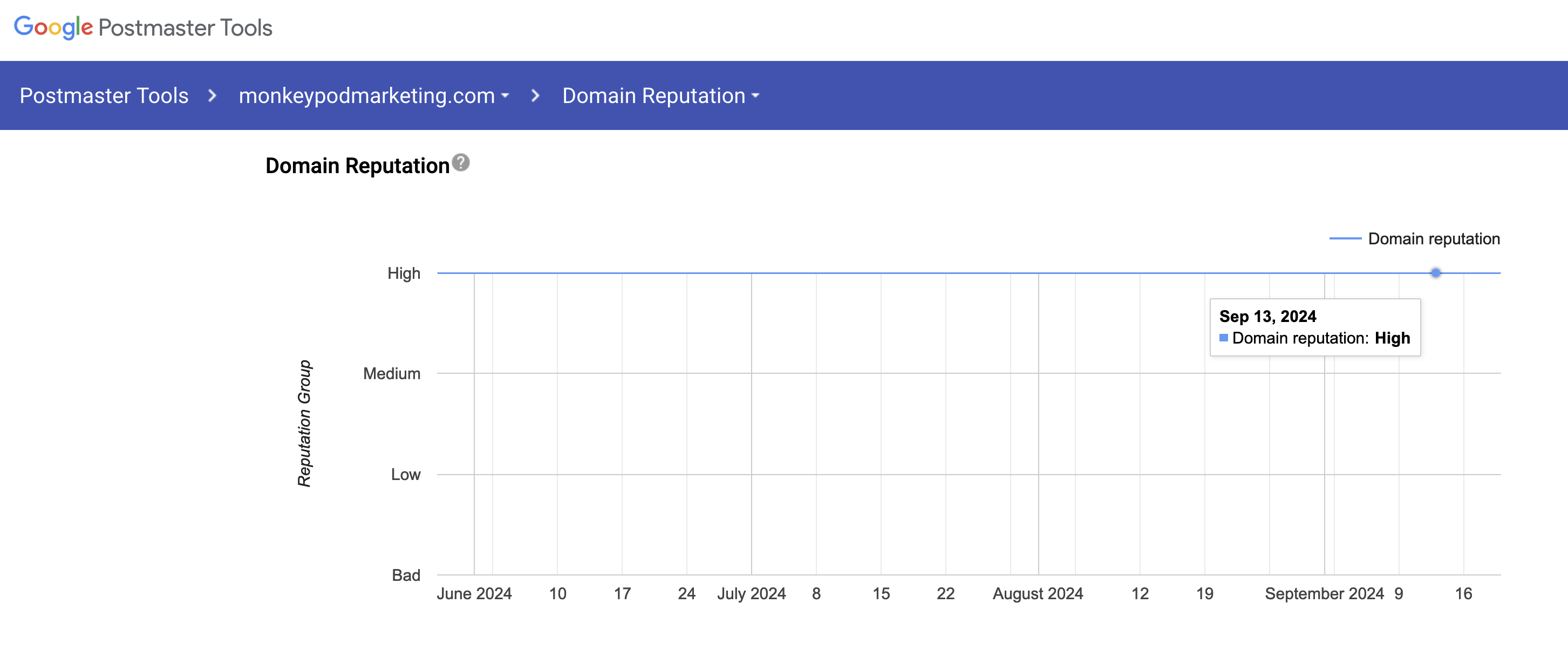
For those looking to stay proactive, we (and Scott) recommend using Google Postmaster Tools.

It’s a free service that gives you insight into your domain reputation, spam rates, and delivery errors—all of which help you spot potential problems before they escalate.

Google Postmaster Screenshot

By keeping an eye on the metrics and monitoring key indicators like open rates and bounce rates, you can make informed decisions that keep your email marketing efforts on track.

Final Thoughts

Email marketing is still one of the most powerful tools in our arsenal, but it’s only effective if our emails are actually reaching the inbox.

It may not be sexy, but taking the time to manage your list, watch your metrics, and follow best practices can help you avoid email jail, get more emails delivered and read, and maximize your ROI from your email efforts.

For more in-depth strategies on improving email deliverability and safeguarding from the risks of poor email list management check out Scott’s “Hit the Inbox” book:

Where do I learn more?

If you want a place to ask questions as you work on this, or any aspect of your business - join us in our private community. The OG Membership is a group of experts and DIYers who collaborate as we solve problems and tackle marketing automation opportunities every day.

The Hidden Email Deliverability Threat You Might Be Overlooking: DMARC Insights with Scott Hartley

The Hidden Email Deliverability Threat You Might Be Overlooking: DMARC Insights with Scott Hartley

When it comes to sending emails for our businesss, most people follow the basic instructions provided by their platforms (at least, you should).

Whether you use Keap, MailChimp, ActiveCampaign, or another service, you’ve likely set up the essential authentication records (SPF, DKIM, and DMARC). But too many businesses are still missing a critical step that leaves them vulnerable to hackers and spammers…

In my recent interview with Scott Hartley, email marketing and deliverability expert and author of Hit the Inbox: How to Avoid the Spam Folder & Grow Your Business with Email Marketing, we dove into the often-overlooked risks that DMARC (Domain-based Message Authentication, Reporting & Conformance) poses to your email reputation.

email stats photo

The Exploitable Gap in Your DMARC Setup

One of the biggest misconceptions is that setting up a DMARC record alone will protect your emails. Unfortunately, many businesses are vulnerable because they have it set up, but they’re not doing anything with that info.

The key here is to actively monitor your DMARC reports. (Trust me, I know how fun that sounds.)

DMARC is more than just a compliance measure—it offers valuable reporting that can alert you if unauthorized entities are sending emails from your domain. If you’re not monitoring your DMARC reports, hackers can spoof your domain, send spam emails, and damage your sender reputation without us even knowing.

Minimal Compliance Isn’t Enough

It’s kind of like buckling your seatbelt but placing it behind your back. Sure, you’re technically compliant, but it won’t protect you in an accident. Similarly, having a DMARC record without monitoring the reports leaves a wide-open window for spammers to exploit.

Compounding this issue is that many small businesses are easy targets for these bad actors because they don’t have time to deal with the technical nuances of email deliverability. While large companies often have teams actively monitoring their email systems, small businesses generally set up the basics and move on, which leaves us open to attacks that can harm their email reputation over time.

What can I do?

So what can we actually do, that’s the question right?

The key here is to not only enable DMARC reporting but also ensure that someone is regularly reviewing those reports. Services are available that can parse the complicated data into actionable insights, showing you whether unauthorized emails are being sent from your domain.

Here are a few actionable steps from Scott to tighten your email security:

  1. Set up DMARC reporting – If you don’t have this enabled, you won’t know if someone is spoofing your domain.
  2. Use a service to monitor reports – Parsing DMARC reports yourself can be challenging. Consider using a tool or service to convert this data into clear information.
  3. Find the right expert – Not every IT professional or managed service provider (MSP) understands email deliverability. Make sure you partner with someone experienced in DMARC reporting and email security.

We get it – Small businesses already face many challenges, and email deliverability might not always seem like a top priority. But ignoring DMARC monitoring could severely damage your ability to reach your audience. Scott offers expert services to help small businesses protect their email domains and improve deliverability.

If you’d like to learn more, check out his book Hit the Inbox: How to Avoid the Spam Folder & Grow Your Business with Email Marketing.

Where do I learn more?

If you want a place to ask questions as you work on this, or any aspect of your business - join us in our private community. The OG Membership is a group of experts and DIYers who collaborate as we solve problems and tackle marketing automation opportunities every day.

The Power of Showing Up

The Power of Showing Up

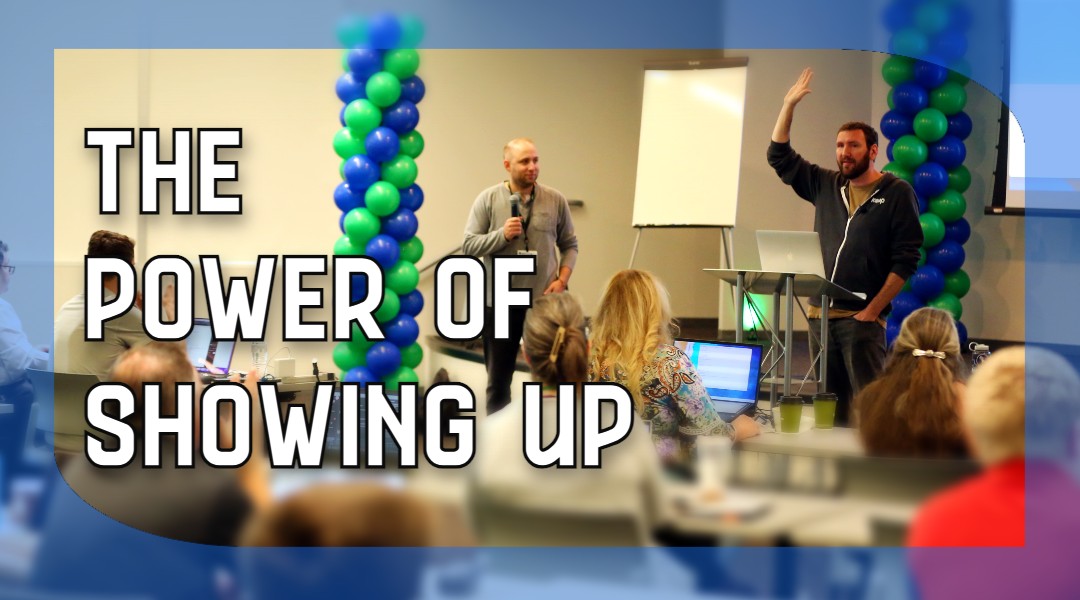
Recently I had the absolute pleasure of assisting the Keap Academy team as they hosted an intensive workshop. Keap users from near and far made the investment to show up for 2 full days of in-person, hands-on app and strategy training. As a Keap Certified Partner, they welcomed my presence so that that the attendee/teacher ratio was as low as possible. This was amazing, as many attendees got a lot of one-on-one face time with trainers and experts as they strategized and implemented.

Jade teaching at Automation Lab

As “normal” as this event was, to be honest I am still blown away weeks later. I often feel a rush of awe and appreciation after in-person events, but there’s more to it than that. I want to unpack and articulate why I constantly feel that way, and to turn it into a learning moment for us all.

Before I dive in, I want to be clear that I can prove there is a lesson and ROI after all. At the risk of sounding self-deprecating, as an automation consultant I can sometimes be the cobbler with no shoes. I often spend more energy on my clients´ businesses than my own (sound familiar?).

And yet, I find my consultancy to be booming despite not having put together many systems in place for myself. After a couple years of beating myself up over a lack of strategy, I realized I had accidentally been employing a strategy all along — this “show up” strategy.

When in a room full of Keap users, it never ceases to amaze me how varied and eclectic peoples´ strengths and expertises are. Some people are more creative than techie, some are both or neither. When it comes to the app itself, it is equally as fascinating to learn how people’s brains can easily or not-so-easily grasp the automation concepts and execution. I have met business owners with no formal education who can build complex automation systems, and I have met highly educated professionals who require extra time to learn the basics. This recent Keap Academy event was no different.

Jade and Walt

But you know what they all had in common? They showed up. Newbies and veterans sat side-by-side to learn and build automation.

Here’s the kicker, though. The real value they all received at that event had, in my opinion, nothing to do with software. It was the cumulative energy and ideas they got from just being there alongside their peers. They could have watched some of the excellent Keap Academy courses or subscribed to the Monkeypod YouTube Channel, and they would have learned a lot (I still do).

But a limitation there is that they’d be learning from a single perspective, no matter how knowledgeable that perspective might be. The beauty and opportunity lies in the diversity of knowledge, experiences, and expertise combined. (Another example of the whole being greater than the sum of its parts, I think.)

addison automation lab

You see, the blessing and curse of automation and technology is that there are so many ways to skin the cat. Even the simplest of tactics could take shape in dozens of ways. For example, something as straightforward as “landing page collects contact info and then delivers a free pdf lead magnet via email” has so many variations that we couldn’t possibly say “just build it like this” and it would work for everyone perfectly.

To some, this is a challenge, for others – like the kind of people who “show up” – it is an opportunity.

Here lies the lesson: You’ll never know what other possibilities are out there unless you mingle with people who have tried it other ways.

None of us know our own blind spots – that’s kind of the definition of a blind spot.

As I write this today is my 5 year anniversary of joining Monkeypod Marketingˋs OG Membership. Many of you know me as the Community Manager there, but before that I was a paying member.

This is just as true today as it was 5 years ago: I get more value from other people’s questions and ideas than from any question or idea I could have thought to ask. It’s not what you know, it’s what you don’t know.. yet.

Maybe more to the point, it’s WHO you know. If I didn’t invest in myself to have the privilege of sharing space with other creative and smart entrepreneurs and experts, I wouldn’t know half of the cool strategies and tricks that I do.

When I signed up, my company wouldn’t cover it so I paid for it out of pocket – I didn’t know what I’d learn, I just knew I was hungry to be around the people from whom I COULD learn.

sarah watz at automation lab

Even when it comes to tactics and best practices that are too advanced for me or even out of my wheelhouse altogether, I enjoy being around the people who can do the things that I can’t. I surely will need those people eventually.

My partner Brian, a serial entrepreneur, often says that you’re the average of the people you spend time with. What I took from this was to find as many rooms as I could where I was the dumbest one there.

Admittedly, that’s hyperbole. But the lesson is to make sure you’re surrounded by people who know things you don’t – it will naturally start to illuminate and eradicate your blind spots.

jade teaching in theater

So I find them, and I show up, again and again. If you’re searching for a more specific action item, then I challenge you to come to the Let’s Grow Summit, and any and all other events you can swing. Better yet, come find me there so we can hang out and share ideas.

Those Keap Academy event attendees likely think they were fortunate that I was there to share ideas and teach app implementation. But I assure you, I got the better end of the deal.