Customer Journey Mapping

Customer Journey Mapping

The moment that is perhaps the lowest common denominator for every business is the purchase.
It’s practically the one thing that every business has in common, regardless of size, model, or industry.

The thing that I think differentiates the memorable brands from the ones we forget is everything that comes before and after the purchase.

At the end of the day the purchase, a defining milestone to be sure, is still just a singular moment in the customer’s journey.

The trick is to train yourself to see that exchange in the context of Lifecycle Marketing.

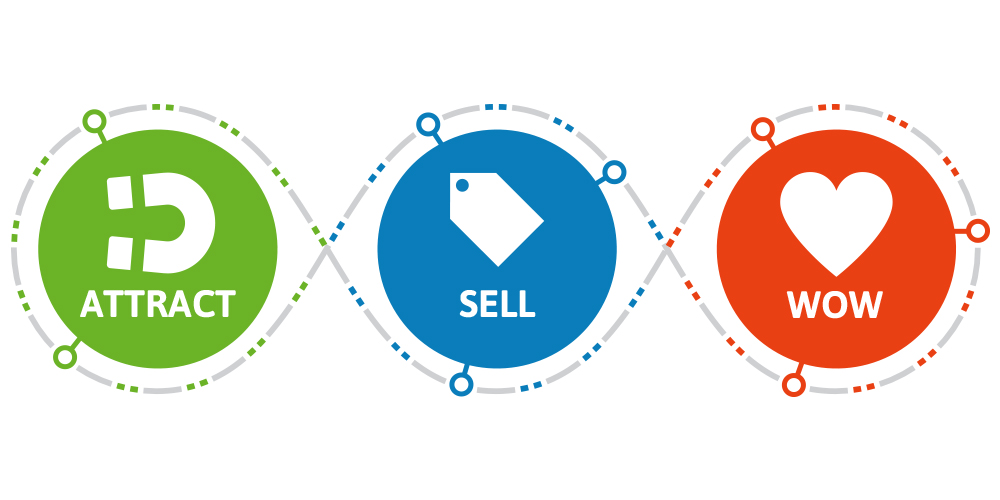
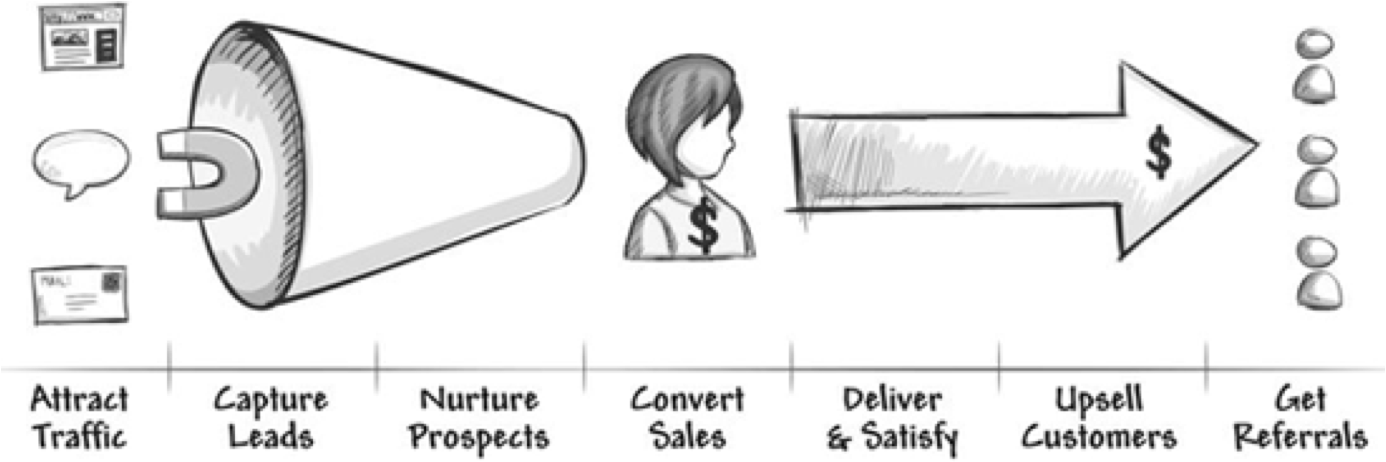
Lifecycle marketing, if you aren’t familiar, is a framework that helps you visualize and plan the customer’s journey. At a super high level, it can be broken down three high level stages.

Keap calls them Attract, Sell, and Wow.
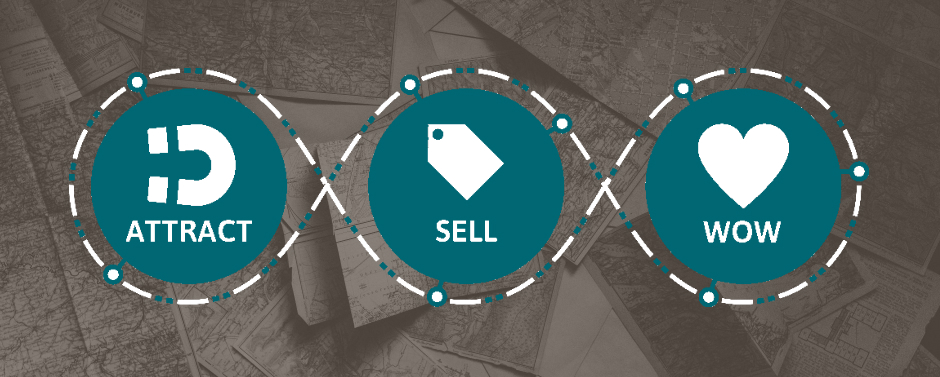
I have them labeled below as Opt-In. Purchase. Wow.

In a perfect world a contact would go straight from signing up to purchasing.

But the truth is it’s rarely that simple, right?

So I like to dig in a little deeper, and break down the journey into more granular stages.

Now, we know where the purchase is – my recommended best practice is to start from there and work out in either direction.

(Check out a video demo of this conversation)

For example, we know that AFTER they buy, they’re going to get the thing they asked for – or, they should. If you buy a course from Monkeypod, within moments you’re going to get an email with instructions for how to access that thing.

I’m not saying that fulfillment needs to happen in the blink of an eye, but it should be a process that you’ve planned, analyzed, and refined.

Now, it’d be great if customers just appeared with their credit card in hand and they were ready to buy, but often times they start by opting in for something free – a lead magnet of some sort.

And once they sign up, obviously we need to give them the thing they asked for – deliver the ebook, or schedule their consultation, etc.

And here’s a step that plenty of people skip – what happens if you deliver that thing and they’re still not ready to sign up?

Too many businesses give up on those folks, or let them accidentally slip between the cracks.

Designing a nurture process is, in my opinion, the single most important thing that businesses can to improve conversion without spending an additional penny.

(Grab my nurture Ebook here)

Now, the next stage we’re going to dig into is part of the post purchase journey – ask yourself “what happens AFTER someone becomes a client?”

I feel like fulfilling on their purchase is the bare minimum – what can you add to this post purchase section that sets your business apart? How can you create an experience that actually wows the customer?

They say that it’s somewhere between six and a billion times easier to sell to someone who has already bought from you, but for some reason marketers seem to have a disproportionate focus on generating new leads – when they could focusing on finding ways to further serve the customers whose trust they’ve already earned.

Yes, this could be a series of upsells, or crosssells – or some strategic product ascension path; but it doesn’t have to be.

It could also be an automated process that recruits satisfied customers to join your partner program, where can become advocates for your brand.

The point here is to have something planned for them.

You don’t want to swipe someone’s credit card and then just let them drift off into cyberspace silence.

Now, the final stage I focus on is actually the first chronologically – traffic.

Yes, traffic is important – there’s no doubt about that.

But the reason I save it for last is because you won’t be maximizing your advertising budget until you have ironed out and optimized the rest of the journey.

Think of it this way – if the goal is to fill your leaky bucket, it doesn’t make sense to turn up the faucet until you’ve plugged the holes.

Here, check it out – I’ll model this conversation using an automated webinar of mine:

If you’re like me then it might feel a little weird to be scripting out all of these things for your customer – like, there are a lot of assumptions in there, right?

When I feel that way I try and remind myself that this isn’t about forcing our prospects to do anything, after all – they’re in the drivers seat.

It’s more about anticipating what they might do, and helping create a path that makes their experience as seamless as possible.

Your customers are going to have a journey either way – so we may as well plan for it.

Lifecycle Marketing is a framework that helps you think through every stage of the customer’s journey.

It gives you the opportunity to plan for what you want each customer to experience at each milestone, and what the transitions from one stage to the next will look like.

Great, so now what?

All this is great, but theory will only take you so far – that’s fair.

So after you’ve mapped out what you want to have happen in each of the stages – then you need to figure the path to turn that plan into reality.

This Action Planning Framework will help with that.
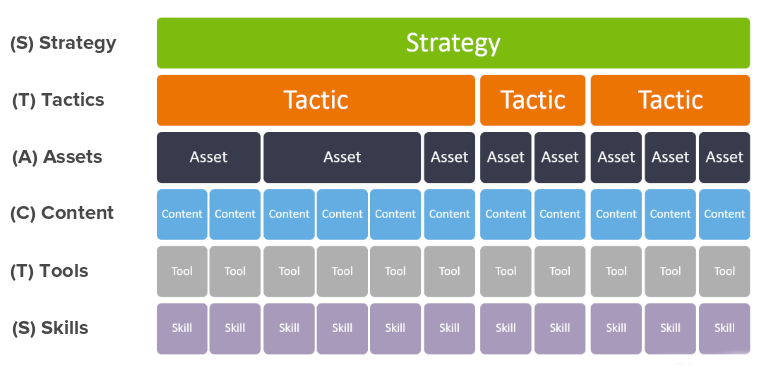
For example – if your Opt-In is a live webinar, that’s fine – but to launch a webinar you need:

A Registration Page (with copy and graphics), Webinar Software/Platform, Content for the Webinar

If you’re going to send traffic to that webinar then you need:

Graphic/Video Assets for Ads, Advertise Platform (Facebook, Twitter, YouTube)

And if the webinar is going to encourage people to Purchase something, then you need:

Sales Page, Merchant Gateway

The conversation on and on – and what you end up with is a recipe for the experience you’ve designed.
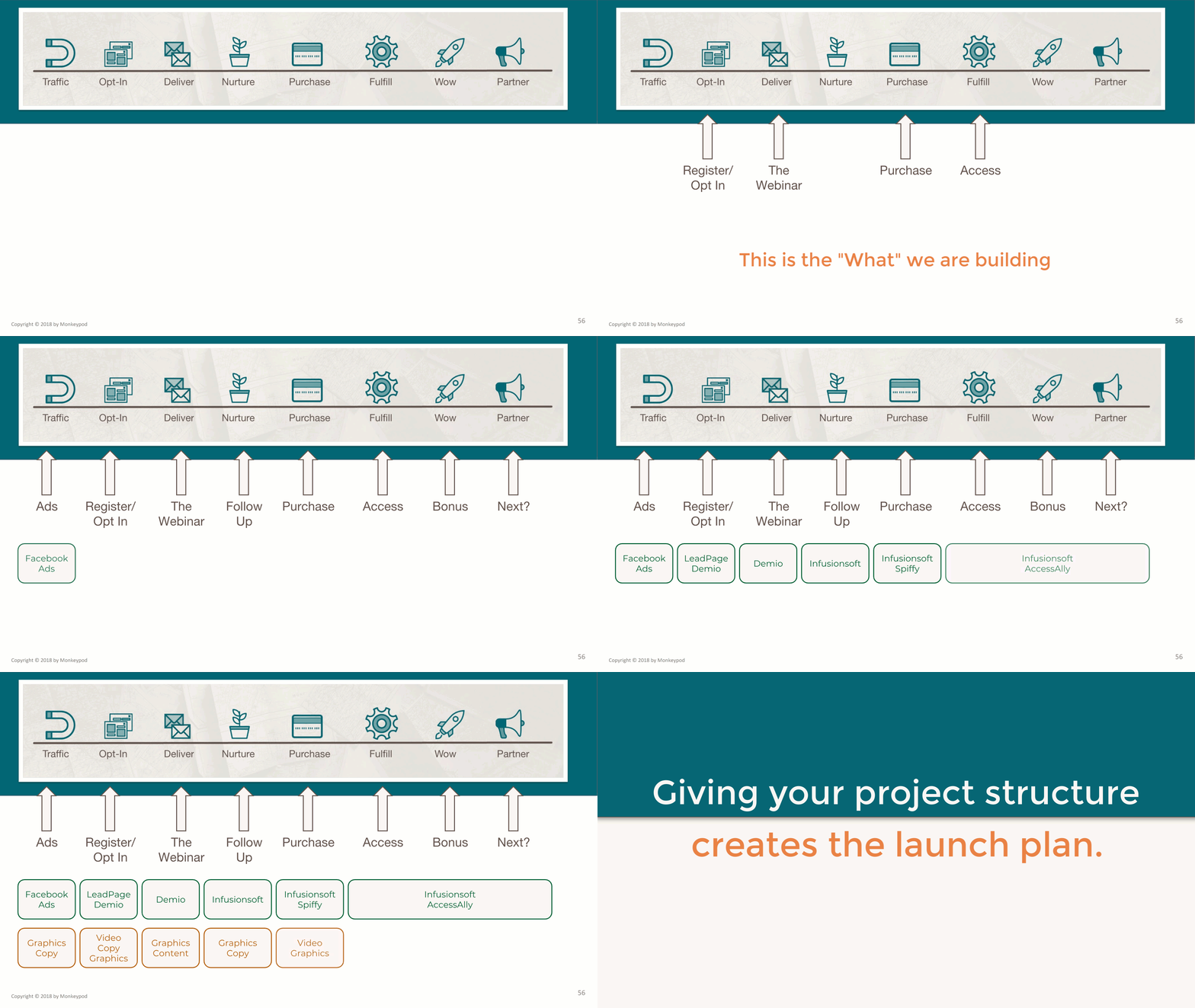
Finally. That’s it, right?

Not quite.

In the video above I’ve mapped out the experience surrounding an Automated Webinar I’ve launched, but the truth is that this is just one of a number of journeys I’ve created for my customers.

There are customer journeys all throughout our businesses, and they range from the very simple to the most sophisticated – the trick is to get clear on what that customer journey looks like today, and then use the Lifecycle Marketing framework to identify areas that have been overlooked, or where it could be improved.

Customer Journey Mapping Resources

Here’s a great case study showcasing how we used Keap at every step of the customer journey for the African Leadership University.

If you’d like to see how Keap’s campaign builder can support a Lifecycle Marketing strategy, then check out the LCM: Real Life course – it walks through the high level concepts of Lifecycle Marketing and then shows you how to support them using the automation in the campaign builder (for Keap Pro, Keap Max, or Max Classic – which was formerly Infusionsoft).

And if you want unpack more of the principles of Customer Journey Mapping, here’s a great blog post from my friends over at the Automation Ninjas agency.

Free Lifecycle Marketing Course

If you are interested in learning more about Lifecycle Marketing, and how to use it to create calm, organized, and predictable growth for your business - then spend some time with the free Lifecycle Marketing video series from FUEL.
Keap  Facebook Custom Audiences

Keap <> Facebook Custom Audiences

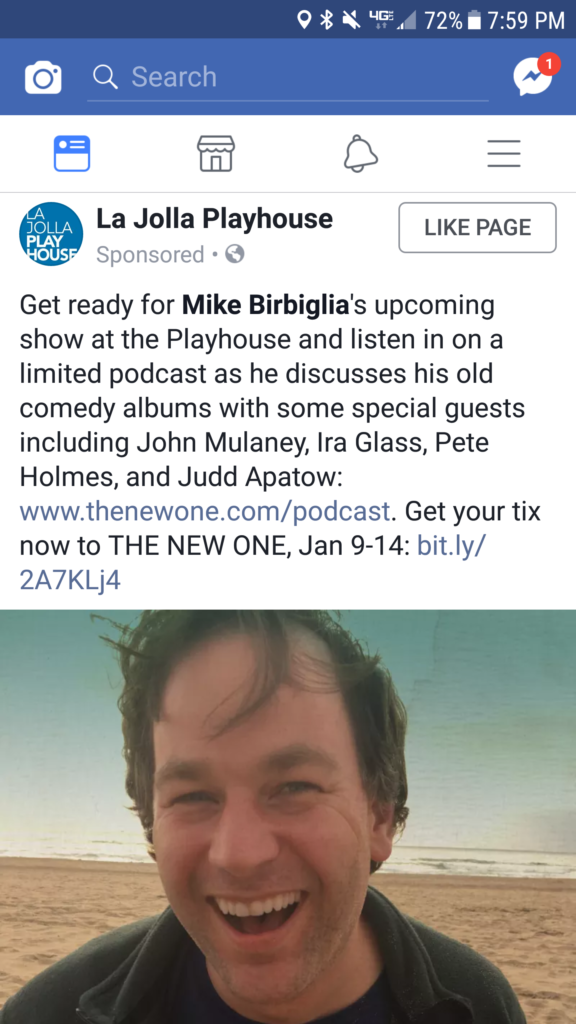
So the other day I was looking at buying tickets for an upcoming Mike Birbiglia performance at the La Jolla Playhouse, and around the same time, I started seeing Facebook Ads promoting the show.

No big deal, I’m being re-targeted, right?

I think most of us are familiar with that concept – it’s when you visit a web page, and then ads like this one follow you around the internet (in this case, around Facebook).

So, I bought my tickets for the show, and the very next day I saw a new ad from the La Jolla Playhouse.

“Get ready for…”

I read it and the marketer in me immediately starting thinking “Cool, they must have one set of ads promoting the show, and then once you buy tickets, you start seeing this other set to help build excitement and promote his podcast.”

Once I got to the closing CTA and noticed it was still asking me to buy tickets, I was disappointed to realize they weren’t running a different set of ads to the people who already bought.

But they could be.

I don’t know what systems they use to collect and process payments, so this might not work for everyone; but if you use Keap and you advertise on Facebook, then this can work for you.

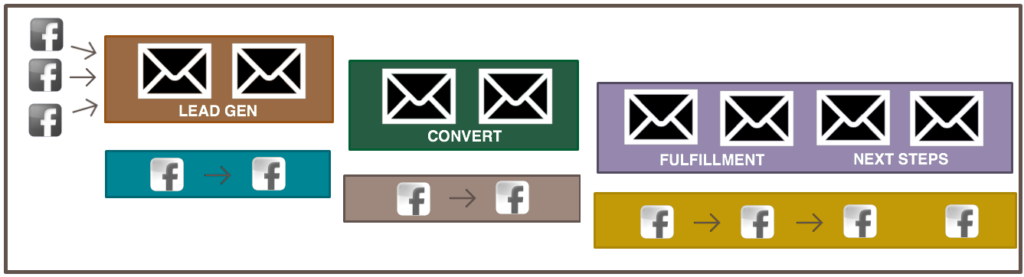
Think about your perfect customer journey – it might look something like this:

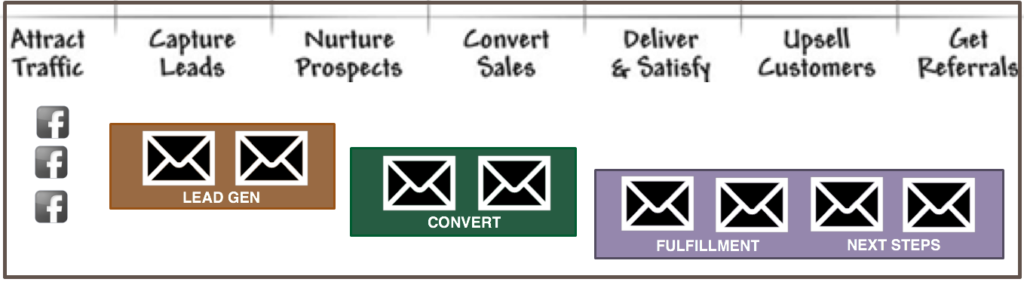
You drive traffic to some sort of opt-in, you deliver on your lead magnet, provide value, build rapport, convert prospects to customers, fulfill on your products and services, and then collect testimonials, ascend, repeat, etc – right?

And so if this is the progression we want people to take, the path we hope they’ll follow, what happens if they don’t?

What’s our safety net if they don’t do what we want them to do. What happens to the people who stall out?

The most common answer, especially with Keap, is email. We can use tactics like the Infusionsoft Nudge, or Abandon Cart campaigns as contingency plans.

And it works, I use both of those successfully in my own business.

But email is just one channel of communication – and for some audiences, or industries, it’s not the most effective channel.

So the question becomes “What channels, outside of email, could we use to help our prospects navigate this journey?”

And there are many, SMS solutions are as popular as ever, Facebook Messenger Bots are becoming more and more mainsteam; and, Facebook Ads.

The concept is relatively simple. At the highest level we’re talking about using Facebook Ads to reinforce whatever message we’re delivering to the customer at the point in their journey we’re at.

Our ads can align with our funnel and help promote or suggest whatever the next logical action would be.

The shift for most people is that we’ve been trained to think about Facebook Ads as tools for Lead Generation, or even conversion tools.

But if we shed those imaginary rules, and we think about Facebook Ads as simply another way to deliver a message, using them to echo or emphasize what we’re already saying starts to make a lot of sense.

How does it work?

In order for this to work, Facebook needs to know where people are in your funnel. You’ll want to connect your Facebook Ads account to Keap so that you can automatically sync contacts through into custom audiences.

There are a few ways to do this, but basically it’d mean identifying segments of the customer journey where you could use a Facebook Ad to improve to enhance the existing experience your prospects have.

What tools do I need?

There are a few options for tools to connect your Keap account and your Facebook Account. I’m sure there are several others, but one we use is PlusThis.

PlusThis offers a tool called Facebook Audience Triggers – which is simple to set up, and really flexible. The tool allow you to add or remove contacts from a Facebook Custom Audience by running an HTTP post as a step in any of your automations.

If you don’t want to use PlusThis, you can also look at Zapier or MyFusionHelper as alternatives. With any of these options you could set up Ad sets to target a particular audience and know that your contacts will only see that add when it’s relevant for them, because they’re only part of the audience when it makes sense for them.

What else?

Listen, I’m no FacebookAds expert – that’s for sure. But this concept has been swirling around the ecosystem for a few years now, and it’s worth a look if you run a lot of Facebook Ads, or deal with a large volume of traffic.

This CAN work for smaller businesses and lists as well, but I’ve found that the ability to match contacts from your database to their Facebook profile is only about 65% accurate. So, if you’ve got a list of 10000 in Keap, you can expect it to find about 6500 for your corresponding Facebook audience.

I won’t make assumptions about your business, but to me this feels like something that everyone COULD be doing in one way or another (even you La Jolla Playhouse).

If you’ve got a different spin on this, questions about it, or your own success story to share, please feel free to do so below!

Lifecycle Marketing Perspectives: Part 3

Lifecycle Marketing Perspectives: Part 3

Head ShotThis is now the third post in the Lifecycle Marketing Perspectives series, the first one is right here if you’d like to catch up.

But here’s the gist of it, Lifecycle Marketing is invaluable, and every small business should map out and implement a Lifecycle Marketing strategy. At least, that’s how I feel about it.

As a consultant and trainer during my time at Infusionsoft, I noticed there was a trend among the most successful small businesses I worked with, nearly every time they had a crystal clear Lifecycle Marketing strategy, and more often than not, we were using automation to execute it.

Today I’ve got some insights from Kevin Mogavero. Kevin, who is a fellow entrepreneur and Infusionsoft Partner, was a colleague of mine at Infusionsoft and is an absolute small business rockstar; and was kind enough to answer a few quick questions about LCM and Small Business.


GJ: Can you briefly explain why lifecycle marketing matters to small businesses?

KM: It’s a great tool to deliberately think about what you need to do in every step of your customer’s lifecycle in your business.  Everyone business has to go though each of those steps, and anyone of them (whether you refer to the 3 step model or the 7 step model) is a place that you can really differentiate themselves.  Most people don’t ever stop and really think of these business processes in these individual steps, they just kind of mush it all together in their heads.  Putting it down on paper and thinking about each individual step makes things flow a lot smoother

GJ: What is the hardest part about lifecycle marketing?

KM: What I’ve found to be the hardest part for most people is creating content for every part.  Most people are pretty strong one area, but weak in another, so they either leave it out all together or they leave lots of room for improvement.

LCM PNG_ClearBackground

GJ: What do most people misunderstand about lifecycle marketing?

KM: What do they misunderstand? I think that Lifecycle Marketing isn’t something you “do” it’s something that is always happening.  Customers/Prospects are always going through the steps of the lifecycle, whether the business has something set up at each stage or not.  If there is nothing set up at any given step, opportunities are being lost.

If I could choose a second thing, it’d be that doesn’t work well unless you know who your audience is.  If your perfect customer definition includes the word “Anyone who…” then Lifecycle marketing probably isn’t working for you as well as it could be.

GJ: Talk about the relationship between Lifecycle Marketing and Infusionsoft (the company or the software):

KM: Once the business does its part in identifying its target market and driving traffic, infusionsoft is designed to bring people though the rest of the customer lifecycle in the easiest way invented for small business.  It’s not perfect, and it does take time to learn, but you won’t find another system that is more complete and easier to use, guaranteed.

GJ: Why are you an expert on Lifecycle Marketing?

KM: I’ve worked hundreds of businesses through the Lifecycle Marketing model.  My job is to make using the Lifecycle Marketing tool, easy for the business.  Each business and each user has their own peculiarities.  For example, some just don’t get the concept of Note Templates, or just refuse to use them.  Although in certain cases, note templates note templates might be the “best” tool to use for a process, if the user just doesn’t like it, and routinely forgets to use it, then it’s not really the “best” tool for the job for that user.  So, I find what the user will do, and set it up that way.  My goal is to make it easy for you, not to make you an infusionsoft expert.


If you’d like to connect with Kevin directly, feel free to use the info below, or leave a comment:

Name: Kevin Mogavero
Company: KRM Development
Website: KRMTrainingPlus.com
LinkedIn: Kevin Mogavero

[rad_rapidology_inline optin_id=optin_4]

Free Lifecycle Marketing Course

If you are interested in learning more about Lifecycle Marketing, and how to use it to create calm, organized, and predictable growth for your business - then spend some time with the free Lifecycle Marketing video series from FUEL.
Lead Nurture Myth #3

Lead Nurture Myth #3

I think the first and second posts I wrote dispelling these myths probably gave you plenty of context, but in case you haven’t read them, or have forgotten: Nurture is really, really important.

Nurture Myth #3: Nurture is something you do for your business.

Lead NurtureSometimes this one takes a little while to sink in, but when it does, the shift it can cause is quite powerful. You see, most people build a nurture process to stay in touch with their prospects – and why do they want to stay in touch with their prospects? Well, probably because they want to make more sales. Or, because they want to keep that top-of-mind awareness. So what’s wrong with this, we all want more sales, right?

Of course we do. And there’s nothing wrong with it on it’s own. The reason I’m calling this out is because driving more sales is only part of what a nurture process should do. It’s only part of the purpose of creating a nurture funnel.

The other half of the equation is benefiting the prospect. That’s right, your nurture process should be something that the prospect derives value from. If you are emailing your prospects regularly and it’s self-serving, they’re going to be able to see right through it, and truthfully, you could be doing your brand a disservice.

Email InboxLook at your own inbox, and look at the way you interact with emails – which ones do you dismiss right away? Which ones do you click on first? Usually there’s a theme among the emails that we open and read:

  1. They’re from people we know and like.
  2. They’re about topics that we are interested in.
  3. They contain information that we need, or that we want.
  4. They’re fun and/or engaging.

You may not be able to tackle all of these bullet points in every single email, but each email you send should touch on at least one of those themes.

If you’re looking back at your nurture strategy (and I would recommend it) and you’re wondering how you can spruce things up a bit, I’ve got a few  recommendations for you. Pick one or a all of these and go to work:

  1. Be convenient.
    Your nurture can actually be really well received if it shows up at a time that is convenient for the recipient. I get a post card from my dentist every 6 months or so reminding me that it’s time to come in for a cleaning. If your business operates seasonally, or has any sort of service that people need more than once – think about how frequently they need it, and remind them when it’s time to purchase again. There’s a way to handle this that isn’t intrusive and that your customers will actually grow to appreciate (Just ask Jessica Maes).
  2. Be informative.
    Nurture at it’s core is just staying in touch with your prospects – but it’s really easy to forget why you’re staying in touch with them. The reality is that you should be building a relationship, and earning their trust. One method for doing this is by making them better every single time you show up. You can do this by delivering education through tips, videos, blog posts, etc.
  3. Be useful.
    As with the second bullet point, you want to show up with something that they need. This goes beyond just information, it could also be a resource. People love ebooks, best practices, or checklists. Think about the things that you learned while becoming an expert in your field, and find nuggets that you can package up to demonstrate your expertise, while also being useful to the prospect.Be Valuable

It all boils down to value. I’ll also let you in on a little secret – if every time you show up in my inbox you make my life better, then I’m going to want you to show up more and more often. Your prospects will too.

I’ve talked with plenty of people who are worried about spamming their list, or they don’t want to email too regularly because they don’t want to annoy people. I’m gonna call BS on that one.

If you’re worried about your prospects marking you as spam, or about annoying them, then it probably means you aren’t very confident in the value you’re providing. I’m a big email permission advocate, but I don’t think I’ve ever said “Wow, what a valuable email. Whelp, into the spam folder it goes.”

So, that’s Nurture Myth #3 – design your nurture funnel with delivering value as your primary focus. You might be surprised at how powerful this can be. If you use Infusionsoft and you’re curious how to design a nurture process, or where it fits in your Lifecycle Marketing strategy, then I’d recommend the step-by-step formula laid out in my LCM: Real Life course.

Lifecycle Marketing Perspectives: Part 2

Lifecycle Marketing Perspectives: Part 2

ScottRichinsIn case you missed the first part of this series, I’m a huge advocate for using Lifecycle Marketing in all aspects of your business. You can check out the concepts here of Lifecycle Marketing on the Infusionsoft website, but basically it involves planning an intentional progression for each and every lead as they transition from prospect, to customer, to raving brand advocate.

I’ve been collecting brief perspectives from Lifecycle Marketing experts, and it’s been really insightful to hear how different people approach the concept. The following insights are from Scott Richins. Scott, in addition to being a friend of mine, was formerly the host of the Infusionsoft Mastermind calls and also of Infusionsoft University (he actually trained me).


GJ: Can you briefly explain why lifecycle marketing matters to small businesses?

SR: Lifecycle marketing gives businesses a holistic framework within which they can build their businesses. Many times customers don’t know what they don’t know, so lifecycle marketing gives them a set of benchmarks – a progression to follow – to ensure they aren’t leaving gaps in their customer experience.

GJ: What is the hardest part about lifecycle marketing?

SR: The hardest part is generally anything that isn’t front end of the funnel. Lead generation is what everyone wants to focus on; it helps bring in more money in a short period of time. However, a company’s long term success is often times based on the experience that the company’s customers have after they have made a purchase. (Tweet that)

Focus on your customer experience, after they decide to buy, and maximizing that. Look at it as an investment in your marketing.

GJ: What do most people misunderstand about lifecycle marketing?

SR: Lifecycle marketing is not typically best implemented from beginning to end. If you launch a great attract campaign but you have no way of following up and educating your prospects or of completing a transaction with them, then you may start strong but you’ll sputter shortly after launch.

I recommend you start closest to the cash. You likely already have some leads coming in, so start converting more of those leads into customer first. Get an offer campaign in place. Then turn immediately to the Wow stage to give those customers a memorable experience. Those are the most important two to get into place, because any leads that you bring in after that will receive a strong offer and excellent fulfillment.

After that, you’ll either implement a referral campaign (which is really just another form of lead generation), or shift back upstream to lead capture and education. And when you get version 1 done, go back and level up each area.

LCM PNG_ClearBackground

GJ: Talk about the relationship between Lifecycle Marketing and Infusionsoft (the company or the software):

SR: Lifecycle marketing is the synthesis of the tens of thousands of hours of learnings that have come from Infusionsoft (the company) helping tens of thousands of small businesses grow their businesses. And Infusionsoft (the software) is the best tool to use to implement lifecycle marketing in a business. Lifecycle marketing is all about shifting your messaging based on the behavior of your customers, and the campaign builder is the easiest, most powerful way to build behavior based marketing automation.

GJ: Why are you an expert on Lifecycle Marketing?

SR: I’ve had the opportunity to work with thousands of small businesses to help them implement lifecycle marketing into their businesses. Since 2011, I have either been consulting or training Infusionsoft customers around the world on how to apply lifecycle marketing principles into their business. My expertise in business process mapping lead me to be a part of the team that designed the campaign builder, after which I began to teach lifecycle marketing through various Infusionsoft training programs – Infusionsoft University, Virtual Academy, and Mastermind Webinar series.

If you’d like to get in touch with Scott, or have questions about anything in this post, feel free to comment below or use the details provided:

Name: Scott Richins
Company: Infusionsoft
Website: www.Infusionsoft.com
Twitter Handle: @ScottRichins

[rad_rapidology_inline optin_id=”optin_4″]

Free Lifecycle Marketing Course

If you are interested in learning more about Lifecycle Marketing, and how to use it to create calm, organized, and predictable growth for your business - then spend some time with the free Lifecycle Marketing video series from FUEL.
Lifecycle Marketing Perspectives: Part 1

Lifecycle Marketing Perspectives: Part 1

As you probably have gathered, I’m a huge advocate for using Lifecycle Marketing in all aspects of your business. If you aren’t familiar with Lifecycle Marketing(LCM), you can check out the concepts here in the free course from FUEL.

As an Infusionsoft consultant, and later as a trainer, it was ingrained in me over and over, not just by Infusionsoft touting it, but by witnessing the genuine impact it has and results it consistently creates. (Sidenote, until today I thought it was spelled “engrained”)

In fact, I believe so firmly in the concept of Lifecycle Marketing that the second course I created under the Monkeypod brand was LCM: Real Life, all about helping small businesses take their Lifecycle Marketing strategy and execute it in real life.

Anyway, over the last few months I’ve been collecting perspectives from Lifecycle Marketing experts, and I wanted to share them here. The following insights are from Justin MacDonald, close friend of mine, Adam Lavine doppleganger, current Infusionsoft employee, and fellow entrepreneur.


LCM-Logo

GJ: Can you briefly explain why lifecycle marketing matters to small businesses?

JM: Lifecycle Marketing matters to small business because it provides a clear blueprint of your existing business and where you should invest in your sales, marketing, and fulfillment to improve and grow. It takes the guess work out of what you should be doing.

It matters because too many small businesses know that this stuff is important, but they forget to tie it all together. They end up creating a disjointed customer experience that won’t scale.

GJ: What is the hardest part about LCM?

JM: LCM creates the “why” and then the “what” but doesn’t address the “how”. This is the difficult part — translating “what” you should do next or better in your business into “how” you can best execute it.

GJ: What do most people misunderstand about LCM?

JM: I think the biggest mistake people make regarding Lifecycle Marketing is not actually using it, meaning, not using ALL of it. It is a lifecycle. You have to prioritize what to execute first, of course, but it is an entire system that is effective when leveraged in its entirety. You don’t minor in LCM, you major in it. (Tweet that)

That, and also nurture. Not enough people focus on building a relationship with their potential customers.

GJ: Talk about the relationship between Lifecycle Marketing and Infusionsoft (the company or the software):

JM: LCM is the strategy, Infusionsoft is the tool that best enables the execution of that strategy. The Lifecycle Marketing concepts hold true for every single business, and there are other tools that can help facilitate it, but few that do it as elegantly and comprehensively as Infusionsoft can.

GJ: Why are you an LCM expert?

JM: Well, Greg asked for my perspective, and since he’s and expert on Lifecycle Marketing…

I suppose other reasons might include personally using LCM and Infusionsoft to grow my own business 6x in 3 years; serving hundreds of small businesses through LCM consulting and implementation, designing Infusionsoft services and events that serve thousands of small businesses through LCM consulting and implementation, and then of course, mostly because of Greg’s Beard.


If you’d like to get in touch with Justin, or have questions about anything in this post, feel free to comment below or use the details provided:

Name: Justin “Coach Mac” MacDonald
Company: Authority Football
Website: www.Authorityfootball.com
Twitter Handle: @Jmacfusion

[rad_rapidology_inline optin_id=”optin_4″]

Free Lifecycle Marketing Course

If you are interested in learning more about Lifecycle Marketing, and how to use it to create calm, organized, and predictable growth for your business - then spend some time with the free Lifecycle Marketing video series from FUEL.