Takeaway Lessons from T&C 2022
I used to spend a lot more of my time going to conferences. It is part of how I stay in the know on some of the latest trends and technologies. Lately, not so much.
But a couple weeks ago, I went back to my first in-person conference in almost three years and it reminded me why I have to do these things.
I found renewed motivation and excitement for what is going on in the industry.
I networked and talked with others who actually know what I do, understand my challenges, and can speak my language (My parents still think my job is made up…).
I have ideas flowing and my task list for my business, QBR, is growing.
So I wanted to share a few of the things I wrote down with you in case it sparks some ideas you need to jump on board with or get going for your business.

Trends
- Person focused– Just like me not being at a conference in several years, everyone is missing and craving some of the social and human interaction that is meaningful and real. The more you can add real human touch and emotion into your business, the more your audience can feel connected and relate to what you have going.
- Sales cycle is getting longer across the majority of industries. This means that people are still buying but they are taking longer to get to that decision. The best thing you can do for this is to make sure your customer journey is prepared for this.
Is your message clear and consistent from start to finish? Do you have lots of value and nurture prepared in their journey? (Here’s a great course if you want to revisit the process of planning out your customer journey.)
- Flip the funnel– You will still bring people into your list with a free offer, but you can ask for your big sales quicker, but only from those who are really ready to buy. This means you have to know your audience well and know if they are ready to buy. More than ever, you need to ask a qualifying question up front to see if they are your ideal customer and in the right mindset to buy. If they are, start by offering your higher priced product and then go lower.
If they aren’t ready to buy right now, give them lots of value until they are ready instead of offering them lower priced products first.
Content
- Email is still not dead and even making a comeback. But like everything else, you have to make it human and personal again. People are looking for real human touch behind everything.
Talk to your people and ask them before sales what their biggest challenge is right now?
You can automate things like sorting questions
“Are you more focused on X or Y right now?”
But then use that info – you can tailor their follow-up automation with dynamic content, and be ready for them to reply. You will need a real human to be able to answer any emails they send to keep those conversations going.
Keep them talking by asking them questions like, “Are you interested in…, and “Can you tell me more about…”
- AI content is here, and only getting more powerful – honestly, it is pretty freaking cool. No, it isn’t perfect, but it can make writing go much faster if you are person who doesn’t love content, but you still need content.Blogs and videos should be feeding your content machines. It has never been a secret that content has been a big part of business but making sure you are using all the cogs (your website, blogs, social media, YouTube, Reels, all of it!) to work together to work as machine and interlinking everything is what keeps the business going.
I know this can feel exhausting, but you don’t have to keep recreating new stuff. Find your pillar content and then repurpose it. And do it again and again.
And use the technology out there to help you – like this one for Keap users.

Social Media
- Video is here to stay, so be your beautiful, weird self! (advice I still regularly give myself, btw)
Short videos and reels are one of the most popular and predicted items from almost every session I went to. This means that if you haven’t looked at reels and YouTube for your business, it might be time to take another look.
- You will always be rewarded for using new features by the platform algorithm, so don’t be afraid to jump on and try new things-even if they don’t last.
- PPC prices are increasing.
- Organic social is harder than ever, and to gain traction with it, you must post…A LOT. Just keep that in mind if this is the strategy you are looking at for growth.
Design a plan you can stick to – what channels will you use? How often will you post? What types of content can you produce? Then put together a calendar that helps you stay with it.
Getting consistent with social media is a challenge for me – and for most people. But fighting intertia to get started is the hardest part, and the benefit is that once you’re in motion, the platforms reward your regular engagement, which helps you sustain the momentum.

Connections
I’ll also add that one of the most valuable aspects of any conference is the ability to connect with people – either friends you already know (but mostly see online), or meeting new people, who may turn into meaningful long-term relationships.
This part of the conference is generally a little less predictable (there isn’t as much of a planned itinerary) but to me it’s just as valuable. Even as someone who is generally introverted, I find the social aspect recharges me, and the conversations are often just as rich and valuable as what happens in the actual event breakout sessions.
If you are looking to implement any of these or need support in your business, reach out or book a discovery call, and I would be happy to see if we can help take something off your plate.
I also want to encourage you to challenge yourself to invest in yourself and your business again, especially if it has been a while.
Get going on that project that has been on the back burner. Get in a room with others who inspire you. Make a move!
Lessons learned from my first actual attempt at marketing myself
1) The Problem
2) The Epiphany
3) The Goal
4) The Plan
5) Tech Stack
6) Promo Strategy
7) The Struggle
8) The Results
9) The Lessons
Hi – if we haven’t met, I’m Jade, a Keap certified partner and the Monkeypod community manager.
And I have a confession: Until recently I’d never actually marketed myself.
What, what? I know, I know.. You’re probably thinking to yourself “Jade, a Keap marketer, has never attempted to market herself?”
Weird, right?

It’s true. I’ve been a relationship-based freelancer for over 2 years now, and have never done any traditional marketing for myself – only for my clients.
“What did you market, then?” you may ask.
Great question. As most good ideas do, it all started with a problem that desperately needed a solution.
The Problem
Have you ever gotten random cold DMs from gurus or services that are just straight-up slimy?
Have you ever seen some app or guru claiming that their way is the way, and if you just act like them and follow their guide then you’ll be a millionaire?
Have you ever seen a marketing fad come around that everyone adopted too quickly and sloppily, only for it to turn unpopular as soon as you blink?
We’ve all seen that crap.
I think it took so long to bother me because, as a business owner, I grew up around Greg and the Keap community where that yucky stuff just doesn’t fly. I’ll even go so far as to say that I took the authenticity and goodness all around me for granted.
As I grew and networked outside of the Keap family, I saw more and more of the yuck.
And I could clearly see that a lot of other entrepreneurs felt like I did – we were frustrated; and had a growing distrust in the marketing industry as a whole.
The Epiphany
Near the end of 2019 I was at an enormous entrepreneur marketing event that was unfortunately chock full of those “me me me” type gurus, and I was not having a good time. Luckily, my partner Brian and I did manage to find a few people who were interested in having two-way conversations, so it wasn’t a total loss.
During one of those conversations, a man was asking Brian how he managed to have such high conversion rates from his sales conversations. Brian said, “Easy. I ask questions and don’t talk about myself or what I know at all. Let me show you..”
Brian then drew a circle and explained how he follows a question path that helps dive deep into his prospects’ problems, which ultimately reveals what it’ll take to get them to engage with him to fix it.
As he was drawing and talking, I realized that I had seen that same concept many times before in various formats.
Examples include Simon Sinek’s “How why what” circle, Tyler Garn’s “Awareness Spectrum” funnel strategy presentations, or my good friend Van Mueller’s “Can I ask you a question?” sales presentations.
And then it hit me. Of course these all sound the same, they are all lovely interpretations of the same high-quality fundamentals that just plain work.
It’s the type of marketing that actually makes you feel good about adopting and implementing in your own business.
It’s not a fad. It’s authentic and effective, it’s what we should all be doing.
I had seen Van Mueller speak many times throughout my previous career in the financial industry, and so I thought to myself “Boy, I would love it if my digital marketing friends could see Van speak. They’d get so much out of it.”
It was then and there that I decided to host a summit.
The Goal
A summit? I must be out of my mind! Me? Who would come to my summit? I had no list, and no social media following.
But here’s what I did have. I had entrepreneur friends who believed in me, the technical know-how to put the pieces together, and a network of people who could execute the things I could not.
I also had a goal to make it a summit that didn’t suck.
I had seen too many invitations to not-so-great summit events and I was afraid that people were sick of them. My summit had to really stand out.
So I set the date, and got to work.
The Plan
1. Consult with experienced experts
Doing something for the first time is hard, y’all!
I had zero, zip, zilch to start with, and therefore no prior data to inform me as I stood on my virgin starting line. So what does one do when they’re trying something for the first time? Talk to people who have, of course!
Keap friends and mentors quickly helped me whip together a timeline of what was to be done, by whom, and by when.
I also invested in educational experiences such as Stu McLaren’s The Membership Experience™, and my coaching sessions with the lovely Meredith Canaan.
That part was fun and easy. The “doing stuff” that followed was much, much harder.
2. Do the message mining
It didn’t matter that I thought there was a problem, and it didn’t matter that I thought my authentic marketing friends would be great speakers at a summit. What mattered is what potential attendees wanted to hear, and what would directly speak to their own problems and needs.
I quickly realized that the problem I felt was real to others and the excitement of a summit was shared by them, BUT their words to describe these things were far different than my own. As soon as I started using their words instead of what I wanted to say, that’s when the message started hitting.
3. Pick your tech stack
I know there are fancy summit platforms you can buy, and other expensive tricks and flash I could have used. But at the end of the day, I wanted to stay true to my message – be authentic, and just do the things that work.
Here’s the tech stack I settled on:
- Keap for my opt-ins, emails, and transactions
- Zoom with the webinar add-on for the summit event
- PlusThis for integrating Keap with Zoom
- WordPress for the sales page on an existing site that I have but never actually built (typical)
- Bonjoro to wow the registrants with personalized videos
- Facebook Ad Manager for paid ads
- Loom and Canva for filming and creating ad creative
- CustomerHub to host the summit recordings
4. Design a marketing strategy
Having no list was a very intimidating place to start. To get as much visibility as possible from new and borrowed audiences, I broke it down into three categories:
Affiliate Marketing
I used Keap’s referral partner tools to create a commission program, which made it a lot easier to ask people to promote me.
Paid Advertising
I took a huge leap when I decided that the summit couldn’t be free. With speakers like Van Mueller, Tyler Garns, Greg Jenkins and more, and with the passion and purpose behind it.. I just couldn’t do it. Because of this, I couldn’t just run “free summit” lead ads, I had to run other lead ads and then sell them on the summit afterwards.
This likely lowered my numbers, but ultimately led to a higher quality and better engaged audience.
Organic Marketing
This was by far the hardest thing I’ve ever had to do. I’ve never posted on social media for my business, and suddenly I had to post good content that attracted people as well as summit sales posts. I would have been posting to crickets otherwise.
So I really had to buckle down on providing value as an influencer in order for people to see me and follow me, and then hopefully know/like/trust me enough to buy a summit ticket.
The Struggles
So la, la, la, I got to build fun campaigns while I paid someone else to design a sales page from the copy I had created out of the message mining. Then all of a sudden…
It was all built.
The sales page was ready, the campaign was published to take sales and fulfill the registration. And I thought to myself..
“Oh no, what have I done? No one is going to come!”
The paid leads were painfully slow and rare to convert because I had a low budget and had started so late with a paid product. My social media following was growing but for some reason I wasn’t a super star overnight.
With a couple weeks to go I had a miserable 25-ish list of registrants, almost all of which were personal friends and mentors, and the speakers themselves. And to top it all off, I was *literally* too scared to ask people to go live with me to talk about authentic marketing and therefore promote the summit.
My coach Meredith had been telling me for weeks to ask people to go live with me for their audiences, but my fear of failure and embarrassment of asking for favors had me frozen.
She said “Let’s just start with one. Who is the one person who would do anything for you, that has an audience you could go live in front of?”
“Greg Jenkins,” I said. She said “Alright, send him a message right now. I’ll wait.”

I broke down in tears!! “I can’t do it,” I cried! “It’s too hard, I don’t want to!” Now I won’t walk you through the rest of that coaching session, but suffice to say, we talked through the root of my fears and I finally got to a place where I could ask Greg.
And I did. And of course he said yes.
And then that gave me the courage to ask many, many more.
The Result
Because I stuck to my guns and did everything I could with the little time and assets I had, I am proud to say that I ended up with 77 total registrants. Over half of those are people I didn’t already know.
To me, that is a total win.
Busy entrepreneurs being as busy and frugal as we are, I should have known that the sales would skyrocket in the 24 hours before the event. The day before I thought to myself “I would kill for 50. Please, please, just get me to 50.” Imagine my delight when my Bonjoro notifications (to record Thank You videos for registrants) started going off like crazy the night before, and loads more the morning of!

Would I have loved it if hundreds and hundreds of people came? Of course.
But gosh darnit, if I didn’t work my booty off for every single one of those beautiful registrants.. Each one was a hard-earned victory.
The Lessons in Retrospect
As I write this, the summit was 8 days ago and I’m still glowing over how much fun the event was!
The best part is that the event delivered what it promised.
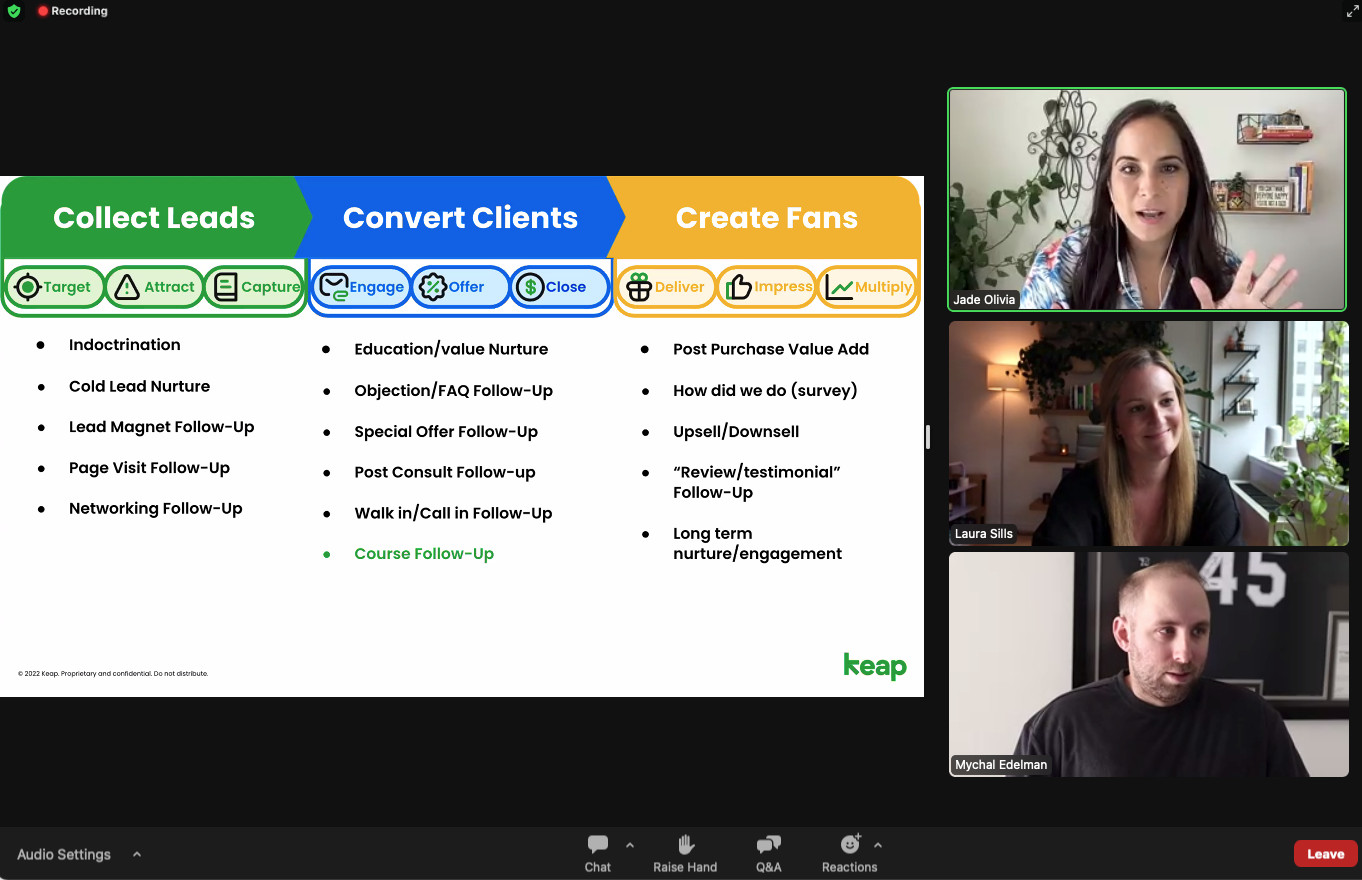
Attendee feedback confirmed that the content and format were both exactly what they wanted and needed, it was truly a unique and impactful event.
Here are my biggest takeaways:
- Set goals. But more than that, make a plan and get people to hold you accountable. I can’t tell you how many things I’ve started and never finished over these few years as a business owner. This is the first one I took seriously, and even so, I would have backed out 100x if I hadn’t committed to a plan and an accountability system.
- Never go it alone. If you’re reading this and you don’t have a support system to get you through shenanigans like the one I just put myself through, then that undoubtedly means you’re not in Greg’s OG Membership. Greg and so many Grovers helped push me over the finish line, even when I was too scared to move forward myself. We’d do the same for you in a heartbeat.
- It’s okay to be afraid. In my weaker moments, I wouldn’t have gotten the support I needed if I didn’t admit it. Furthermore, my admissions were not only met with support, but others also expressed that they have often felt the same fears and were relieved to see that they weren’t alone.
- Nothing’s Wasted. Maybe I’m crazy for calling 77 registrants a “win” after all the time and money and anguish, but the experience alone was worth it. No matter what, there are lessons to be learned.
- Do things that are hard. If I never would have done this, I never would have put myself out there like I did. Nothing that is worth doing is easy.
Comment below if you have any questions about the tools or tips mentioned above, or if you have any advice about how I can improve for the next one! 🙂
Internal Forms for Prospect Intake
The other day a question was posed in our OG community – here’s the scenario:
The member gets voicemails (and emails) with interest from prospects who are looking for more information about their products and services.
But their details didn’t have a reliable way of making it into the CRM – which meant that leads were sometimes slipping between the cracks.
There are probably a few ways to improve this process, but I proposed using internal forms.
What are internal forms?
Internal forms in Keap are a way of creating a form specifically designed to be used by you and your team members, with the sole intention of adding contacts to Keap, or updating contacts who are already in your database.
They’re just like web forms – but instead of being externally accessible, they’re built for your team to use.
How do I use Internal Forms?
Well – they live inside the automation builder, just like your other goal methods.
So you’ll drag one onto your canvas, and define the fields you want to use it to collect.
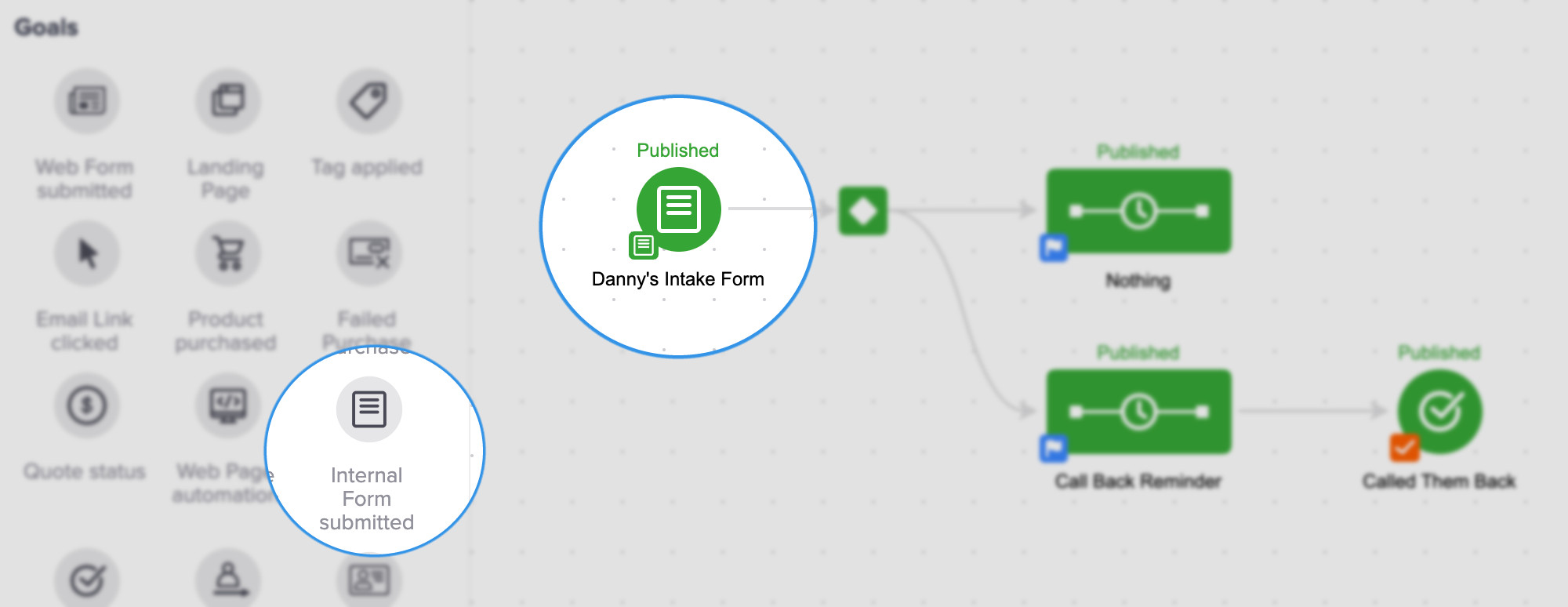
But, it’s worth pointing out that if you’re using Keap Pro or Keap Max the process is a little different – here’s a walkthrough for Pro and Max users.
Regardless of how you set it up, it’ll give you a repeatable process you can use to add contacts, with options for triggering automation.
Internal Forms are definitely one of Keap’s underrated features.
The primary use case is adding new contacts – but you can also use internal forms to add information to existing contacts, and launch automation as a result.
Or, I’ve seen internal forms used as a manual way of approving applicants for a mastermind, for your partner program, or whenever you want the ability to manually make a decision about what happens next to a contact.
If you’re using Keap’s internal forms in your business, drop a comment below and share one of your use cases.
Thanks for reading.
Have your own questions?
If you would benefit from a place to ask automation questions when you get stuck, and get ideas and inspiration from other businesses, you can join us in the Monkeypod Membership.
![How to use LeadSources [in Keap Max Classic]](https://www.monkeypodmarketing.com/wp-content/uploads/2022/05/LeadSources.jpg)
How to use LeadSources [in Keap Max Classic]
LeadSources in Keap are definitely one of those features that most people agree are important AND wish they were better with.
Let’s start with some basic questions…
What are LeadSources in Keap?
Simply put – LeadSources are the different channels through which leads, prospects, and customers end up in your database.
This lets you know where people are coming from – so you can double down on what’s working.
Why do LeadSources matter?
Measuring your different leadsources helps determine which of your traffic channels are producing new contacts, and new customers, and at what rates.
And if you’re recording expenses against the leadsources, it’ll also calculate the average cost per contact, and per customer.
Having a clear understanding of this helps you make confident decisions, so you know which of your efforts to invest in, and which to stop.
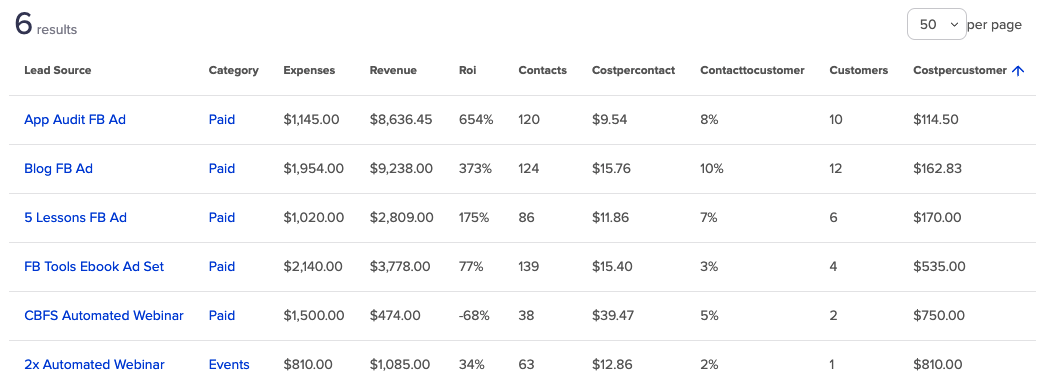
Not all leads are created equal – and not all leadsources produce equally.
So the goal is to surface up this type of info so you can determine which channels are not only producing the most leads, but the leads that then go on to spend the most money with you.
To do this in Keap you’ll need a firm understanding of the Lead Generation section of the software – this covers visitor records, as well as LeadSources, and LeadSource ROI reporting.
Here’s a video, plucked from the IS Starter Kit course that covers the various features available in this section of Keap:
If you’re tracking purchase info in Keap (directly or through an integration) then the LeadSource reports will give you an indication of your ROI on each channel (the return on your investment).
The goal is to have your Cost Per Customer (also known as Customer Acquisition Cost) less than your average Customer Lifetime Value (the amount customers spend with you over their lifetime).
The greater the difference in those two numbers, the more profitable the traffic channel.
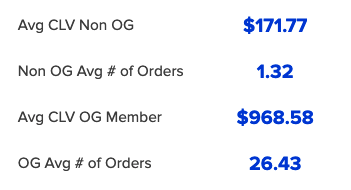
Knowing how much customers spend with you on average helps you decide how to spend your marketing budget.
How do I use LeadSources?
The simplest way to use them is just to measure which channels are adding contacts to your database.
But, if you have purchase and expense data available, you can go beyond that.
Naturally, if you are spending more to acquire the customer than you are making on it, that’s likely an indicator that the traffic channel isn’t currently viable.
What do I do with traffic channels that aren’t profitable?
If you notice that a specific leadsource isn’t producing – or isn’t producing in a profitable way, it could be for a few different reasons.
It is either a signal to revisit some aspect of it or stop running that ad altogether.
Before you discontinue it entirely, you might try refining (or expanding) the targeting to see if you can improve the flow of leads, or quality of leads you’re getting from that channel.
Or, you could revisit the ad content itself. Review the ad copy, video, and graphics – are they aligned? How could they resonate more with the audience you’re targeting?
It’s worth mentioning that paid advertising is an extremely nuanced space – so if this is an area where you feel out of your depths, it might be a good time to bring on an expert who specializes in designing or optimizing ad campaigns.
Additional Resources
If you’ve found this useful and want more on LeadSources specifically here’s a solid blog post from Jordan Hatch about using LeadSources in your business.
And another one from Tyler over at Box Out – Ad Tracking the Right Way in Keap.
If you want to take things to the next level, check out the ROI Tracker Tyler discusses in his post.
And if you want more training like this, you can unlock the rest of the IS Starter Kit course here.
![Keap’s AI Copy Generator [Sneak Peek]](https://www.monkeypodmarketing.com/wp-content/uploads/2022/03/copy-generator-blog-post.jpg)
Keap’s AI Copy Generator [Sneak Peek]
Update: All Keap Users can access the Copy Generator by visiting plays.keap.app and logging in with your Keap credentials.
And if you’d like a guided walkthrough, check out the build-a-play event replays in the Keap Academy platform.
What if I told you your emails could write themselves? Does that sound like something you might be interested in?
Designing automation that supports your customer experience is the core of Keap’s functionality, we all know that – but at the end of the day your automation is only as powerful as the content it delivers.
And for many small business owners, copywriting can be a roadblock. Until now. *dramatic reveal*
The Copy Generator
Keap has quietly been working on a new AI powered Copy Generator.
It isn’t live quite yet, but I got to take the beta for a test last week and it just about blew my mind. I think this new tool has the potential to be an absolute gamechanger.
Here’s a demo:
Not bad, eh?
(btw, the webinar referenced in the video above has already taken place, but the replay is available here if you’d like to follow along).
How does it work
Well, I’m not 100% clear on the witchcraft and/or technology behind this, but I do know it’s more than just standard AI.
This tool has been designed specifically to use AI while guided by marketing strategy and best practices, which is a big part of what differentiates it from other AI copy generators out there.
I’m stoked people – it’s early still, but I think this has the potential to be one of the most innovate improvements we’ve seen in years (my top two are currently the campaign builder in 2012, and dynamic content in 2019).
Like I said above, this is currently in beta testing so Keap can get some feedback on it – so just be patient and you’ll get notified when it’s ready for wider scale release.
If you are okay with some wrinkles, and are willing to offer feedback, drop me a message and I’ll see if I can get you into the beta trial.
Update: All Keap Users can access the Copy Generator by visiting plays.keap.app and logging in with your Keap credentials.