Fundamentals of Nurture Automation

Fundamentals of Nurture Automation

Let’s talk about Nurture.

It’s not flashy. It’s not new. But it’s one of the most important parts of your sales and marketing ecosystem — and too many businesses skip it entirely.

Where does Nurture fit?

The short answer is: in the gaps.

You know those little moments between major milestones in your customer journey? The space after someone opts in but before they buy? Or between a discovery call and a proposal? That’s where Nurture lives. It’s the connective tissue that keeps people engaged, supported, and moving forward — instead of slipping through the cracks and disappearing altogether.

The role of a Nurture process is to systematically follow up, answer questions, remove friction, and make it easier for a lead to say yes when the time is right. It’s about progress. It’s about support. It’s about keeping the conversation going.

Why is Nurture valuable?

This part is huge. Because the leads you’re nurturing? You already have them.

You (or your marketing team) worked hard to generate traffic. You ran ads. You built landing pages. You created offers and lead magnets. And if you’re not actively nurturing those leads, then a chunk of them are just sitting there — slowly cooling off.

A well-built nurture process helps you improve the conversion rate of the leads you’re already getting. Which means better ROI on your ad spend. Better performance from your lead magnets. Better alignment between your marketing and sales efforts.

If you’re trying to grow without a nurture strategy, you’re just leaving money on the table.

How do I actually do it?

Good news: This part is straightforward — especially if you’re using an automation platform like Keap, ActiveCampaign, HighLevel, etc.

The basic idea is that you create an automated series of helpful, supportive touch-points (emails, texts, videos, etc.), and then you set it up to trigger when a contact might otherwise be at risk of going cold.

The nurture process keeps them warm. It provides resources. It addresses FAQs. It builds rapport and trust — so that when they’re ready to buy, they think of you.

Hopefully you’re reading along and nodding your head, and if you’re thinking “…but, what should I say?” — we’ve got you covered.

This short video will walk you through some of the actual content ideas that can make up a strong nurture campaign. Real examples. Clear guidance. Stuff you can implement today.

So we’ve given you ten nurture topics – that could be the material you need for a ten day nurture sequence – if you’re sending daily, but it also could be content that is spread across ten weeks, or ten months, depending on the cadence you decide.

Let’s review, those ten topics are:

  1. Welcome, Introduction Message
  2. Business Origin Story
  3. The Core Problem you Solve
  4. Case Study (or Testimonial)
  5. Common FAQs
  1. Behind the Scenes Look
  2. Quick Demonstration of Value
  3. Signature Service/Offering
  4. Best Practice/Industry Trend
  5. Invitation to Connect

And, you may have noticed that some of these topics could easily be used to generate a handful of nurture touch-points. Like, say you had more than one case study to share, or more than one FAQ to address, etc.

So don’t be afraid to take these topics and expand on them as you develop your nurture strategy – a rule of thumb is that it’s always better to have too much nurture than not enough.

Nurture: Next Steps

If you’ve made it this far, then let me encourage you to take action.

Either build a brand new nurture process from scratch — or revisit one you’ve already got and see how it could be stronger. Because even small improvements to your follow-up strategy can lead to big wins over time.

Nurture is one of the most efficient ways to grow — and once it’s set up, it works around the clock to help your leads take the next step.

Let’s stop letting good leads go cold. Start nurturing.

Automation Expanded

Nurture is one very clear and specific automation use case – but automation is infinitely versatile, if you know where to look If you aren’t sure where automation would fit – we’ve built a course specifically designed to help you identify those opportunities.
Automated Content Sharing Recipe

Automated Content Sharing Recipe

Ever feel like you’re creating strong content, but it’s not getting the attention it deserves? Yeah—same.

I think this dynamic affects most everyone who produces content – we know what we’re putting out is valuable, but for any number of reasons it might not be reaching the people it can really serve.

One of the ways we try to squeeze a little extra mileage out of the stuff we publish is by making sure it actually gets posted to all of our social channels. In this video, I’ll break down the exact automation recipe we use to share new Monkeypod content—mostly YouTube videos and blog posts (like this one)—out to our different social channels.

It’s a simple formula that runs through Zapier, but it helps us stay visible, consistent, and efficient.

This simple setup helps us get more eyes on the content we’re already creating—without adding a bunch of extra work to the pile.

While I demonstrated it using Zapier (because that’s what we use), you could totally build a similar system with other automation platforms like Pabbly, Make, n8n, or whatever tool fits your stack.

The real takeaway here is that a little bit of automation can go a long way in making sure your content actually gets the attention it deserves.

And as an added benefit, it helps keep your social channels from going stale if you aren’t regularly publishing new material. Happy sharing.


Looking for Ideas?

This was a fairly unique automation use case – but these types of scenarios are all over the place. If you aren’t sure where automation would fit – we’ve built a course specifically designed to help you identify those opportunities.
Productivity Hacks (for my ADHD brain)

Productivity Hacks (for my ADHD brain)

Staying organized is tough enough for most of us, and when your brain doesn’t play by the rules that adds a whole new layer.

Our beloved Monkeypod Community Manager, Jade, has ADHD – and over the years she’s built a system of tools, habits, and little brain hacks to help her stay on top of things. And in this video, she’s pulling back the curtain to share what works for her.

If you feel like you’re constantly juggling a hundred things (and maybe dropping a few along the way), this one’s for you. Check out Jade’s setup and see if any of her tools strategies can help you hack your brain too.

The thing about productivity is that there’s no one-size-fits-all approach—what works for one person might not work for another.

But the key is finding tools and systems that complement your brain, not fight against it. Hopefully, some of Jade’s tricks gave you a few ideas to test out in your own world.

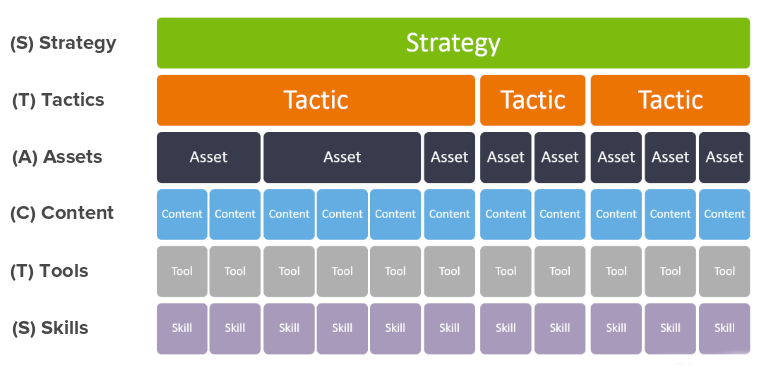
And, if you’re planning a project from scratch – here’s a framework tool that can help you avoid friction as you bring a project to life.

Want a demo of this framework in action? Check it out here.

If you’ve got your own favorite hacks (or tools you like) for staying organized, drop ‘em in the comments—we’re always down to learn something new.

Smart Scaling with Keap’s Solution Launchpad

Smart Scaling with Keap’s Solution Launchpad

We all love when Keap rolls out new features, especially the ones that actually move the needle for small businesses.

As a caveat, this one might be predominantly for Keap partners, but I do think it’s important that everyone know tools like this are available.

At last year’s Keap user conference, Dr. Denise Dennis gave a killer presentation on scaling smarter with Keap’s Solution Launchpad tool. And since not everyone could be there in person, she kindly agreed to do a special replay just for the Monkeypod universe audience.

So if you missed it check out the video below—you’ll learn how Solution Launchpad can help you simplify automation, streamline delivery, and scale the way you serve people.

Good stuff, right? Dr. Denise walked through how Solution Launchpad works and why it matters, but we wanted to take it a step further. So Cameron sat down with her for a follow-up chat to unpack some of the key ideas, share more examples, and talk about how to actually put this into practice.

To wrap it up, the conversation between Cam and Dr. Denise Dennis unpacks the presentation and expands on use cases for Keap’s Solution Launchpad tool.

The main takeaway? Productizing your services is a game changer. Whether you’re an automation expert or a coach, having a clear, repeatable offering not only saves you time, but it helps you stand out as an expert in your field.

A lot of businesses get stuck trying to appeal to everyone, but as Dr. Denise shares, narrowing your focus and niching down lets you attract the right clients and charge what you’re worth.

If you serve small businesses then the advantage you get from using a tool like Solution Launchpad is the flexibility to customize things for different clients, while still creating a streamlined process that you can repeat again and again.

The bottom line: scaling smarter is all about working smarter, and having a system that helps you focus on what really moves the needle for your business and your clients. If you want to connect with Dr Denise, you can do that on her site here, or by joining us in the Monkeypod Membership.

What should I automate?

If you’re on board with the idea of automation but aren’t sure where it would fit – we’ve built a course specifically designed to help you identify opportunities in the customer journey where we’ve seen automation solve problems and create momentum.

Customer Journey: Crash Course

Customer Journey: Crash Course

If you run a business then you likely have customers (fingers crossed, right?).

And if you have customers, then they had a “journey” – even if you don’t call it that.

The customer journey is essentially the sum total of the interactions and experiences they have with your business, from the time they first hear about you, through to the point of purchase and beyond.

The single most important lesson I’ve learned in growing a successful small business is to take ownership of that journey – their experience should be strategic and intentional – something you or your team planned for them.

And there are countless ways to plan and enrich this journey and a number of tools that can standardize or accelerate it. So, if your head is spinning thinking about how you should get started, we’ve distilled the most important lessons down into this crash course – enjoy.

Here are the key things to remember:

1. The customer journey already exists. If you have customers, they had a journey. So what we’re talking about here is really just refining what already exists to make sure it’s intentional and strategic.

2. The journey spans the lifecycle of the customer – it starts when they first hear about and interact with your business, through to the purchase, and into the delivery of your products or services. There are opportunities throughout every juncture to make things easier for them and more predictable for you.

3. Automation can help with the heavy lifting. If the idea of delivering top notch customer experience feels daunting, the secret sauce is to introduce automation to the process. Automation might feel like a technical term, but the concept really just means helping things happen in a standardized and repeatable way.

What should I automate?

If you’re on board with the idea of automation but aren’t sure where it would fit – we’ve built a course specifically designed to help you identify opportunities in the customer journey where we’ve seen automation solve problems and create momentum.

Pipelines: Keap vs ActiveCampaign

Pipelines: Keap vs ActiveCampaign

A pipeline is a way to manage a process, generally a sales process. And different platforms will have pros and cons for how they store the information, trigger automation, and what reporting metrics they make available.

Whether or not your business needs a pipeline tool will depend on a variety of factors, here’s a resource to help you with that determination.

But if you do determine your business has the need for a pipeline, to manage deals in your sales funnel, or some other business process – then you’ll benefit from the way it can offer increased insight, reporting, and help add automation.

In this video Brett, from BlickDigital, will walk us through the core differences in how pipelines and deals are handled between ActiveCampaign and Keap.

If you’re thinking your business would benefit from this, but you’re not sure where to start – here’s a great resource for Keap users to help you get your head wrapped around the ins and outs of opportunities, deals, and pipelines.

Huge shout out to Brett Farr for walking us through the key differences in how ActiveCampaign and Keap handle this part of their software. If you’re interested in learning more about working with Brett and BlickDigital, check them out here.

And, if you’re still on the fence about which CRM is right for your business, or need help making the best choice, you can book a call with the Otium Team to help find the system that fits your needs.