
Marketing, Small Business, Tips and Tricks, Tools, Uncategorized
As many of you know, I’m a total geek when it comes to new tools. I’m not always as quick to adopt as I should be, but I love learning what’s possible.
Anyway, I was at the Traffic & Conversion Summit over the weekend (I’ll recap it soon), and on the morning of day three I attended a session which was literally 60 minutes of a guy on stage listing tools that Digital Marketer uses and recommends. I tried to record some of the session on a really poor quality Facebook Live video. But to save you from suffering through that, here’s a list of tools I wrote down that you may want to check out.
I should call out that these are not tools that I can formally endorse. I haven’t used these most of these tools, and in fact, many of them I hadn’t even heard of. If you’d like my list of recommended tools, those are listed here.
Keyword Tools
SEMRush – Comprehensive Keyword Research
VideoCents – YouTube Keyword Research
Keyword.io – Google Auto-complete Keywords
WordTracker – 1000’s of longtail keywords
LSI Graph – Latent Semantic Index (LSI) Keywords, Latent Semantic Indexing is one of the things that Google looks at to make sure that the words they expect to be on a page are actually there.
TwinWord.com – Fancy tool for demonstrating the distance between words in the latent semantic index.
SeCockpit – Find 1000’s of proitable google keywords quickly
Traffic Tools
Sumo.com – Suite of tools, highlights include Welcome Mat
PushEngage.com – Web-push notifications
Votigo – Contest and Sweepstakes Solutions
YoRocket – Analyzes your headlines
FullContact.com – Aggregates a contact’s web presence and social profiles to give you context for who someone might be – (Also works with Zapier)
BrightVerify – Verifies email addresses, by uploading a list, or in real time as people are signing up on your website
ReferralCandy – Refer-a-friend engine
SEO Tools
SEOpresser – WordPress tool that grades an entire post based on a variety of factors
Pingdom – For monitoring your page speed, performance, and gathering insights
aHrefs – To find out all the links your competitors have, and analyze the links you’re using
rmoov.com – Identifying links and backlinks that may be hurting your website
Nozzle – So much SEO information you won’t believe it – Their slogan is “Know everything google knows. If you can handle it.”
WPsuperCache – WordPress caching plugin to help with site load time
Social Ad Tools
DriftRock – Tool for personalizing Facebook ads and other things
AdEspresso.com – Generate 1000’s of Facebook Ads quickly
GetCompass.co – Facebook Ads competitive intelligence
Follower Wonk – Twitter follower tool and analytics
MeetEdgar.com – Repurpose and repost social content
Facebook Pixel Helper – Chrome extension, tells you when you’re having challenges with your Facebook Pixel
AudienceDrill – For drilling down to the audience that you may want to reach
Lead Capture
OptinMonster – Lead capture, pop-ups, and A/B testing
OptiMonk – LeadCapture, exit pop-ups, boosted conversions
Gleam – Competitions, Lead Capture, Visual Galleries, Reward Redemption
Bounce Exchange – Targeted offers based on analytics and onsite behavior
Analytics
ClickMeter – Monitor, compare, and optimize your marketing links
Tag Assistant by Google – Chrome plugin, helps to troubleshoot installation of various google tags
InsightSquared – Business intelligence software
UsabilityHub – Tool for product managers and designers to quickly capture feedback through user testing
QualaRoo – Voice if customer insights to help your business grow
LikeAlyzer – Likes and social data on your own Facebook page, or on your competition
Grytics – Facebook Group analytics and insights – reports on posts, members and activity
TruConversion – Offers easy to use analytics tools so you can make data driven decisions for your website
Sitespect – Digital optimization, personalization, omnichannel testing and analtyics
Chat Tools
ManyChat – Use a Facebook Messenger bot on your site
ModernApp – Grow your business with Facebook Messenger
ChatFuel – Create an automated chat experience with Facebook Messenger
Wow. So, that’s quite the list. I hope you find a few that you can use to make your life easier. I want to reiterate that I’m not using these tools, and that I can’t formally endorse any of them. However, I do have a list of tools that I rely on daily for Monkeypod. Check em out here.
I’d love to hear your favorite tools. Feel free to leave them in the comments below!

Uncategorized
Editor’s Note: Personally, I’m utterly fascinated by the entrepreneurial journey. I feel like hearing an entrepreneur’s story really helps you understand them, and just as often also furthers your understanding of yourself. A while back I asked my friend Justin MacDonald to share his story, and I’m just now getting around to publishing it (Sorry for the delay Jmac).
How I went from an exhausted, underpaid teacher to an executive for the “Harvard of Africa” in 4 years.
I’ve got two hours remaining of a 36-hour trip from Kigali, Rwanda, and saying I’m “excited” to see my wife of 13 years and our three boys, is a gross understatement.
You know those moments in your life where you catch yourself hyper-aware of being in the moment, in a place, time, and circumstance that you simply could never have imagined?
Where you find yourself thinking, “So, I’m having a cocktail at the president of the African Development Bank’s house,” or “So, that’s a family of gorillas in the Rwandan jungle; I wonder what we’re having for dinner later.”
I have those a lot now.
Four years ago, I knew what I was doing for the rest of my life, literally. I was an English literature teacher and high school football coach. I knew what I’d make, what my calendar was, and what my life would be like until I retired.
And now, I work from home, or Hawaii, or our family ranch in Idaho, or on a plane, or wherever I want, for a university in Africa that CNN and the rest of the world is calling the “Harvard of Africa.”
My CEO is named by Forbes a top 10 “Power Man” in Africa and has a TED talk with millions of views, and my colleagues are all brilliant and supremely well-educated.
(My first intern had just graduated from Harvard, and my second just left for the London School of Business, and two nights ago, I had a shot of Jägermeister at a nightclub in Kigali with our Vice Dean who was a B-School professor at Harvard and Oxford. I just want to make it really clear that I am easily the dumbest guy in the organization.)
At a glance, in the last four years, I’ve somehow managed to make about three times my previous salary, get equity in an amazing institution, start and run my own two businesses, build my expertise in a few areas where I now speak for a fee, and still have more time with my amazing boys and wife than I did when I was teaching
The details that enabled this journey are remarkably specific, and perhaps less relevant to your immediate circumstances. So I thought I’d share the key principles I have tried to exercise that might explain just how the hell this transformation happened.
Actually do what you say are the most important things to you.
For me, I said that “Faith, Family, and Football” was the mantra that defined me. In reality, as a head coach and English teacher, that mantra was actually, “Football, and then whatever is left.”
Education is an amazing profession, but it’s needy and unquenchable, so it takes and takes, and never gives back, like that asshole in The Giving Tree. So football and teaching took from me, and I took from my wife and boys in turn, and in my effort to change a generation of men, I was neglecting the only three that mattered, my own. Eph that.
We were together five days total in my last year as a teacher and coach. And I finally woke up enough to be the man I was telling our players to be and I put my faith and my family first and crumpled up my 10,000 hours of expertise and threw it away. I didn’t have a job when I resigned.
Be humble. Be hungry.
Failing sucks. At least one thing Trump and I can agree on is our desire for “so much winning”. Admitting I sucked as a husband and father was really hard and embarrassing. Starting something totally new was scary and humbling, but I went into it as a blank slate, ready to learn and grow, and wanting to do it as fast as possible. Freeing myself from the BS of ego is what allowed me to fail and grow fast.
My approach to new challenges and professional opportunities is to make sure people know the truth about me, about what they’re getting, and more importantly, what they are not getting. It’s so much easier to perform when you set realistic expectations. So I don’t BS people to try to impress people. That authenticity is usually refreshing for them. Saying, “I don’t know, but I’d like to” has been a key to my growth.
Say no and never be afraid to get fired.
When someone asks me for professional advice, I warn them not to take what I’m about to give them because it doesn’t make any sense, and I extend that same disclaimer to you now. Do not listen to this; I will not be responsible.
I tell them to decline 90% of their promotion opportunities, and I tell them to never fear being fired. If you think of your job or business trajectory as a freeway with lots of lanes and lots of traffic and you doing your best to change lanes to move into a faster flowing lane, think how many times you’ve changed lanes only to have to slam on your brakes and watch the other lanes moving faster next to you.
They look like the right move at first, but often don’t live up to the promise they showed initially. That’s how I see most professional opportunities.
There’s always another lane and often, they will look faster and better, but I try to exercise extreme caution before I say yes to an opportunity.
And when I do, it’s a decision made through the lens of my priorities. I believe we are here to serve, and no matter what cause or job I’m in, I serve it with my all, so with that being a given, I want to know which opportunity is going to serve me back. Those that align best with the life we’ve designed as a family are those that I explore and take.
In that traffic analogy, I see myself as an off-road Baja Super Truck, and I simply look for off-road opportunities to pass the traffic; it’s the only way to leapfrog.
Care about people.
The only thing that matters is people. If I want to succeed, I have to have help, and if I want people to want to help and move at the speed of trust, then I have to build that trust which happens through conversations and acts of service for others. I don’t know any other way.
And I don’t mean care about people because they can be of service to you; I just mean care about people because they’re people.
To be honest, I’m not very good at this, mainly because I’m very much human – pretty much like that asshole in the The Giving Tree – but it’s the thing I strive to do better everyday.

Closing Thoughts
A lot has changed in my life in a short period of time. I’m certainly not going to sit here and claim that I’ve got it all figured out, or that there is a recipe I’ve uncovered which has helped with the transformation I’ve undergone in the last few years. Really, there isn’t.
The four keys I’ve outlined above have certainly been instrumental in my growth, and my hope is that they’ll be helpful for you as well. But the fact of the matter is that entrepreneurship is a journey.
Small business is a journey. And that journey shows up differently for everyone. Much like that superb hiking analogy Greg wrote about a few months back; we’re all on the same trail.
I’m grateful for the people that cared enough about me to encourage me, to open doors for me, but above all, to be honest with me. So I hope this brief bit of honesty is useful to you.
Keap, Uncategorized
Me: Are you really going to interview yourself?
Greg: Yup, we’re doing this, let’s go.
Me: Okay, but don’t you wanna at least explain what you’re doing so people don’t think you’re weird?
Greg: Nah, they’ll figure it out. Plus, I’m excited.
Me: Okay then, you’re the boss. Tell me about the IS Starter Kit.
Greg: It’s my latest course, and it’s freaking awesome. I’m really excited.
Me: Yeah, obviously. What’s the course about?
Greg: Well, it’s an Infusionsoft course. It’s 40 modules long, and it jumps around quite a bit. The easiest way I can describe it is “It’s all the things you didn’t know you needed to know.”
Me: That sounds appealing, which was probably the goal.
Greg: Yeah, I wanted this course to be a good fit for most people.
Me: Smart. Why did you create this course?
Greg: I created this course because I realized that a lot of people just start using Infusionsoft, and they learn things the hard way. Then, the hard way just sort of becomes their status quo. I can’t count the number of times that an entrepreneur has said to me “I wish I had known that at the beginning”. But the reality is that your introduction to Infusionsoft is rapid, and can be overwhelming. This course is designed to answer 40 questions that most people skip over when they’re just getting going.
Me: Are you going to tell us what the 40 modules are? Or just keep bragging about them?
Greg: I don’t think listing 40 questions is the best use of this interview. But if anyone is curious, they can download the course agenda here.
Me: Isn’t there a risk that people will already be able to answer some of the questions?
Greg: That’s not a risk, that is a fact. There are 40 modules, and some (or most) will probably be review.
Me: What? Are you sure people will want that?
Greg: Well, that’s the whole reason this course is so inexpensive. I don’t think it’s groundbreaking. I don’t think this course is revolutionary. It’s just really solid information. And if you’re going to build something that lasts, the foundation matters. I think that Infusionsoft gets easier every time you log in. And each time you answer a question or understand a new feature, it makes the software that much more approachable, and that much less intimidating.
Me: All I heard was inexpensive…
Greg: Yeah, The course is $57 dollars (though my members are insisting that I need to raise that), and there’s a massive launch discount as well. I wanted this course to be a no-brainer for people.
Me: Is $57 really a no-brainer?
Greg: Well, I think about it this way: There are 40 modules. You don’t need 40 groundbreaking new concepts. You only need one answer, or one new feature that saves you time or earns you money; and I get 40 tries. I like those odds, in fact, I like to think that it’ll probably happen more than a few times. Plus, it’s going to get better and more valuable over time.
Me: What do you mean it’s going to get better?
Greg: Oh, right. Well, this course is going to evolve. As people give me feedback and make requests, I’m going to record and add new modules to it overtime.
Me: Cool. I like that. Will those cost extra?
Greg: Nah, as long as the course is unlocked they’ll get access to any new modules I add.
Me: So, this course is for new Infusionsoft users?
Greg: Definitely. But here’s the deal, it’s for anyone who feels like they’d benefit from understanding Infusionsoft better. Or for a team member who you desperately want, or need, to hand the reins to. Yeah, ideally we’d all learn these things as we’re just getting started – but that’s not the reality. Often times when you’re starting with Infusionsoft you’re sprinting to get something done, and you don’t take the time to really look around, or to get familiar with all the different settings and features.
This course surfaces the things you didn’t even know you needed to know. And knowing them now, whether from the beginning or retrospectively, is going to make your business and your sales and marketing more effective, more efficient, and give you more confidence and freedom to be able to do what you need and want to be doing.
Me: So, it’s for new users, but also for users who aren’t new? Isn’t that cheating?
Greg: Yeah, maybe. It’s also great for people who manage Infusionsoft for other businesses.
Me: How so?
Greg: Well, think about this – Let’s say you use Infusionsoft for your own business, and you’re really good at it. Well, maybe you’re using 50% of the software. So, you get really comfortable with that 50% of the application. But if a client of yours needs something you don’t use, then you’ve gotta figure it out.
Me: How does this course solve tha-
Greg: Haha, I was getting to that. This course isn’t built for any one specific business – it’s built to answer some of the most common questions, AND to shine a light on some of the less commonly used features. If everyone understands exactly what Infusionsoft does, and how it works, then they can make an informed decision as to how they’re going to use it.
Me: Killer. So, it’s kind of for everyone.
Greg: Exactly
Me: No one is that altruistic. What do you get out of this?
Greg: I get the opportunity to teach. I love this stuff.
Me: ….
Greg: ….and if they like learning from me, and think it’s valuable, maybe it’ll open the door for my other courses, or my membership.
Me: That makes more sense.
Me: Alright, so, how do people get started.
Greg: Well, people can buy it here – but honestly, I’d really recommend checking out the free trial. That way everyone can get a sample of the content, and they can make sure you’re not allergic to my voice or something.
Me: How long do they have to make up their mind?
Greg: The course isn’t going anywhere, in fact, it’s just going to imrpove. But the launch discount expires on August 26th, and 12:00 pm Eastern US Time.
Me: Think anyone is still reading this?
Greg: I dunno, hopefully they’re halfway done with the course by now.
Me: Do you think this was awkward to read?
Greg: Probably. But it was even more awkward to write…
Me: Good point. What are the best and worst case scenarios for someone who reads this whole post?
Greg: Geez. Worst case? They hated it, think I’m an ass, and I miss out on an opportunity to help them get more out of Infusionsoft. Best case would be they grab the content, love it, and then tell me that this blog post was the most brilliant sales copy they’ve ever read.
Me: Okay, anything else you want me to ask you?
Greg: Nah. I’m just excited about this course and looking forward to hearing how it makes a real and meaningful difference. Because I believe it will.

Uncategorized

Clay Harper, Small Business Performance Expert, Infusionsoft
Clay Harper is an Infusionsoft employee of 3+ years, with experience in a variety of roles all having one common theme- helping entrepreneurs. He’s made it a point to stick around in customer facing roles because solving problems is one of his passions. And I’ll be the first to add that he’s darn good at it too. He’s got a level-headed, no-nonsense approach that really resonates with lots of folks. In addition to his passion for helping small businesses, Clay is an accomplished traveler, business owner, and professional beekeeper (For real). Anyway, I asked him to write, and here’s the awesome outcome.
3 Tips to Improve Your Website’s Homepage
“What do you think of my website?” is a question I am frequently asked by my consulting clients. Whether these entrepreneurs are do-it-yourselfers who made their own wordpress site or they paid thousands to a web designer to get it done, they all want to know if their website’s homepage is making a good impression.
Tell me truly… If you had a consistently underperforming employee, wouldn’t you fire them? Surely, you’d let them go? With great gusto you would!
Your website’s homepage is no different and it has three jobs that it must accomplish! Your homepage must:
1. Welcome and inform visitors about your business
2. Persuade to engage with your website
3. Obtain an email address/phone number
Homepages that accomplish this start on the right footing with customers, get visitors to interact more with their site and convert more visitors into email addresses, phone numbers and ultimately sales.
Welcome and Inform:
I believe it was Tolstoy who penned that “All happy websites are alike, but that each unhappy website is unhappy in its own way.” If you look at enough websites you notice that the good ones tend to have white backgrounds, use non-primary colors, and are tightly organized. They show rather than tell and they are judicious in their use of stock photography.
 Your website is the face of your business so it needs to be unique to you, but realize people have already figured out how to make a good website. You aren’t going to suddenly invent a new way to do it. Look at competitors and emulate those doing it well.
The colors, style and layout you choose greatly influence how people think about you. This is doubly true for new visitors to your website that find you organically or from your advertising efforts.
Keep your writing punchy and to the point and be sure to include more than one “call to action”. Remember that people tend to skip paragraphs longer than 4 sentences long. It is generally more effective to show than to tell, so use graphics (and video) when possible.
Take advantage of the natural way people tend to scan or read through web pages. In English, people read left to right top to bottom but they always look at things exactly that way. For more on this check out this resource. Most modern themes for websites apply these patterns into their design so you should too.
It can be difficult to evaluate your own website. Have a trusted, web savvy person take a look and ponder on their advice. Lastly I don’t always use boring stock photography… but when I do I prefer ones that have Vince Vaughn in it.
Persuade them to click deeper into your website
 Your homepage’s second job is to get people to dive deeper into your website. Your homepage is the most trafficked page because it’s the first or second page that people visit. A good homepage has links and buttons that are persuasive to different segments in your target market.
Not everyone who hits your website is the same. Each person has different priorities and interests (like a snowflake). You want your homepage to educate and offer a virtual potpourri of interests so that the visitor can choose the one that most interests them. Self-segmentation!
Most homepages should be a filtering page where visitors can see a variety of options and click the one they like best. This means visitors to your secondary pages are prepared and ready to consume targeted content and click on calls to action.
Convert Visitors into Email Addresses and/or Phone Numbers
Finally your homepage must convert your visitors into email addresses. Conversion is the most important job for your website and your copy should be geared toward that end. Most websites convert visitors into email addresses using a web form to give away free valuable content in exchange for that email address.
 Once the visitor (now a shiny new lead!) submits that email address you will need to deliver what you promised and follow up with an amazing nurture sequence of emails to persuade them to purchase. This is where email automation takes over and Infusionsoft (or whichever tool you use) springs into action.
I’ve been focusing on email addresses but the same is true for phone numbers. Just realize that people more closely guard their phone number as an email rarely interrupts dinner.
Often businesses will choose to have a more generic lead capture featured on their homepage, since most visitors hit that page, so an offer with broad appeal can be more effective. They save their more specific lead magnets for the individual pages of their website where they are most effective.
A homepage that welcomes, persuades visitors to dig deeper, and captures email addresses will bring you quality leads who are more likely to purchase. So take a look at your website. How does it stack up? Do you need to have a hard conversation with your website about it’s future with the company?
Creating a beautiful, high-converting website that you can be proud of is definitely some work, but having a website that educates, engages and is in-tune with your marketing is invaluable. Take action now!
Please post your questions and comments below, or you can tweet directly at Clay.

Guest Posts, Small Business, Tips and Tricks, Uncategorized
 Small businesses often struggle with knowing how to grow their team; especially without compromising what they deliver, or what they stand for. If you’re an entrepreneur, you’ve probably poured yourself into your business, and you probably take an immense amount of pride in your company. As you should. It’s that fact that makes hiring people who reflect your brand so important.
When it comes to finding talent, hiring, and growing companies, Lauren Hodgson is in her element. Lauren is a good friend of mine, and I asked her to share some of the wisdom she’s collected throughout her career, which included helping Infusionsoft grow from 200 to 600 employees, in the hopes that it’ll help your team grow.
3 Keys to Designing a Employment Branding Foundation
If you’ve ever been fishing you probably had to select what bait you wanted to use. And depending on how much you know about fishing, you may know that you should select your bait carefully, as it can attract different fish. If you’re fishing for salmon in lake Michigan you’re going to use a very different bait than if you’re fishing for yellow fin tuna off the coast of San Diego.
Let’s take it one step further: If you were a fisherman, wouldn’t you prefer that fish swam right up to your boat? Life would be a little easier if they were just jumping onto the deck instead of you having to seek them out. Of course. By attracting fish to your boat, you’re able to get a larger selection in less time. This saves you time and gets you more of what you want.
You likely already apply this principle to your business with your marketing & lead generation. It’s called inbound marketing. Good news! You can apply it to your hiring, too. In fact, when you do, you’ll find more of the right people for your business. More of the right people is a brilliant thing.
When you apply this principle to hiring, it’s called employment branding. It’s one of my favorite things in the world. It does the hiring for you. When you build an attraction machine, it brings in the right people who want to be a part of what you are creating. Plus, the better you are at proactively attracting people, the easier it is to find (& captivate them) when you need to hire. Employment branding is the magnetic force that helps you constantly fill the pipeline with people who are champions of you and your business. And those are the types of people you want on your team.
Here’s the kicker. It’s a proactive strategy, not a quick fix. Once you do it, though, you’ve got a machine humming in the background, doing the work for you.
By creating this attraction machine, you spend less time sifting bad resumes, asking unnatural interview questions, and crossing your fingers that interviewees are going to work out. This work goes side by side with your current marketing – it’s actually extension of it. In fact, the 3 biggest things you can do for your employment brand are things that should already be doing for your business. This work will attract customers, partners, and employees alike.
Quick recap: You invest the time upfront, it’s work you should already be doing, and it gets you more of the right people for your business.
Here are the top 3 things that create a strong foundation for your employment brand, getting the right people knocking down your door:
#1 Get super clear on who you are and what you stand for
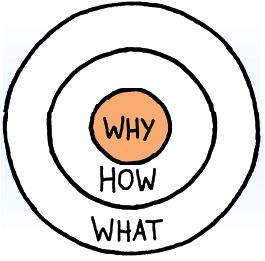 But, seriously. SUPER CLEAR. When people interact with you (in person, on your website, etc.), you want them, in less than 30 seconds, to know what you stand for- your purpose. Not what you do, but why you do it. Tap into why you started. What problem are you trying to solve? What dent do you want to make? What do you want to be known for? The answer to these questions should be jumping off your website.
If you haven’t spent the time on deliberately articulating this or if you need a refresher, you may like the HBR article with the great Jim Collins on Building Your Company’s Vision. Clarity on your vision and purpose is the #1 thing in attracting the right people to you. Great people connect to purpose – they want to be working for something larger and they want that something larger to align with what they care about.
#2 Align every inch of the business to your purpose
Once you are crystal clear on why your company exists, you want every piece of your business to be a mirrored reflection of that existence. It should be evident in how your business behaves – your business model, client interactions, partnership pay structure, how you choose Partnership A over Partnership B, community involvement, website messaging, etc. Align everything to it because these decisions, these consistent behaviors over time, become your culture. Your culture is what attracts certain people and detracts others. Your company culture already exists (even if it’s just you!) – the goal is to intentionally design it in such a way that it is effective in driving what you want. One of the  truest principles of culture, represented in a model by Ann Rhoades, former Chief People Officer of Southwest Airlines, is this:
“Leaders drive the values, values then drive the behaviors, the behaviors drive the culture, and the culture ultimately defines the performance.”
Your leadership dictates the culture. Be intentional about how you operate the business. When it aligns – living, breathing, and sleeping it’s most integral form of its existence – the right people can’t help but notice.
#3 Your people are your brand ambassadors
Your employees, including you, are your brand ambassadors. If you don’t have employees yet, think of your vendors, customers, investors, and partners as your ambassadors. Set and share the vision with them. When you’ve got the right people on your team, give them ownership, let them co-create the plan, and they will multiply your efforts way past what you alone can do. When your people have purpose, autonomy, & mastery in their work with you, it creates a multiplying affect that ripples throughout their life and in networks, communities, and people far past your own. This is the employment brand spreading organically. It’s also where you’ll generate employee referrals, hire recommendations, and make coffee connections, matching up you with amazing people to join your team. These “leads” are coming from your network of champions for your business, so they’ll likely be more qualified. More of the right people; it’s the beauty of word of mouth in action.
You are able to create a company that is simply irresistible to work for by focusing intently on the core of who you want your business to be in the world. This work generates the most authentically fitting people that want to be a part of what you are creating. Nothing overcomes a poor fit. Be clear on what you stand for, align your business to it, engage and empower your people to be your champions. This is the foundation of having an employment brand that is constantly filling the pipeline of people who want to partner up and do the amazing work you set out to do.
About the Author: Lauren Hodgson
 I am a big believer that when we get clear on what we stand for and partner with others that stand for the same, we can create some pretty rad shit. As an Employment Brand Strategist, I help teams share the mission that they’re on and help them create a machine that magnetically attracts the right people to join their mission. I believe in fit because we are a better world when people can contribute their full selves. Plus, status quo is for the birds. In the past I led the hiring for a fast-growing tech company, Infusionsoft, growing it from 220-650 employees in 3 years. I’ve also led in the space of people development and culture at lululemon athletica and Apple. I am all about exceptional leadership, strategically designed company culture, and living into dreams. In late 2015, I start a new journey, traveling parts of the world for about a year with Peter, my husband and partner-in-adventure.