Guest Posts, Marketing, Small Business, Tips and Tricks
 I’ve got a guest post here from one of Infusionsoft’s brightest personalities – Judi Miller. You may know her as the voice of Infusionsoft’s training webinars, or just from her numerous contributions to the Infusionsoft ecosystem at large. Suffice to say, Judi has been around the block with Infusionsoft a time or two, and consistently finds ways to go above and beyond to help the customers she works with not only understand the software, but also grow their businesses in ways they didn’t expect. This week I asked her to put on her creative cap and show off how she helps customers who get stuck thinking of topics for their regular newsletter.
And by the end of this article you’ll have 132 new ideas for your newsletter topics. I promise.
Raindrops on roses and whiskers on kittens…
 Can you name the famous musical that those lyrics are from?
Did you say The Sound Of Music? Ding Ding Ding… You are correct!
Now can you come up with 5 alternate titles?
Make a list of animals that have whiskers.
What marketing strategies would you employ if Sound of Music was being released today?
Those are all examples of brainstorming. It’s great exercise for your brain. And it can be an awesome way to get new, fresh ideas.
TV and movie writers often sit in a room and brainstorm ideas for hours. That’s one of the ways they get their new and exciting episodes and screenplays started. (Here’s one writer describing their techniques)
You too can do this too, and generate new and engaging ideas, and creative ways to provide value to your audience.
So I know you are thinking: “When is she going to get on with Newsletters…”
Well first, I’ve got a hard truth for you. Here ya go…are you ready….
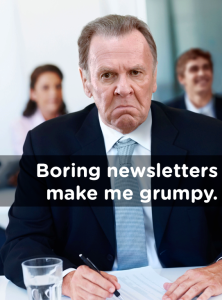 Most newsletters are BORINGGGGGGGG!!
It’s true. Most of the newsletters that I’ve seen or that I receive are packed with two things: articles and promotions. And sometimes they don’t even tell the reader why those articles matter. Here are the questions you need to be asking yourself:
- Do my customers and prospects really read my newsletters?
- Do they enjoy reading them?
- How would they respond if I just stopped sending them? Would they line up and ask where I went? Would they even notice?
- Do they look forward to my newsletters each month?
- Do they open it up and read it? ALL of it?
- Do I give them ideas, information, make them better, or do anything other than push my product? Do they engage and actually enjoy my monthly voice?
These can be tough questions. And sometimes the answers aren’t fun. So, if your answer is a big fat “No”, or a dull “I dunno”, then I guess that’s it right? There’s nothing you can do at all? Right?
WRONG ANSWER.
If you send a regular newsletter, it can be much more than just a delivery method for information. Each month your newsletter can be encouraging, funny, engaging, inspiring and welcoming. It can create a rich and meaningful relationship between you and your subscribers. I know how corny this sounds, but I’ve seen it!
You can be the source of something they want to share in a mom’s group, a morning huddle at an office, with their friends at happy hour, or out to their social networks. Your newsletter can be something that makes their day. Or their week!
So here’s an idea, if you feel that your newsletters have gone a bit stale, try this:
Create a theme for one month. This is where brainstorming will be helpful. How about something… super! (Maybe, in honor of a new superheros movie. But you can skip the latest Fantastic Four movie, yuk. )
Then, work within that theme. Let’s see, September 2015….Are you SUPER?
(Editor’s note: A common method is one called Starbursting– it’s a method based on asking questions rather than generating answers. Use What, Why, Who, Where, When and How to start questions about your business, using your theme. I.E. Why is our product super? How do we create a super experience? Who do we think is super?)
Now, start to think of how you can use super in all the different parts of your newsletter. Or, for a series of newsletters. Maybe you start out with a definition.
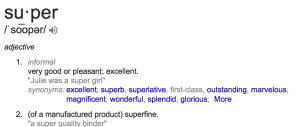 Super: adj 1. very good or pleasant, excellent
You could… list ten reasons your customers are super. Profile one, or a few of your employees as if they were super heroes.
You can have so much fun with this word. Depending on what industry you’re in, you may be able to come up with creative ways to incorporate your theme.
- For a family dental office you can have a “Super Flosser Challenge” – and profile a flosser of the month.
- For a traditional office you can have “Super Service Award” for someone who went above and beyond.
- You can outline super creative uses for your product – or a collection of super results your customers have shared.
- If you’re a nutritionist, or diet coach, you could do super foods for your health. Or for your memory. Or for your new and trendy diet.
- Maybe include a super testimonial from your super customer about a super employee. (Too much super?)
As an entrepreneur, you probably already are accustomed to using the resources around you. Well, if you’ve got a family, why not make it an activity a family can do at the dinner table. Brainstorming is about getting ideas out, and not about judging the ideas. So really, anyone can contribute. And then later, if you want to dismiss some things that’s totally fine. But let’s get it on the list first.
There are tons of brainstorming articles out there, and many different methods, but one common theme is that you can’t stop to judge the ideas as they come.
 Once you settle on a theme for your newsletter, you will find inspiration everywhere. And then, you’ll start to notice your new possible themes too. A bakery delivery truck might make you think ‘fresh’, and that’ll be your new theme.
You could be out running and you’ll think of a theme with customers running from their problems.
Perhaps you’re at a movie theater and it strikes you, your next theme will be “I can’t believe it’s not…” while eating buttered popcorn.
Or maybe an avocado tree will make you think about customer service.
Once your creative juices start flowing, you will not only enjoy writing your monthly newsletter, but your prospects and customers will begin engaging with you more, sharing your newletters more, and your relationships with strengthen. Oh, and higher engagement and stronger relationships are two pretty promising indicators for a uptick in sales too. Sounds supercalifragilicious to me! (Shoot, wrong Julie Andrews movie!)
P.S. To jumpstart your creative process you might start with a list someone else has already put together.
(Editor’s note: 75+24+33=132)
Let us know how you generate newsletter content in the comments below!
Customer Experience, Keap, Lifecycle Marketing, Marketing, Small Business
The first thing you need to know is that Lifecycle Marketing transcends Infusionsoft. It’s a stable concept for small businesses everywhere. The common mistakes I’m going to outline here are not unique to Infusionsoft users. They’re prevalent throughout the small business community at large.
Lifecycle Marketing (or LCM as I’ll call it) is the strategy around which Infusionsoft encourages you to build your business. As a consultant and trainer at Infusionsoft, I saw it work time and time again. And, I also got to see plenty of businesses who couldn’t stay afloat, or just struggled because they didn’t adopt it. Well, they either didn’t embrace it, didn’t understand it, or didn’t execute it. Let me outline 3 icebergs that could sink your LCM ship.
 For those who don’t know, Lifecycle Marketing involves designing a process, or several, that will take your customers experience into account during every single step along their customer journey. This means that everything from opting in to your list, all the way to making repeat purchases has been planned for. Learn more here.
1. LCM isn’t Static
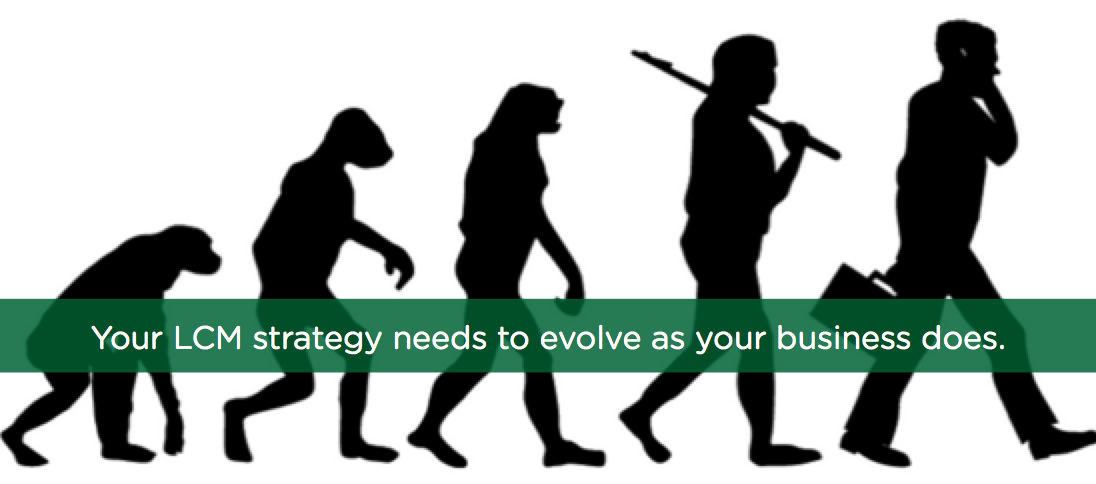
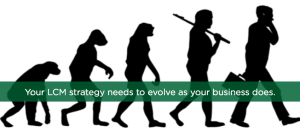 It needs to evolve. As your business changes, so to should your lifecycle marketing strategy. Too many businesses work through their LCM strategy, and then never revisit it. The reality is that small business lives in a constant state of flux. Your business looks different today than it did three months ago, or a year ago. It’s important to carve out regular time to revisit your LCM strategy and make sure that it reflects your current needs.
Action: Carve out a full day once a quarter to revisit and audit your LCM strategy. See what has changed in your business, and if anything needs to change in your LCM approach.
2. Too Simple to Work
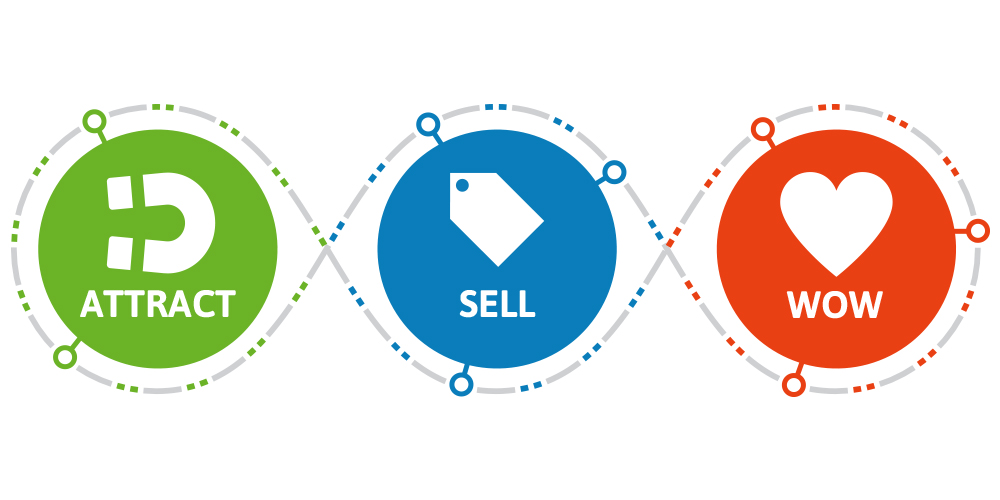
 I’ve seen it happen over and over. A small business owner is presented with the concept of Lifecycle Marketing and they’re underwhelmed by the graphic, or the explanation, or both, and so they dismiss it. Well, the reality is that the graphic isn’t all that impressive. I don’t think too make people look at it and say “Oh, SELL, that’s the piece I’ve been skipping.” But I do think there is value in the LCM graphic, and to me it’s in the connections between the stages. Far too often people tend to look at Lifecycle Marketing as these independent stages that comprise a strategy. When in reality, the real magic of an LCM strategy is in how the stages tie together. The intentional focus on transitioning prospects from one stage to another can be the difference between prospects becoming customers, or slipping between the cracks.
Action: Don’t take the graphic at face value. Look at how your LCM stages tie together, whether or not they were designed with respect to one another, and whether or not you’re creating a cohesive customer experience.
3. No Natural Nurture
To me, the easiest thing you can do to get more customers is develop and implement a nurture funnel. There are generally two ways to get more customers- either by getting new leads, or by converting the leads you have at a higher rate. Nurture is all about doing more with what you already have. (I feel like I’ve said that before) The reality is that most people agree with this, but very few actually do it. The biggest reason people aren’t doing this is because they don’t know HOW to do it. They’re confronted by question s like: Where do I begin? And What do I say? How much is too much? And if they can’t immediately answer, then they end up paralyzed and nothing gets done.
Well, I’ve got 11 questions you should walk through to help design a nurture funnel that works, and it starts with “What is the GOAL of my nurture?” (Hint: It may be more complex than ‘buy something’) If you’re looking to build, or refine, a nurture process, you can download the 11 questions here.
Action: Start with these 11 questions. Then find a tool (I recommend Infusionsoft) and build a nurture funnel that automatically follows up with prospects, and builds a relationship, provides value, and fosters trust.
There isn’t a single surefire indicator for whether or not a business is going to become a wild success, but having a solid Lifecycle Marketing strategy, and executing on it, will certainly set you up for smoother sailing.
Oh, and if you use Infusionsoft, check out my LCM: Real Life course – it’s all about bridging the gap between LCM theory and the actual campaigns that support it. And you can get the first module for free!

Guest Posts, Keap

Paul Sokol, Data Scientist, Infusionsoft
Today I have the third recommendation(see part 1 and part 2 here) from my good friend Paul Sokol. He’s known on the streets as Infusionsoft’s Campaign Builder Mad Scientist, and also happens to be one of the finest marketing minds I know. So, ya know, listen up:
Campaign Builder Mad Scientist’s Favorite Free Campaigns
Favorite Campaign #3: Sales Pipeline Starter Kit
-Paul Sokol, Data Scientist, Infusionsoft
There are certain versions of Infusionsoft that come with a pipeline module known as Opportunities. In my opinion, Opportunities are the most powerful part of Infusionsoft because nowhere else does it so eloquently combine CRM, automation and eCommerce. Seriously, when executed properly one sales rep could do the work of an entire team.
And that’s why this is my third favorite campaign.
Opportunities are one of the most misunderstood and misused parts of the software. The campaign is designed to not only get you the proper structure in place for a meaningful sales pipeline, but is also contains training on how to properly setup a sales rep’s dashboard and how to properly work an Opportunity record.
If you have a sales team (or YOU are the lone sales rep), I strongly recommend installing this campaign and taking the time to go through all the setup tutorials. If you remove all distractions (turn off phone, email, Facebook, etc.) you can most likely get through everything in under an hour, but the ROI from that focused time will be massive.
Let me share a story about how powerful Opportunities can be. Back in the day, I used to be a success coach (which is where I met Greg in the first place). One of my clients was Steve Schwartz, who sells electric dog fences. You know the type, a wireless dog  collar and if the dog crosses a buried wire they receive a light shock.
Anyway, when I first met Steve, it was just him and one other sales guy trying to get clients. Being in the northeast, his business was understandably seasonal. People want to get fences installed in the summer and not in the winter during all the snow.
Notice how I said “understandably seasonal”. That doesn’t mean the market itself is ACTUALLY seasonal.
And that is what Steve discovered upon fully adopting Opportunities into his sales process. Not only has his sales been improving, because of how he managed his sales pipeline, the winter is no longer a “slow season” for him and he can generate business year round.
To learn more about the Sales Pipeline Starter Kit, go here: https://marketplace.infusionsoft.com/campaign/sales-pipeline-starter-kit
I could go on for days pontificating about which campaigns you should be using in your business, but this is a great start. If you implement all three of these, you’ll get massively organized, grow your sales and above all save time. Plus, you’ll be able to provide a customer experience that large corporations could only dream of.
So go for it! Implement these and run circles around the competition 🙂

 Can you name the famous musical that those lyrics are from?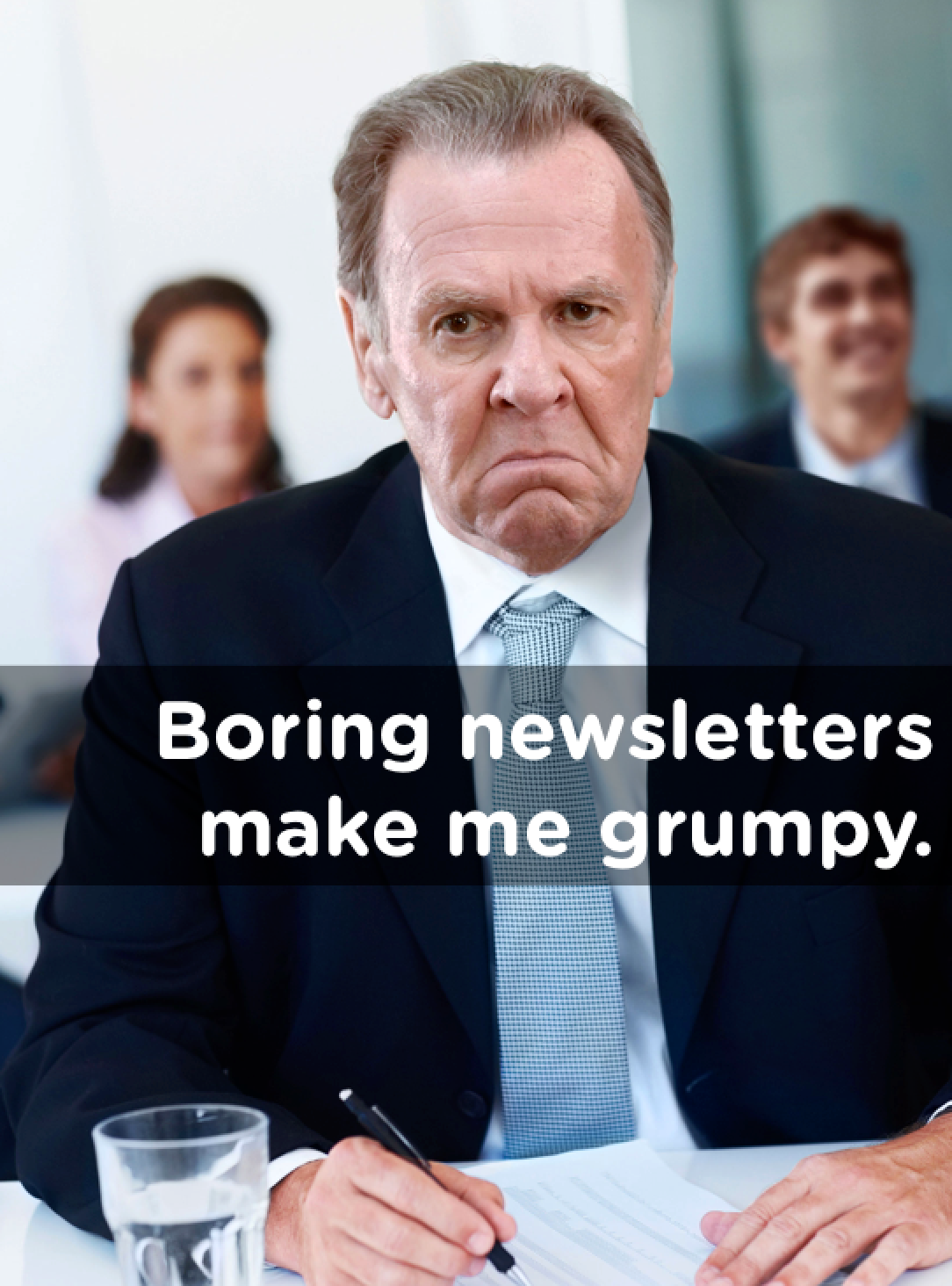
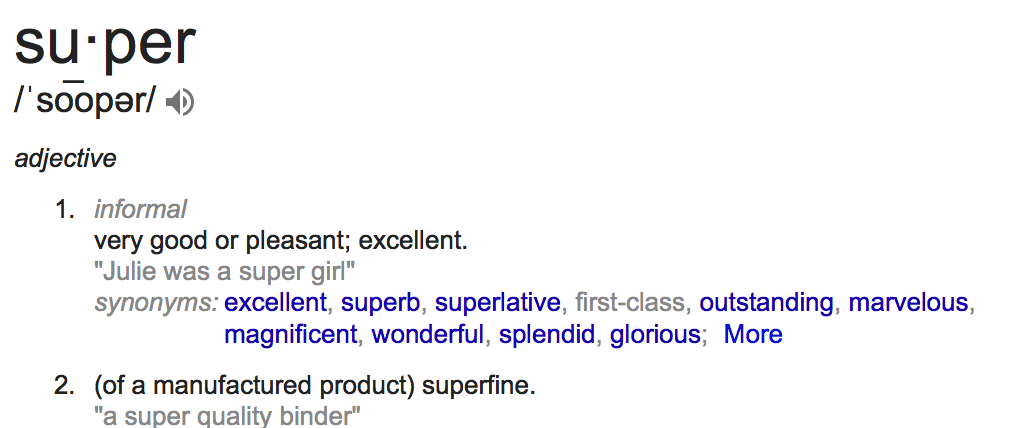 Super: adj 1. very good or pleasant, excellent
 Once you settle on a theme for your newsletter, you will find inspiration everywhere. And then, you’ll start to notice your new possible themes too. A bakery delivery truck might make you think ‘fresh’, and that’ll be your new theme.