Marketing, Tips and Tricks
Your subject line is really important, we can all agree on that. I mean, it’s the first thing people see – even before they open the email.
Well, with all that emphasis on subject lines, I thought it’d be fun to look back at the last 6 months of Monkeypod emails and see which subject lines of mine performed the best, and then try and figure out why.
The folks over at Digital Marketer have done a list like this every year for the last few years, and they seem to know what they’re doing so I’m not going to reinvent the wheel. I’ll just borrow their structure and use my own findings (Here’s their 2015 list).
Feel free to steal these subject lines for your own business, or use them as inspiration when you’re writing new ones.
Note: I don’t have a massive audience, but I have sent a little over 18,000 emails since June. For the sake of this list, I’m only going to look at emails that were sent to 100+ recipients.
Another note: Open rates and averages can vary dramatically from business to business, and from industry to industry. I’ve worked hard to keep my list really targeted, and to set the appropriate expectations for subscribers. As a result, my audience is pretty engaged. Don’t get discouraged if your open rates aren’t as high as you’d like, it’s an opportunity.
10. Missing Tips Alert [SOS]
- Open Rate: 57%
- Click Through: 15%
- Content: Promotion to buy the Mini Pod Tips Series (get the tips)
- Analysis: The subject line piques curiosity by indicating that something is missing. I think people inherently have a fear of missing out on things, and the [SOS] added on afterward further indicates that something is wrong, and even that they might be able to fix it.
9. Decision Diamond Hack [BLOG]
- Open Rate: 57%
- Click Through: 22%
- Content: Blog Post (read it)
- Analysis: Decision diamonds are hard for people. And people like hacks. It’s that simple. By using the word ‘hack’, it implies that this is something secret, or at least not very well known. My audience is primarily Infusionsoft users, and this resonated pretty well.
8. Lesson 3: Simple Works
- Open Rate: 59%
- Click Through: N/A
- Content: Lesson 3 of the 5 Lessons of Automation (grab em)
- Analysis: I set the expectation that I’d be delivering 5 lessons – so the recipients are expecting the email, which is why this and the number 6 subject line both come from the same series of emails. Also, the simplicity of the subject line “Simple Works” exerts confidence without making it sound intimidating.
7. PartnerCon Recap Part 1
- Open Rate: 60%
- Click Through: 29%
- Content: Blog Post (read it)
- Analysis: PartnerCon is an important event in the Infusionsoft ecosystem, and as I’ve stated, the majority of my blog readers are Infusionsoft users and partners. This post was published right after PartnerCon, so I think the timing helped it dramatically. Lots of people were wondering what was said, or revealed, and I think even those who attended were curious about a condensed summary. Also, by saying Part 1, I indicated that there’d be more coming, and I think people want to make sure they’re caught up when the next post comes out.
6. Lesson 2: Bring a Personality
- Open Rate: 60%
- Click Through: N/A
- Content: Lesson 2 of the 5 Lessons of Automation
- Analysis: As with before, the expectation was set that I’d be delivering 5 lessons. So I think recipients were expecting the email, and I also think the word “lesson” indicates that there’s something worth learning in the email. Finally, saying “Bring a Personality” nearly implies that they haven’t been bringing one, so I think some people may have opened hoping that they were already doing this.
 5. COWABUNGA [BLOG POST]
- Open Rate: 61%
- Click Through: 3%
- Content: Blog Post (read it)
- Analysis: This was a really effective subject line, but obviously it didn’t generate very many clicks to the content. I can’t be certain, but this post had less technical information, and was a lighter post about what email marketing pet peeves the Teenage Mutant Ninja Turtles might have. I’m guessing the subject line was fun and intriguing, but once they read the email, the copy either didn’t do a good enough job framing up the blog post, or the topic just didn’t resonate.
4. Feeling Tipsy?
- Open Rate: 62%
- Click Through: 6%
- Content: Nurture emails after the Mini Pod Tips Series opt in.
- Analysis: This email had interesting results. Obviously people opened it. This was a follow-up to the Mini Pod Tips Series, so I was using the word “Tipsy” as a play on words, and at first glance I attributed the success of this email to my own clever subject line. But, back in September I also got a reply to this email from a then prospect who told me he nearly unsubscribed because this email rubbed him the wrong way, because read it and felt it was implying that he was drunk, or would have to be drunk to not take my offer. So, I adapted the email copy to explain the subject line further and make sure that I’m not offending anyone. There’s something to be said for the “shock and awe” approach, but you definitely don’t want to be offending your list on a regular basis.
 3. Pleased to Meet You [New Product]
- Open Rate: 67%
- Click Through: 12%
- Content: Mini Pod Tips Series Announcement
- Analysis: Man, the mini pod tips series has come up a handful of times in my top 10 subject lines. Which, if you read about my first flop, doesn’t seem to make a whole lot of sense. But I guess it just goes to show that subject lines and open rates don’t necessarily translate to results. This subject line was fairly direct, and I included the *New Product* teaser because I had eluded to an upcoming product a few times before hand. Also, because people like free things, and we like good deals. If you’re receiving emails from me, there’s a good chance that you like the type of thing I have to offer – so I don’t see any reason to disguise an offer or a new product.
2. Just a Quickie
- Open Rate: 68%
- Click Through: 31%
- Content: Survey Request
- Analysis: This is a subject line that I use in a few different campaigns and it consistently performs. People like it because it’s a little suggestive, just enough to pique the recipients curiosity. And the click through is successful as well because once they open the email, it’s really quick and to the point “Hey, take this one question survey”.
1. Alright. Let’s segment.
- Open Rate: 88%
- Click Through: 73%
- Content: Segmentation Email
- Analysis: Kind of an anticlimactic conclusion to this list, right? This subject line isn’t all that sexy, but it was sent to a few hundred people and 88% opened it? And 73% took an action? To me, that’s pretty remarkable. So the take-away here isn’t the subject line itself, it’s really the circumstances surrounding this email that made it so successful. When I started Monkeypod I put out a handful of opt-in forms on my various social media channel, and I got several hundred sign-ups from people who wanted to know what I was up to. Then, after I explained a little bit about the vision I had for Monkeypod, and the impetus behind me leaving Infusionsoft; I sent this email and asked people to segment themselves. I gave them a handful of links, and let them click on whichever best described them. In doing so, I was of course applying tags and segmenting people into the various groups so that I could make sure that I only sent them the things which they had told me they wanted to receive. To be honest, this email is probably the reason that my other open rates are as high as they’ve been as well.
Email is still a really effective marketing tool. And I’m not sharing these subject lines with you to brag, although I am pretty proud of the engagement I’ve been able to sustain. I’m sharing these because I hope that you can either use them directly, or as inspiration for your marketing collateral in the upcoming year.
Disclaimer: Yes, I know that a few hundred people isn’t a statistically significant sampling. I’m not a statistician. I just thought this would be a fun way to share some of the subject lines that have been working for me.
Please feel free to share your best performing subject lines below, or by emailing me directly! And if you need help finding them, check out this article from Brett at Blick Digital.

Lifecycle Marketing, Small Business, Tips and Tricks
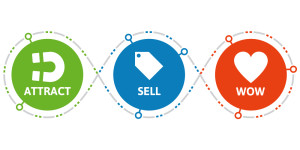
 In case you missed the first part of this series, I’m a huge advocate for using Lifecycle Marketing in all aspects of your business. You can check out the concepts here of Lifecycle Marketing on the Infusionsoft website, but basically it involves planning an intentional progression for each and every lead as they transition from prospect, to customer, to raving brand advocate.
I’ve been collecting brief perspectives from Lifecycle Marketing experts, and it’s been really insightful to hear how different people approach the concept. The following insights are from Scott Richins. Scott, in addition to being a friend of mine, was formerly the host of the Infusionsoft Mastermind calls and also of Infusionsoft University (he actually trained me).
GJ: Can you briefly explain why lifecycle marketing matters to small businesses?
SR: Lifecycle marketing gives businesses a holistic framework within which they can build their businesses. Many times customers don’t know what they don’t know, so lifecycle marketing gives them a set of benchmarks – a progression to follow – to ensure they aren’t leaving gaps in their customer experience.
GJ: What is the hardest part about lifecycle marketing?
SR: The hardest part is generally anything that isn’t front end of the funnel. Lead generation is what everyone wants to focus on; it helps bring in more money in a short period of time. However, a company’s long term success is often times based on the experience that the company’s customers have after they have made a purchase. (Tweet that)
Focus on your customer experience, after they decide to buy, and maximizing that. Look at it as an investment in your marketing.
GJ: What do most people misunderstand about lifecycle marketing?
SR: Lifecycle marketing is not typically best implemented from beginning to end. If you launch a great attract campaign but you have no way of following up and educating your prospects or of completing a transaction with them, then you may start strong but you’ll sputter shortly after launch.
I recommend you start closest to the cash. You likely already have some leads coming in, so start converting more of those leads into customer first. Get an offer campaign in place. Then turn immediately to the Wow stage to give those customers a memorable experience. Those are the most important two to get into place, because any leads that you bring in after that will receive a strong offer and excellent fulfillment.
After that, you’ll either implement a referral campaign (which is really just another form of lead generation), or shift back upstream to lead capture and education. And when you get version 1 done, go back and level up each area.

GJ: Talk about the relationship between Lifecycle Marketing and Infusionsoft (the company or the software):
SR: Lifecycle marketing is the synthesis of the tens of thousands of hours of learnings that have come from Infusionsoft (the company) helping tens of thousands of small businesses grow their businesses. And Infusionsoft (the software) is the best tool to use to implement lifecycle marketing in a business. Lifecycle marketing is all about shifting your messaging based on the behavior of your customers, and the campaign builder is the easiest, most powerful way to build behavior based marketing automation.
GJ: Why are you an expert on Lifecycle Marketing?
SR: I’ve had the opportunity to work with thousands of small businesses to help them implement lifecycle marketing into their businesses. Since 2011, I have either been consulting or training Infusionsoft customers around the world on how to apply lifecycle marketing principles into their business. My expertise in business process mapping lead me to be a part of the team that designed the campaign builder, after which I began to teach lifecycle marketing through various Infusionsoft training programs – Infusionsoft University, Virtual Academy, and Mastermind Webinar series.
If you’d like to get in touch with Scott, or have questions about anything in this post, feel free to comment below or use the details provided:
Name: Scott Richins
Company: Infusionsoft
Website: www.Infusionsoft.com
Twitter Handle: @ScottRichins
[rad_rapidology_inline optin_id=”optin_4″]
Customer Experience, Marketing, Small Business
So, it’s the end of the year, and I’m back in Michigan visiting my family. I hope you’re enjoying some time with yours as well, if that’s the type of thing you’re into. So, 2015 has been a pretty busy year for me. Most notably I left my job at Infusionsoft, moved to San Diego, and started Monkeypod Marketing.
Pretty much any time I talk to someone that I haven’t seen in a while, I end up answering a few questions about how Monkeypod is going. I don’t mind it one bit because the truth is that it’s going really well. I’ve done some things that I’m really proud of, and the feedback has been really overwhelmingly positive. It hasn’t necessarily taken the shape or direction that I thought it would, but it’s growing every day. Every single one of my virtual courses I’ve launched has been really well received.
Except one.
This brings me to the title of this post, my first flop. You see, I’ve now launched a handful of courses. The CB: Trilogy covers the campaign builder in a comprehensive way; LCM: Real Life is the bridge between Lifecycle Marketing strategy, and the actual campaigns that execute it; and the Ecommerce Pod is a linear approach to understanding and configuring the Infusionsoft ecommerce section. And then there’s the Mini Pod Tips Series, which didn’t make the splash I hoped it would. And I think I know why.
I’m not above admitting when something didn’t go exactly to plan. I’m not perfect, despite what my mom might tell you. In fact, I’ve already taken away some really important lessons from this flop and my hope is that by being transparent about it you can take away something too.
So, I’ve been building and launching courses, right? Well, my courses vary a little in price. They range from $70-80 to $150 or so. And I started thinking “If someone doesn’t know anything about me, asking them to spend $70 might be a little steep.”
So back in August or so I got the bright idea that I needed to have an entry level product, something inexpensive that also allowed people to get to know me, and gave them a taste of what Monkeypod is all about. (Yeah, kind of like tripwire marketing)
So I started to design what that might look like, and the reality is that there are so many different types of Infusionsoft users. For example, some of you reading this are brand new to Infusionsoft, some are veteran users; some of you are solopreneurs who do everything yourself, and some are marketing managers for companies with a few dozen employees. So how could I possible design something that was appealing to everyone?
Well, that’s where the idea of a “Tips Series” came in, so I’d have something for everyone. I put together 20 small, digestible tips and recorded videos explaining and outlining them. Some of thees tips are strategic, some are feature oriented, and some are just “did you know it could do this cool thing”. I spent a lot of time and energy compiling, planning, recording and editing the tips series – and it turned out exactly the way I wanted. The videos are pretty polished and the content is rock solid.
I wanted to make it really accessible, so as to reach a broad audience, so I decided to give away the first 8. Why 8? Because why not. Then, I figured after the 8 videos, once everyone has gotten a feel for who I am and how awesome these tips are, I’d present people with the chance to buy 12 more for $20, so it’d work out to be about $1 per tip. What a steal, right?
Well, I launched it. Promoted it on my social channels, and even put some money into some Facebook ads behind it and people loved the first 8.
But no one was taking the offer for the next twelve videos. Like, seriously, no one.
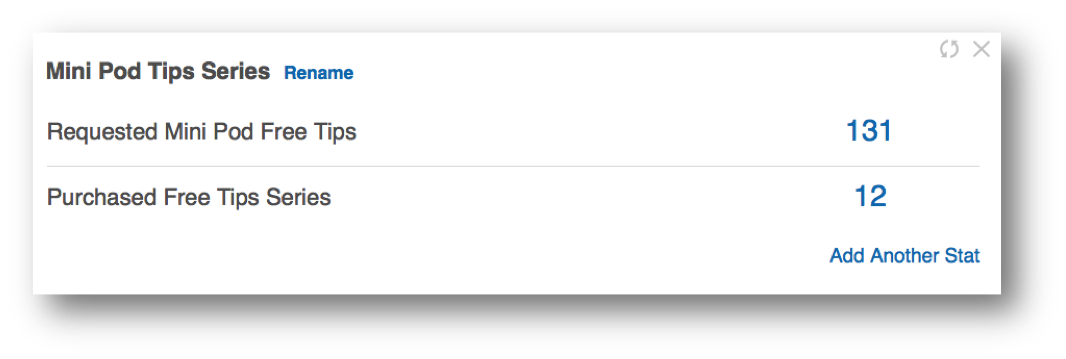
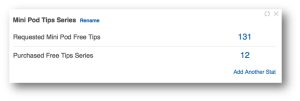
I remember really clearly that 96 people had signed up for the free 8 before I had one person decide to buy the next twelve. Now I know every industry has their own benchmarks for what they consider to be successful conversion rates; but I’m pretty sure that 1% isn’t what we’re going for.
So I did some homework. I reached out to some people who had taken the 8 tips to try and understand what they liked, or what they didn’t; and also why they decided not to grab the next twelve. And here’s what I learned – nearly every single person had found the first 8 tips valuable. Maybe not every single tip, but there was something for everyone. The problem wasn’t that they weren’t valuable, the problem was that they didn’t solve a need. They didn’t address an issue.
I had created the course for the wrong reason.
You see, all of my other courses were successful because they were solving a direct pain point.
“The campaign builder is hard to learn, and I want to get more out of it.”
Boom, CB: Trilogy.
“Lifecycle Marketing is a good strategy, but I don’t quite know how to actually do it.”
Oh, hello there LCM: Real Life.
“I need to start selling, and there isn’t a linear progression for configuring the Ecommerce section.”
Ask and ye shall receive, Ecommerce Pod.
But the Mini Pod Tips Series, besides being a mouthful on it’s own, had ended up being pretty self-serving. I created a course to introduce myself, and yeah, to demonstrate value. Those are things that I wanted. Not things that people were asking for. I don’t think anyone was sitting around at home thinking to themselves “Man, I wish I had some tips.”
Which is a shame, because the tips series is actually really valuable. I just did a poor job of positioning it. So, I’ve gone back to the drawing board on it, and I made a few changes to the way the campaign functions as well, and things have changed a little; but my real take-away is that I need to stay focused on solving problems. Although, the tweaks have helped too, roughly 30% of the last 35 have ended up taking the offer to buy the extra 12.
 So, all this to say – figure out what problem you’re solving. Stay focused on providing value in a space that needs value. And yes, let your customers tell you what they want (and I’m listening, I’ve got a list of courses I still plan to create). Of course it is a balancing act, we’ve all heard the quote attributed (maybe inaccurately?) to Henry Ford “If I had asked them what they wanted, they would have said faster horses.”
Well, the problem in this case was not that I wasn’t listening, it’s that my courses were had been well received because they were designed to meet a need. Sometimes this need is stated explicitly and sometimes it won’t be.
Oh, and if things don’t go according to plan, make sure you extract a lesson from it (and maybe a blog post too).
Would love to hear about any tough lessons you’ve learned this year in the comments below! Happy holidays everyone, thanks for reading.

Lifecycle Marketing, Small Business, Tips and Tricks
As you probably have gathered, I’m a huge advocate for using Lifecycle Marketing in all aspects of your business. If you aren’t familiar with Lifecycle Marketing(LCM), you can check out the concepts here in the free course from FUEL.
As an Infusionsoft consultant, and later as a trainer, it was ingrained in me over and over, not just by Infusionsoft touting it, but by witnessing the genuine impact it has and results it consistently creates. (Sidenote, until today I thought it was spelled “engr ained”)
In fact, I believe so firmly in the concept of Lifecycle Marketing that the second course I created under the Monkeypod brand was LCM: Real Life, all about helping small businesses take their Lifecycle Marketing strategy and execute it in real life.
Anyway, over the last few months I’ve been collecting perspectives from Lifecycle Marketing experts, and I wanted to share them here. The following insights are from Justin MacDonald, close friend of mine, Adam Lavine doppleganger, current Infusionsoft employee, and fellow entrepreneur.
GJ: Can you briefly explain why lifecycle marketing matters to small businesses?
JM: Lifecycle Marketing matters to small business because it provides a clear blueprint of your existing business and where you should invest in your sales, marketing, and fulfillment to improve and grow. It takes the guess work out of what you should be doing.
It matters because too many small businesses know that this stuff is important, but they forget to tie it all together. They end up creating a disjointed customer experience that won’t scale.
GJ: What is the hardest part about LCM?
JM: LCM creates the “why” and then the “what” but doesn’t address the “how”. This is the difficult part — translating “what” you should do next or better in your business into “how” you can best execute it.
GJ: What do most people misunderstand about LCM?
JM: I think the biggest mistake people make regarding Lifecycle Marketing is not actually using it, meaning, not using ALL of it. It is a lifecycle. You have to prioritize what to execute first, of course, but it is an entire system that is effective when leveraged in its entirety. You don’t minor in LCM, you major in it. (Tweet that)
That, and also nurture. Not enough people focus on building a relationship with their potential customers.
GJ: Talk about the relationship between Lifecycle Marketing and Infusionsoft (the company or the software):
JM: LCM is the strategy, Infusionsoft is the tool that best enables the execution of that strategy. The Lifecycle Marketing concepts hold true for every single business, and there are other tools that can help facilitate it, but few that do it as elegantly and comprehensively as Infusionsoft can.
GJ: Why are you an LCM expert?
JM: Well, Greg asked for my perspective, and since he’s and expert on Lifecycle Marketing…
I suppose other reasons might include personally using LCM and Infusionsoft to grow my own business 6x in 3 years; serving hundreds of small businesses through LCM consulting and implementation, designing Infusionsoft services and events that serve thousands of small businesses through LCM consulting and implementation, and then of course, mostly because of Greg’s Beard.
If you’d like to get in touch with Justin, or have questions about anything in this post, feel free to comment below or use the details provided:
Name: Justin “Coach Mac” MacDonald
Company: Authority Football
Website: www.Authorityfootball.com
Twitter Handle: @Jmacfusion
[rad_rapidology_inline optin_id=”optin_4″]
Guest Posts, Keap, Small Business

Paul Sokol, Data Scientist, Infusionsoft
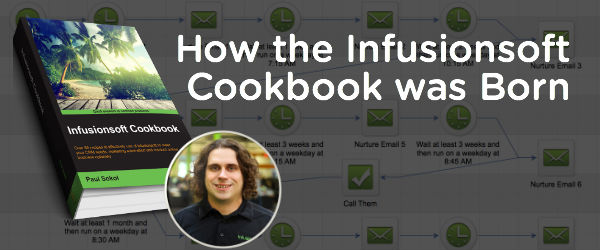
Another awesome post from the one and only Paul Sokol. Check out this post, or this one, or this one on the Ninja Turtles if you want to a formal introduction to The Mad Scientist.
Hello fair Monkeypod reader, good to see you again!
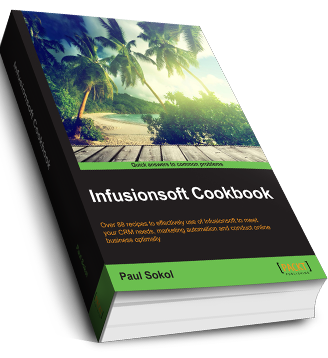
Some people are curious about this Infusionsoft Cookbook thing you might have seen floating around. If you hadn’t heard, I recently wrote a book about Infusionsoft strategy.
My fellow Jedi Greg (aka the dude who owns this blog) asked an excellent question, “Why did you write it?”
The literal reason is that someone presented me with the opportunity to do so, and I chose to pursue it. Why did I choose to pursue it? Because I want as many people as possible to succeed with their small business and writing a book seemed like a great opportunity to push that agenda.
Its a fascinating story of manifestation actually.
You see, back in early 2014 I was blessed with an opportunity to speak at ICON14 on the topic of workflow automation. To accompany the talk, I included a PDF (here ya go) that was a workflow cookbook with some “recipes” for different Infusionsoft campaign models. It was fun playing around with the recipe idea in the writing.
The talk happened and people downloaded it. Around that time, I recall saying something to the effect of, “I’d love to write an entire Infusionsoft cookbook some day“. How powerful those words were. The download rates dwindled soon after ICON14 and that was the last I thought about it.
 Towards the very beginning of 2015, Packt Publishing in the UK reached out to me with a tremendously appealing offer: Do you want to write an Infusionsoft Cookbook? Of course, in my head the answer was an emphatic “Yes!“. There was an interesting dilemma though. Being a proud Infusionite I am unable to get paid for my Infusionsoft knowledge outside the building. In other words, there would be a conflict of interest if I did any outside consulting or implementation.
This opportunity was too good to be true, so I had to at least try for it. After getting approval to ask the CTO from my manager, it received a blessing to ask the legal team. That team verified it was ok with the CMO and I was given the green light to get a publishing contract. Gotta love working for a company that believes in people and their dreams 🙂
The marathon of writing and editing began. About 9 months later, the drafts of all chapters were in the hands of the publisher. Soon after the final drafts were completed and it went to print-on-demand.
Which is how we get to this post today, fair Monkeypod friends.
What can you learn from this? Why did you even just read this?
Hopefully, it provided some hope and inspiration for you to tackle a big dream of your own. No idea how to start? Perfect! Start researching and meeting others who might know how to do it. Know what you have to do but simply aren’t for whatever reason? Perfect! Make the choice to spend 15-30 minutes on it today. Not tomorrow, today. Writing this book was a marathon; and not writing for a single day pushed it back exactly one day every time.
Shameless Self-Promotion Section: If you want to get my Top 3 Marketplace campaigns along with the Infusionsoft Cookbook, please visit https://www.iscookbook.com
What big dreams do YOU have? Leave a comment and maybe we can help each other out as a community!
Editor’s Note: I reached back out to Paul to try and dig in on how the connection came to be. Did they really randomly reach out to you? Seemed far fetched to me, and the reality is, yes. They did. This opportunity just happened.
So, I think the takeaway is that by putting himself out there, by speaking at ICON, or writing for Infusionsoft’s blog, or being generally active on social media, someone saw something they liked, and it sparked an idea somewhere that ultimately manifested as this book. What are you doing to put yourself out there?
Small Business
I know, I know, the suspense has been killing you. In parts one and two, I eluded to the emotional turmoil I had experienced and then I kept you waiting. Not fair.
But wait no more, lemme explain.
As ParterCon approached I was really busy creating course content, keeping the blog updates regular, and managing the membership program I’ve been running. I had registered and bought my ticket, so I knew I was going, but I hadn’t really spent any time or energy thinking about it outside of that.
About a week before PartnerCon Sara asked me if I was excited about it. And I thought about it for a moment, and I answered “Not yet. But I’m sure I will be.” And I believed that I would be.
 You see, PartnerCon is this exciting event where hundreds of people get together who all have a mutually shared interest. Helping small businesses. Specifically, helping those that use Infusionsoft for their small business. It’s a powerful three days, filled with appreciation, support, ideas, and actual tangible progress. You can literally walk around PartnerCon and hear people making plans, both for their own businesses but also for ways they can help one another. I’ve attended PartnerCon a few times in the past, but this year was my first time as an actual partner.
So the day before I left for PartnerCon Sara asked me once more, and after I thought about it, I realized I still wasn’t excited. I was, well, something else. Anxious maybe?
I drove to PartnerCon instead of flying, so I had nearly six hours in the car by myself to mull over why I was feeling that way. I mean, I love Infusionsoft. I love the Partner ecosystem. I’ve been a partner for six months now and this will be my chance to connect and reconnect with partners in my new role, as Monkeypod Marketing, instead of as employee Greg Jenkins.
So why then? This should be a dream scenario. It’s all the things I love. Why wasn’t I excited?
Well, after some reflection, I think it was because of a few things.
The first of which I noticed as I was walking up to register and pick up my badge. It didn’t feel like home anymore (despite the event’s “welcome home” theme). I spent well over three years walking into an Infusionsoft office nearly every single day. And it just felt so different to be walking at this time so that I could pick up the badge that would allow me to be there all week. I walked past current employees and got a mixtur e of looks – some were excited to see me, some looked at me just as a familiar face that they were struggling to place, and others walked right by me. Now, Infusionsoft is a big building, with 700+ employees, so naturally, I didn’t know everyone; but I always felt at home. Ironically, until this time.
Now, I want to be clear. Infusionsoft did an excellent job making partners feel welcome. And I think that for the partners who weren’t used to being in that office every single day, they did feel at home. Well, as much as one can while they’re at a conference.
The second source of anxiety I identified was that I wasn’t sure how I’d be received by the partners I already knew and liked. When I was at Infusionsoft, I was a resource. A valuable (I hope) asset that could give them inside tips, or potentially help with projects or concerns they were facing. Now, well, I was just another partner; and for some, I suppose I’m now a competitor. In reality, every single partner I talked to was supportive and welcoming. It’s possible the ones who don’t like me, or perceive me as competition, just avoided talking to me; but overall, every partner I met or reconnected with had glowing things to say about me personally, about Monkeypod, or about a blog post or video of mine they had seen.
It’s not that I thought the Partner community wouldn’t remember me, it’s just that for so many relationships, the context of the relationship carries a lot of weight. And I wasn’t sure how much of the impression I had made was “Greg the Employee” and how much was “Greg the Person with that great beard”.
The third, and perhaps most important, a contributor to my emotional distress was the pressure of visiting with the current Infusionsoft employees. Yup, even my close friends. Lemme explain: Because Infusionsoft deals with small businesses all day every day when you work there, you find yourself craving entrepreneurship. Heck, just listen to the core values, “We believe in people and their dreams”, “We empower entrepreneurs”, statements like these are attractive to employees who have a passion for small business. But, the type of people they attract also frequently has a desire to start their own business.
Since leaving Infusionsoft I’ve had many of my friends and former co-workers reach out to ask how things are going, and to inquire about the latest and greatest from the front line of starting a business. Which is awesome, and I appreciate it. For many, it’s a unique mixture of genuine support and suppressed jealousy. Lots of people want to know how things are going for me, and I really do think they care about my well-being, but I also think there’s a part of them that wants to know “Is it worth it?”.
So I guess some of my anxiety was coming from the fact that part of me wished I had more to show for myself. A part of me wished I could say “Yup, I left. I never second-guessed myself and things have never been better. I immediately tripled my salary and I work 20 hours a week from home in my sweatpants.” But that just hasn’t been the case (except for the occasional sweatpants day).
Don’t get me wrong. Life is great. And Monkeypod is growing, rapidly. And I’m beyond proud of what I’ve been able to accomplish in my first six months. But it’s also really hard. And it hasn’t gone as planned.
Running a small business is hard. And it’s been humbling. I was arguably as prepared as anyone who sets out to start a business, more so even. But even with all the skills, tools and resources I’ve had, it’s still been an intricate blend of exhausting frustration, and exhilarating validation.
Anyway, the week came and went, and everything went as smoothly as I could have hoped. I got to reconnect with some friendly old faces, and I got to meet some awesome new ones. The anxiety I was feeling, although real, in the end, was probably unnecessary.