How to Get More People to Start and Finish your Course

How to Get More People to Start and Finish your Course

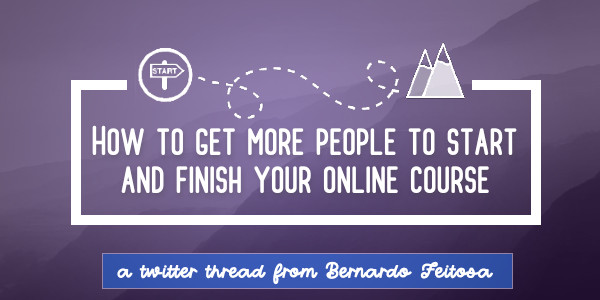
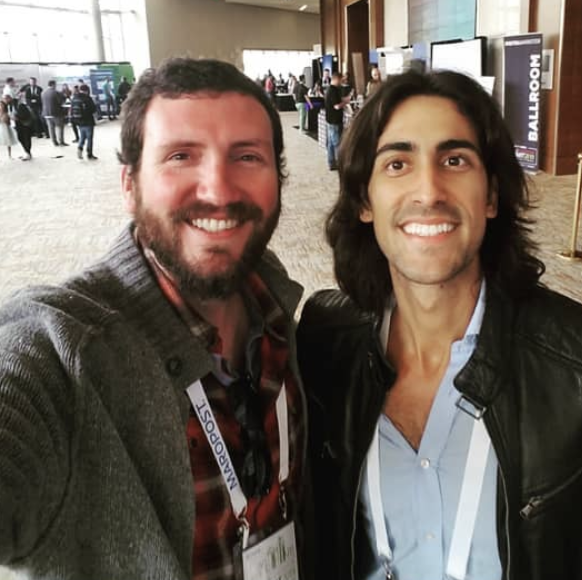
Recently I saw a thread on twitter from my friend Bernardo Feitosa where he dug into ‘cracking the engagement code’ for an online course he offers.

The Results: 5x more course participants engaged, and 16x more completed the course.

The thread covers how they did it – it was so valuable I asked him if I could turn it into this blog post – he said yes (obviously).

Note: If you want to see the original thread on Twitter you can do that here.

It all started with this masterful set-up:

Here are the following steps Bernardo outlined:

1. Commitment Form

1/ Commitment Form: If you want someone to do something, why not make them promise?
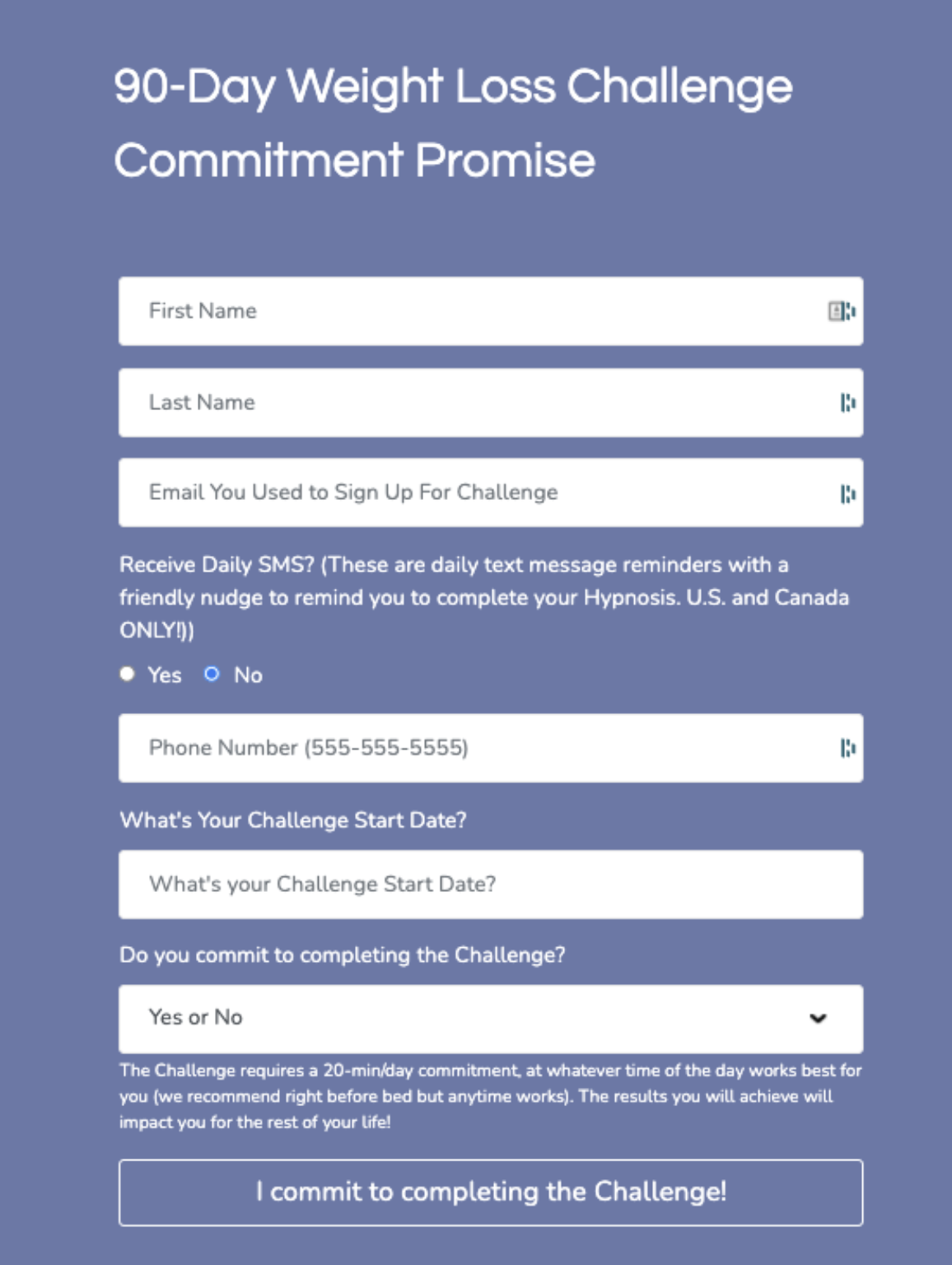
Commitment Form

2. The Relentless Sequence

2/ The Relentless Sequence: There’s only ONE goal to this sequence: sign the commitment form.

I won’t show a single piece of content from the course before they commit to completing it. Getting this level of buy-in from every student was a game-changer.
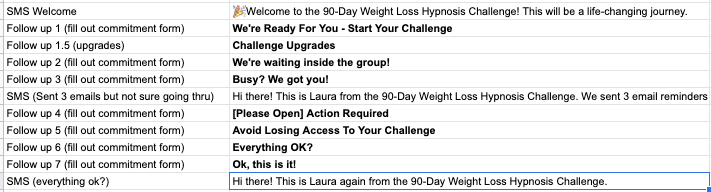
Relentless Sequence

3. The Magic Email

3/ The MAGIC email: “Is everything OK?” We’ve delivered emails over 10M times, and in all of that history, one email has the highest response rate ever… This is it:
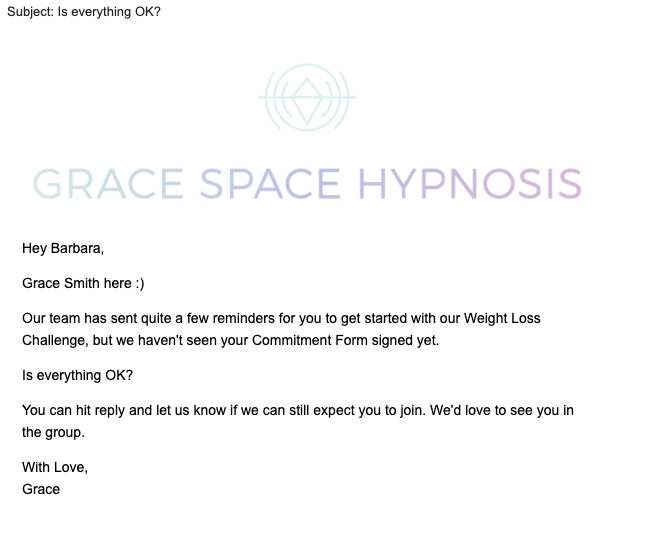
Magic Email

3.5/ This “Magic” email is so good that every day I see new replies in our inbox, with customers saying how grateful they are that we’re following up.
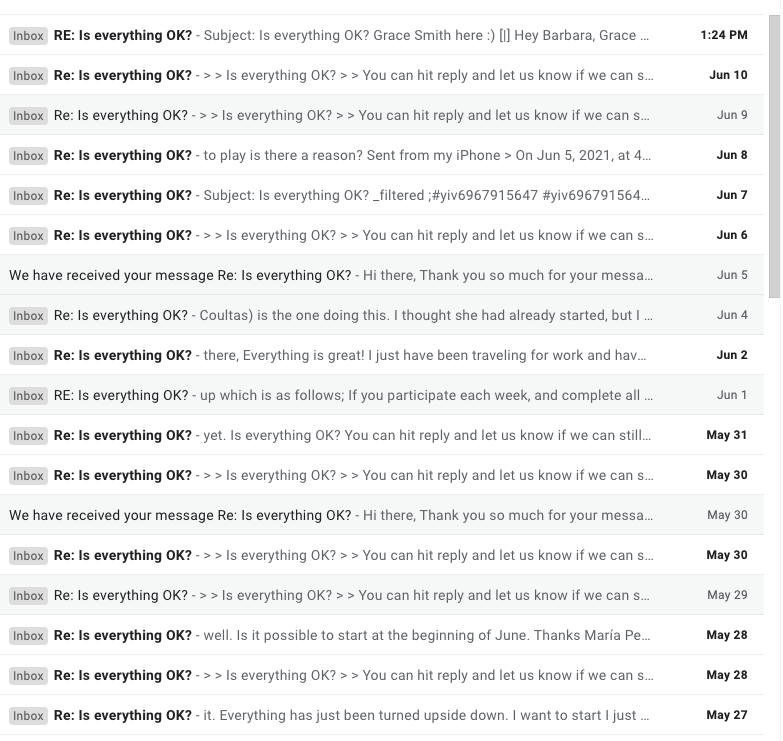
Magic Inbox

4. SMS Reminders

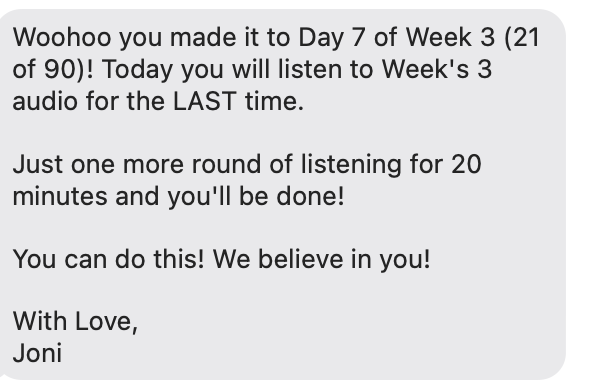
4/ SMS Reminders Because our course is a daily challenge, we send daily SMS. For a regular course weekly might be better.

So it wouldn’t be annoying, we had people opt-in to these via the commitment form. 60% of all students say YES to daily SMS.
SMS Reminders

5. Lessons Learned

5/ Lessons I learned:

* It was worth it. Our upsell rate has doubled. Not doing that would have been leaving money on the table.

* Don’t be afraid to follow up. Clients actually appreciate it. You’re helping them.

* Keep it simple. Don’t overwhelm them with too many steps.

6. Why not a cohort?

6/ We have a high-ticket cohort based course with 90%+ completion rates. Cohorts are the best to maximize completion rates.

For this lower-ticket course, we needed the strategy to be evergreen.

7. What was the Tech Stack?

7/ Tech stack:

* All automation was done via Infusionsoft, SMS was integrated with PlusThisandTwilio

All could be done with other CRMs like HubSpot, ActiveCampaign, etc.

* This course is on WP with Memberium but I also use Thinkific for cohort courses.

Other options: Teachable out of the box and AccessAlly by Nathalie Lussier for WordPress.

Want it done for you? A top notch consultant like Brian Keith can help you implement.

Bernardo is (obviously) a super smart guy, and this thread was packed with valuable information that he shared generously.

If you found it valuable, you can:

1. Retweet and tag course creators who could benefit from this strategy

2. Follow him @BernFeitosa to see more of his journey
Bernardo Feitosa
Introducing Field Math

Introducing Field Math

That’s right – field math has been released as a native function inside of Keap.

Historically you’ve been able to set or update a contact field as a step inside your campaigns, but with this update you can now also perform basic math functions (add, subtract, multiply, divide) – which takes things to a whole new level.

There are countless use cases where this can be valuable – but a common scenario is when you want to unlock a bonus for someone after they’ve made a certain number of purchases.

Like, a punch card at a sandwich shop – or any sort of frequent flyer program.

Here’s a demo of how that campaign structure might look using this new feature:

Okay party people – that’s the new field math feature.

This isn’t quite as flexible as PlusThis, Zapier, or some of the other third-party tools that handle this – but it’s nice to have a native option that handles simple use cases.

Here’s a link to the full release notes from the Keap help site.

If you have any questions or comments please leave them below – I’d love to hear the different use cases you might have for this throughout your business.

Introducing Slottable

Introducing Slottable

Picture this:

Your company is holding an event with slots available on three different dates. And the three date options are at different locations or can host different amounts of people.

Not far-fetched is it?

So why is it so hard?

We run into scenarios like this from time to time in The Monkeypod Grove. A seemingly easy concept — Hosting an event with slots to fill — is for some reason actually kind of hard to execute and automate using Keap and Calendly and other fun tools like these.

Grovers are constantly explaining their unique issues, and lots of brilliant OGs have had to come up with some sophisticated campaign manipulation to make it work the way we want it to for these unique use cases.

But it shouldn’t be that hard. All we want is to display each slot, when/where each session is, show many are left, and kick off some automation. And it was hard.. until now.

Introducing Slottable. A ridiculously simple tool made solely to solve this simple, yet common, problem.

We asked our good friend Bryce to do a demo for us:

Okay ya’ll – that’s Slottable.

It’s quick – easy to use – and solves some real world problems for folks who need slot scheduling.

If you’re interested, check out the details, or jump in on their free trial here.

Questions, comments, compliments? Drop em below.

Editing Live Campaigns

Editing Live Campaigns

“What happens when I edit a Keap campaign?”

Versions of this question come up over and over in the Keap community, and for a few good reasons.

Here are two:

First, no matter how much time you spend planning and designing your campaign, once it goes live you’re bound to notice things you overlooked, or you wish you would have done.

And second, being able to confidently edit a live campaign lets us launch a lean version more quickly – with plans to rapidly iterate.

editing campaigns

If you’re brand new to campaign building, then I’d recommend starting this Campaign Builder 101 blog post for some basics.

But, if you’ve got a few live campaigns then lets get right to the point…

Can I edit my Keap campaigns after I’ve published them?

Yes. Absolutely.

It’s normal and expected to need to edit your campaigns after they’ve launched.

But, it begs the question…

What happens if I modify a live campaign?

The answer to that one is “It depends on what changes you make”.

The behavior for editing campaigns IS predictable – as in, there is logic to how it behaves.

But it isn’t always intuitive – and so when things happen that people don’t expect, it can feel unsettling.

There are enough Keap users who have been burned by something they didn’t anticipate, that it’s created a sense of mystery and intrigue around the idea of republishing.

Here’s a video I plucked from the CB Trilogy course that details the expected behavior in some of the most common republishing situations:

So to recap – it’s safe to edit your existing campaigns.

Editing an Email

If all you are changing is the copy in an email (or the sender, or the subject line, etc), then when you publish it will start sending the new version to contacts who hit that step. But it won’t affect contacts for whom that email has already sent.

Adding a Goal

When you add a new goal – it starts listening right away. Contacts who have taken that action in the past won’t automatically achieve it* – because at the time they took that action, the goal wasn’t listening.

*the lone exception to this is tags – entry point tag goals will give you the option to pull in contacts who have previously received that tag

Adding a Sequence after a Goal

When you add a sequence after a goal, contacts who achieve the goal in the future will be added to the sequence. But anyone who had previously achieved that goal won’t automatically be added to the sequence (if needed, you can do that manually).

Adding a Sequence after a Sequence

When you add a sequence after an existing sequence, with no goal in between, active contacts will remain active until they complete the scheduled steps in their current sequence, and queued contacts from the first sequence will immediately flow into the second sequence (because now they have a place to go).

Adding or Changing Steps inside a Sequence

When you add a new step, or modify the timers inside a sequence, the system recalculates each contact’s position in that sequence.
 
If the step you’ve added is in the future (or would be, based on when they entered the sequence), then they’ll queue up and receive it at the time you intended (governed by the timer).
 
But if the step ‘would’ have happened in the past, then it won’t schedule it for them. It would run the same logic check, and decide “oh, that WOULD have already happened, so don’t run it”.

The video above is part of chapter three in the campaign builder trilogy course, which is a comprehensive deep dive training on Keap’s campaign builder.

Thanks to a partnership with Keap, this course is now available free of charge. If you’d like to learn more about the campaign builder, you can unlock the course today.

Automatically Sending a CC or BCC Email with Keap

Automatically Sending a CC or BCC Email with Keap

Every now and again I see questions pop up when someone needs to use Keap to send an email and CC (or BCC) someone else.

CC or BCC email with Keap

There are plenty of use cases where you might want this type of functionality – most commonly introducing two peoeple, connecting someone to their account manager, or looping in a third-party.

And while the Keap email builder doesn’t have a native option to CC someone else, there are a few ways to do this.

Can Keap automatically send an email and CC (or BCC) someone?

With a little creativity, the answer is “Yes”.

This video demonstrates two methods – one native option for Max Classic users, and an option for all Keap users through Zapier.

So to recap – it is possible.

Method One:

If you have access to the legacy templates section, you can set up a template that includes a CC or BCC, and then trigger that email with an Action Set.

This route is totally native.

Method Two:

Or, you can use an HTTP post to trigger a zap – and send the email through another service that way.

This option does require a paid subscription to Zapier.

But either way, hopefully you’ve got an option to have Keap automatically send your CC or BCC email.

Feel free to share any other methods you’ve used for tackling this scenario in the comments below.

6 Lessons I learned from Stu McLaren

6 Lessons I learned from Stu McLaren

The lessons I outline in this blog post have come from watching Stu McLaren, and by participating in his flagship course (formerly called TRIBE) the last few years – but, these lessons aren’t unique to memberships, or membership model businesses.

1. Sometimes the hype is real

I’ll be the first to say it – I’m generally a skeptic.

When I hear someone recommend a “guru” they think I should follow, I often nod along and internally brace myself to be underwhelmed.

So, it took several people recommending Stu before I even took a look. And in 2019 when I signed up for his free workshop series I did it see what the fuss was about, without any actual plans to buy.

But, Stu showed up – and delivered. Big time.

Vegas Buffet

And I bought as soon as the cart opened.

I’m kinda a marketing junky, so I try to watch carefully to see how people operate, making mental notes about the rate and cadence of their emails, the design and flow of their course content, and all the moving pieces that comprise the customer experience – and Stu, and the Tribe team, are the real deal.

I went through his flagship course in 2019, and have every year since.

The lesson here isn’t that all gurus walk the walk (many don’t) – just that once in a while, the hype is real.

So, keep your eyes peeled.

2. How diverse membership can be

The OG membership has been part of my business since long before I heard about Stu, and The Membership Experience (formerly called TRIBE); but through the Stu’s never-ending stream of examples, I really started to understand just how many different types of membership models there are.

Through his community I’ve met membership site owners, and heard stories from countless industries, ranging from arts and crafts, to coaching, to supporting those who take care of their elderly loved ones, to music, elementary school teachers, photography, or folks turning their pets into instagram influencers.

Cooper Beach

The list of examples goes on and on.

The lesson here is that sometimes our personal lens prevents us from seeing angles that might be valuable

3. The value of a success path

I’ve learned heaps from the The Membership Experience course itself, but perhaps the biggest takeaway is the concept of a “Success Path”.

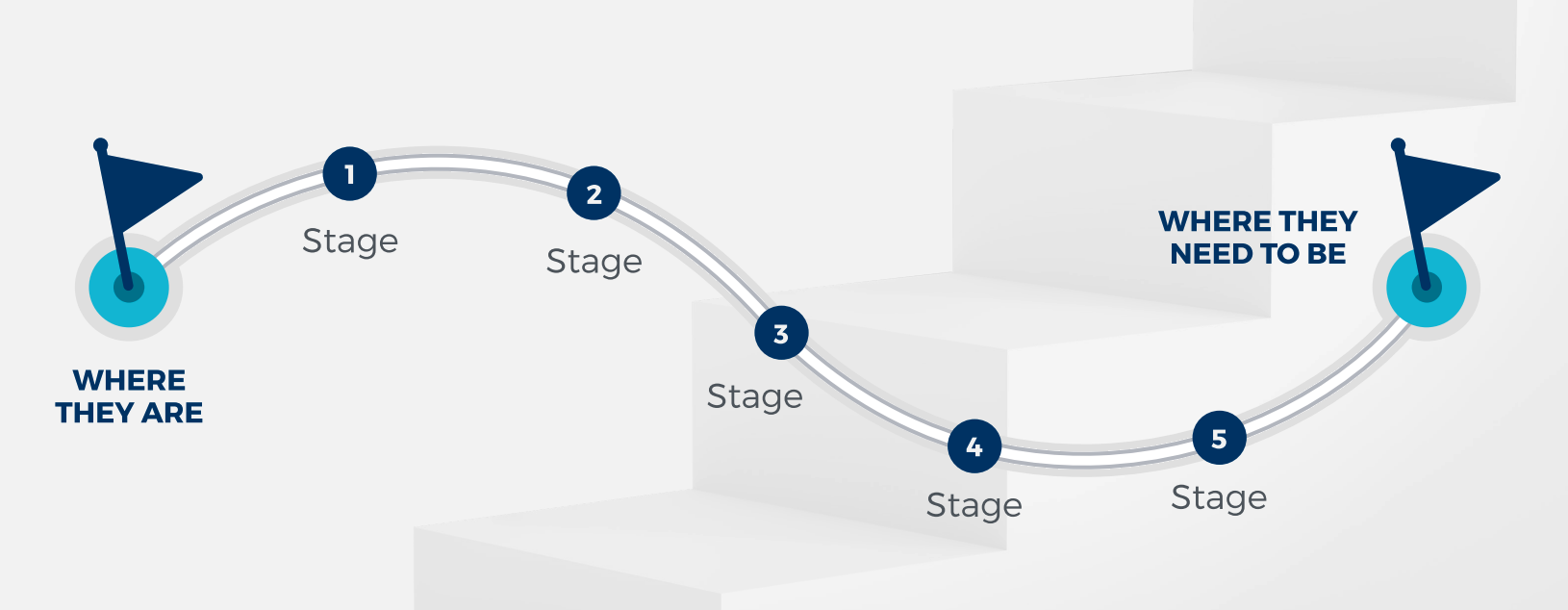
You can dig in deep with this blog post of mine, but the basic concept is that it maps the path you want your members to take, and the transformation it helps create for them.

And the Success Path isn’t just a tool for your customers – it’s also the key to creating your own content, such that it aligns with their journey, and supports members from milestone to milestone.

If you zoom out a level – the success path concept isn’t even unique to memberships. It’s really about the change that anything you sell helps take place – it maps the route from where the customer started to where they want to end up.

The lesson here is to show people the roadmap that will get them where they want to go.

4. All progress matters

Thousands of small businesses enroll in The Membership Experience each year – and some folks are just starting out, with nothing more than an idea; while others may have mature memberships, with thousands of members.

And one clear lesson has been that everyone can make progress – and that all progress matters.

The key to this is recognizing that everyone’s progress is personal. And there isn’t a finite amount of progress to go around – seeing how Stu models this, and celebrates big and small milestones alike has helped me recognize and do the same for my audience.

I serve Keap users – and some are brand new to the software, while others have had it for years. It bends my brain to ask “how can I be a fit for these different types of people who have different needs?”

The way I think about it is sort of like a Las Vegas Buffet.

Vegas Buffet

There is more there than any one person needs, but everyone who visits leaves full.

Monkeypod (and TME too) have more than any individual likely needs – but there is something for everyone.

The lesson here is that each person gets to decide how they make progress, and all progress matters.

What you put on your plate depends on your appetite.

Real quick: I should point out that I am an affiliate of Stu’s course – and even though this post isn’t directly about the TME course, I’ve got a few links coming up and I’ll get a commission if you decide to purchase The Membership Experience through my affiliate link (but at no extra cost to you).

I’ve gone through this course the last few years. It’s good. Like, very good.

If you know you want to sign up you can check it out here – Sign Up Here >>

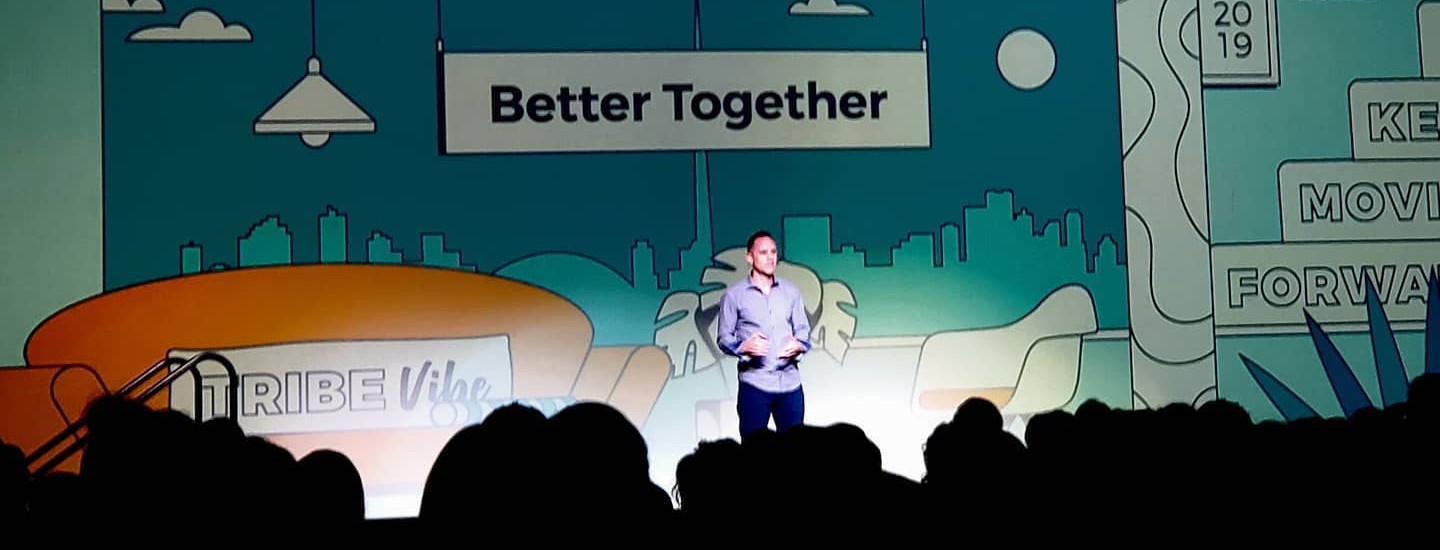
5. Your vibe attracts your tribe

When I was first introduced to Stu I remember thinking “Okay, this guy is a little disney for me…”.

And, to his credit, is pretty much the only sort-of-negative thing I can say about the man today.

He’s the real deal – and as a result, he attracts folks who appreciate that.

Among his many quotable quips is “Your vibe attracts your tribe”, and it’s evident in his community.

Stu is generous – and committed. He cheers people on, and loves to celebrate success.

And that vibe is echoed throughout not just his team, but also the participants in the course. If you join The Membership Experience, you’ll see that the group going through the course is upbeat, supportive, and helpful.

The lesson here is that the vibe you put out affects the audience you’re building and serving, so be intentional about it.

Stu Quote

6. Launching is an art form

Having been around the digital marketing space for a while now I am familiar with the concept of a product launch.

But until Stu’s workshop series in 2019 I had never really understood the artistry behind it.

Don’t get me wrong – the free workshop series is valuable on it’s own, even if you don’t register for the full course; but it is a runway that leads into his launch.

And it is masterful.

Vegas Buffet

The first time I went through it was just mystifying.

I was, along with thousands of others, swimming in expert advice, valuable business lessons, and real world examples – all set against the backdrop of massive community engagement.

It was staggering – both powerful and impressive (remember, I bought the first night the cart opened).

But the second time I went through it I had more of an academic lens – I wanted to deconstruct the experience so I could understand the mechanics behind it.

This process made me appreciate it even more. I realized it wasn’t an accident – it’s an art form.

Even if you don’t have a membership or any plans for one, I still recommend signing up for the free workshop series just to watch an elite professional at the top of his game.

You can sign up here.

Conclusion

So, obviously there are a bunch of lessons here – but perhaps the biggest takeaway is that we can learn from both what someone says, AND how they say it.

If you decide to sign up for The Membership Experience – that’s great, I think it’s valuable.

But even if it isn’t for you, I’ve learned heaps just from watching how Stu and his team run their business, and I think there’s value just in watching those who are great at their craft.

Who is on your list of folks worth following?