The Three Timer Types [in Keap]

The Three Timer Types [in Keap]

Keap campaigns are built using goals and sequences – goals are the triggers, and sequences are what happens as a result.
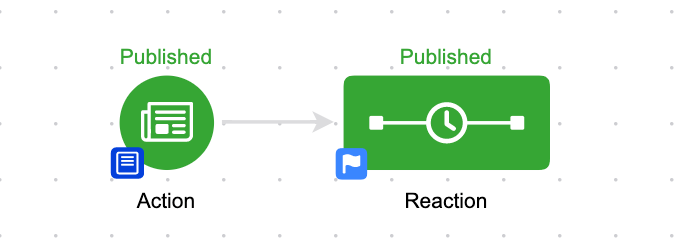
keap fulfillment list

Inside your sequence there are three timer types available to control the timing and pace of the steps; Delay, Date, and Field

If you want everything in your sequence to happen all at once, you might not need a timer.

But odds are at different times you want to use each of these.
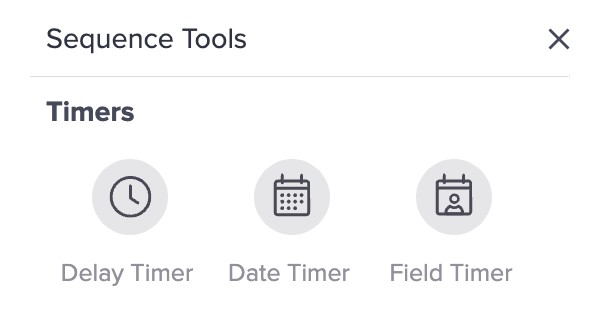
keap timer types

Let’s take a look at each of them.

What are Delay Timers?

Delay timers are the most common timer – they simply delay the contact for a set amount of time before allowing them to progress forward.

“Wait 3 days before sending this email”

What are Date Timers?

Date timers are the easiest to understand – they are used to schedule a specific step for a date on the calendar – or, a range of dates.

“Send this email on July 1st”

What are Field Timers?

Field timers are used to schedule sequence steps before or after a date unique to the contact record – like, their birthday, or their membership renewal date.

“Send this email 3 days before their next mentoring appointment.”

An important note for field timers is that it will use the value in the contact field at the moment they enter the sequence – so if the date isn’t set at that point, it won’t be able to schedule the timers.

And similarly, if the date changes after someone has already entered the sequence, it won’t reschedule unless they’re removed and re-added (or the campaign is republished).

All three of the Keap timer types have their individual merit, and plenty of scenarios where they are useful.

This video covers how to use each of them and when they might serve you best:

Another common misconception is that you can only use one timer type per sequence – which isn’t actually true.

The reality is that you can’t connect two timers of different types – but you can use more than one timer type in the same sequence.

The key is using separate ‘start’ triggers for the different lanes.
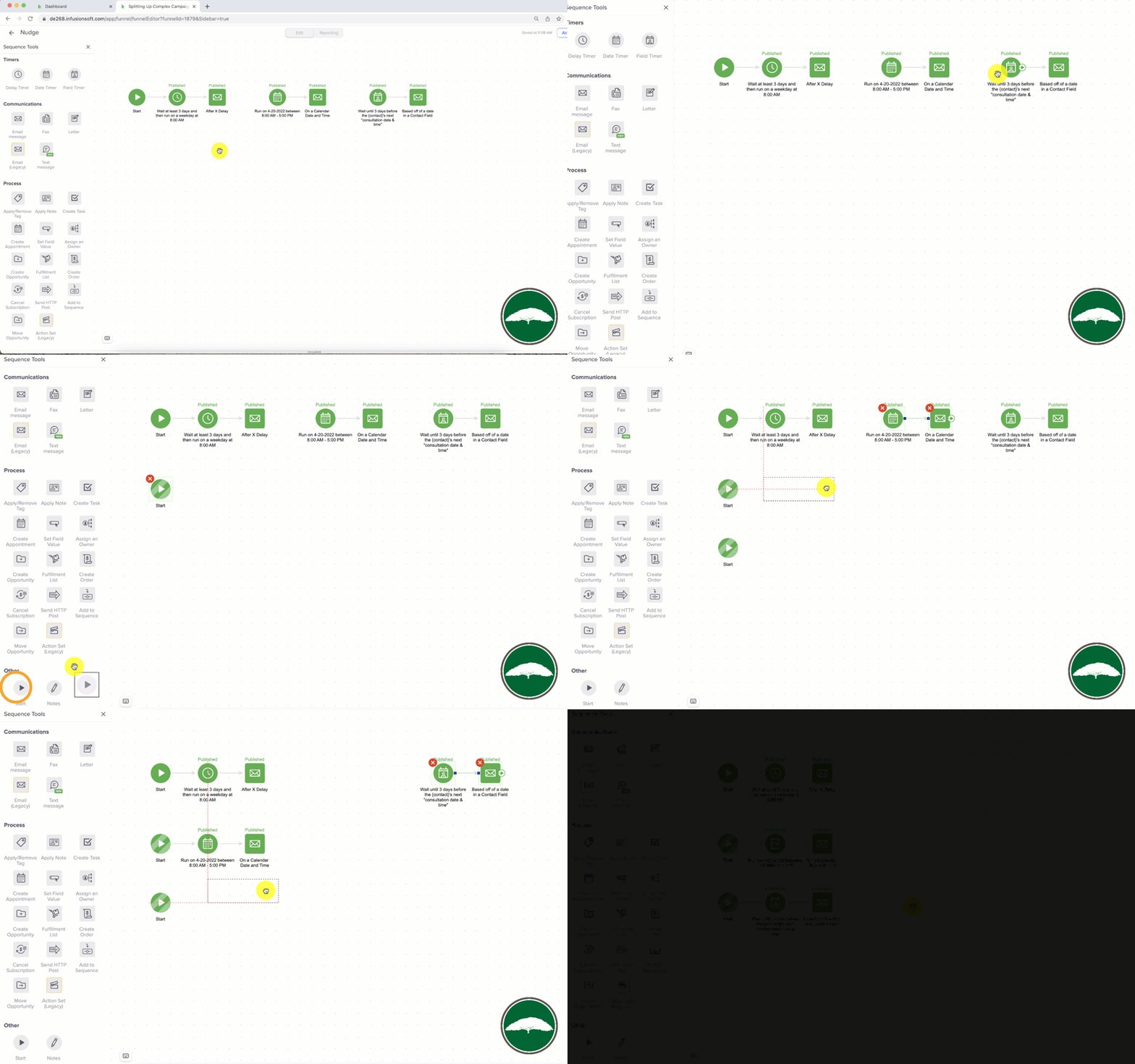
Keap Timer Types

The more you understand the timers, you’ll find them increasibly flexible and powerful.

Here are a few creative examples of how the timers can be used in unconventional ways:

Keap Timers Puzzle 1
Keap Timers Puzzle 2
Keap Timers Puzzle 3

Thanks for reading – as a reminder, this video is from chapter two in the CB Trilogy course. Thanks to a partnership with Keap, the full course is available here.
How to Use Fulfillment Lists in Keap

How to Use Fulfillment Lists in Keap

Keap’s fulfillment lists are a personal favorite of mine – and they’re definitely one of the most underused features inside of the campaign builder.

Or maybe in all of Keap (Max Classic only, I believe).

You know how automation usually happens on an individual by individual basis?

Like, if 100 people enter a sequence, there will be 100 emails sent (one to each) or 100 tags applied (one to each) or 100 tasks created (one for each), right?

Well, fulfillment lists allow you to batch those contacts together, and process them as a group.

When would you want this?

Good question – it’s for instances where you want to receive a list of the people who hit that step – like, a list of event attendees on the morning of your event (so you can print name badges).

There’s no need to receive 100 different notifiations, you can just get a single spreadsheet of those people sent directly to you.

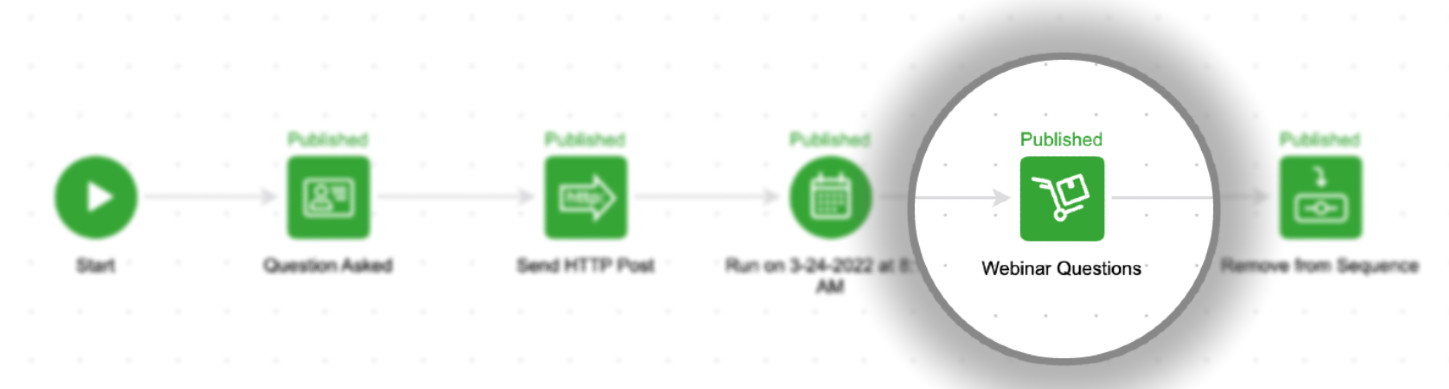
Or, a list of people who you need to ship books to, or a list of questions you’ve received in preparation for a presentation, etc.

keap fulfillment list

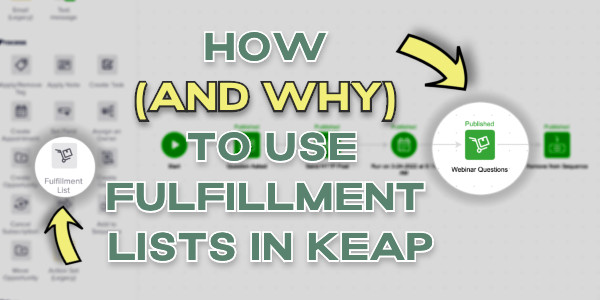
Just look for the fulfillment list item in the processes section inside of a sequence.

The use cases go on and on, but the solution for each is Fulfillment Lists. This video demonstrates how you can set it up.

So that’s fulfillment lists in a nutshell – do you have an obvious use case for them in your business?

For more training on Keap’s campaign builder, check out these resources:

Campaign Builder 101 [Blog Post]
CB Trilogy [Virtual Course]

As you’ve probably heard me say, I believe the campaign builder is the most powerful tool on the planet for small businesses.

How to Split Up Complex Campaigns

How to Split Up Complex Campaigns

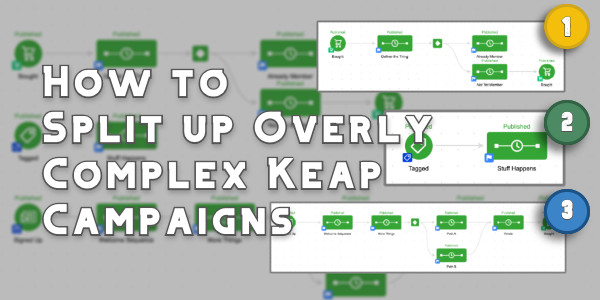
This blog post addresses a fairly specific Keap question about a relatively advanced scenario:

“How do I up split a complex campaign?”

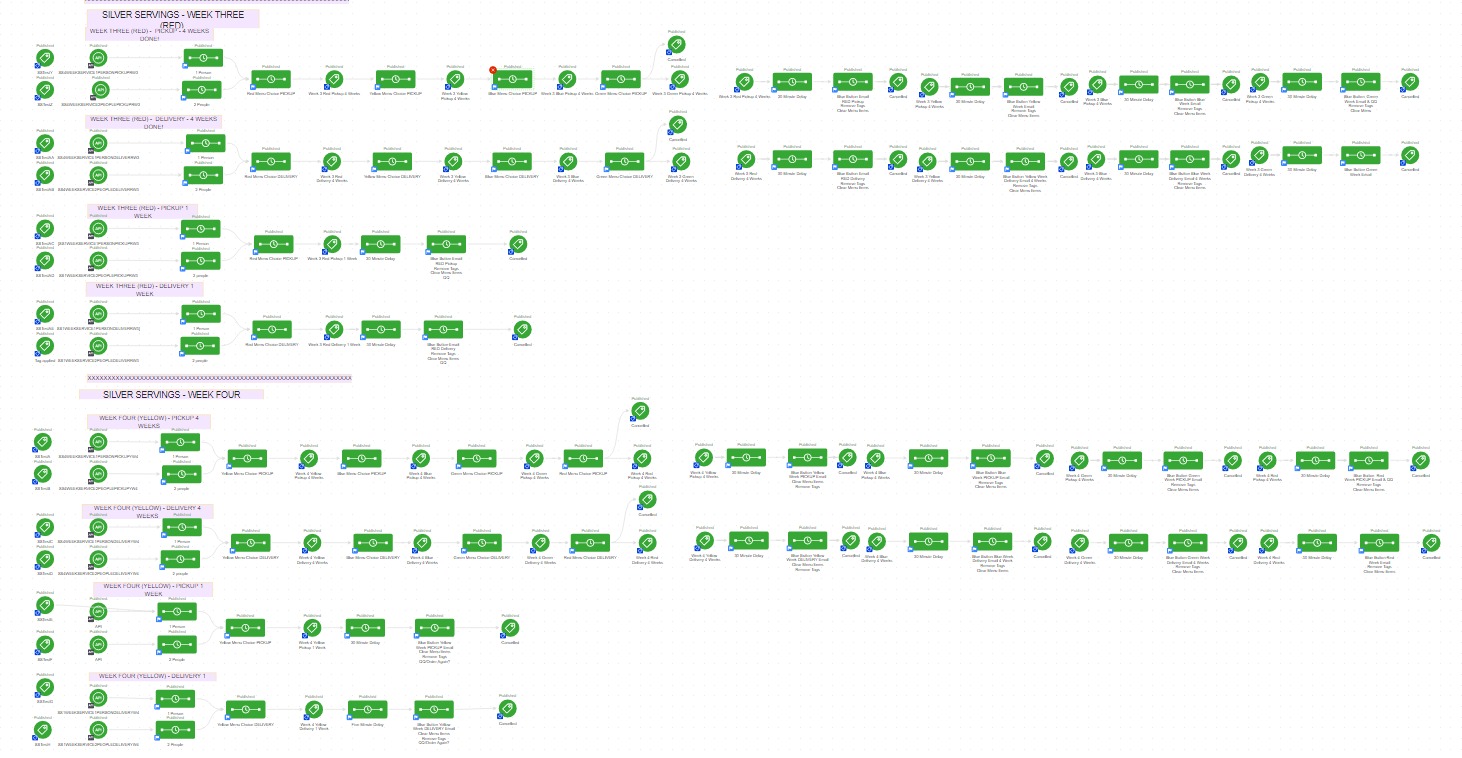
It was prompted by a question Steven, an OG Member, asked yesterday when he realized the campaign he’d built had spiraled a bit out of control.

complex keap campaign

Is the campaign functional? Sure.

But it’s cumbersome – and when a campaign is that big it has a number of drawbacks; it’s harder to manage, to modify, and to report on.

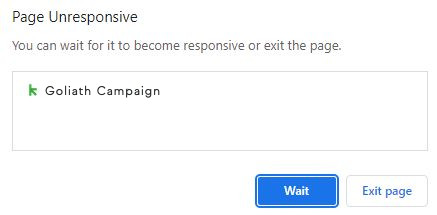
And it takes forever to load (ever seen this horror show?).

campaign loading issue

So, the answer is to generally build your campaigns in smaller more modularized structures, as Mike advises here.

And then chain those structures together, like this.

Great advice – but it doesn’t help Steven (or anyone who has an unruly campaign).

How do I break up a big Keap campaign?

But if you have an existing campaign that you want to divide into smaller campaigns you can – but there are some considerations.

First, you’ll want to decide what you want to happen to the contacts who are already in the automation.

And second, you’ll want to pay close attention to the functioning goals – some goal methods live in a singular campaign, and can’t easily be moved.

In this video I’ll show you the various ways to divide up a bloated campaign, and talk through those considerations as well.

So there you have it – now you (or Steven) have a process you can follow for making your goliath campaign more manageable.

And, in case this all feels a little advanced – here are two resources I recommend to keep exercising those campaign builder muscles:

Campaign Builder 101 [Blog Post]
CB Trilogy [Virtual Course]

The campaign builder is Keap’s automation engine – understanding how to harness this tool is the key to multiplying the ROI you get from Keap every month,

Keap’s AI Copy Generator [Sneak Peek]

Keap’s AI Copy Generator [Sneak Peek]

Update: All Keap Users can access the Copy Generator by visiting plays.keap.app and logging in with your Keap credentials.

And if you’d like a guided walkthrough, check out the build-a-play event replays in the Keap Academy platform.

What if I told you your emails could write themselves? Does that sound like something you might be interested in?

Designing automation that supports your customer experience is the core of Keap’s functionality, we all know that – but at the end of the day your automation is only as powerful as the content it delivers.

And for many small business owners, copywriting can be a roadblock. Until now. *dramatic reveal*

The Copy Generator

Keap has quietly been working on a new AI powered Copy Generator.

It isn’t live quite yet, but I got to take the beta for a test last week and it just about blew my mind. I think this new tool has the potential to be an absolute gamechanger.

Here’s a demo:

Not bad, eh?

(btw, the webinar referenced in the video above has already taken place, but the replay is available here if you’d like to follow along).

How does it work

Well, I’m not 100% clear on the witchcraft and/or technology behind this, but I do know it’s more than just standard AI.

This tool has been designed specifically to use AI while guided by marketing strategy and best practices, which is a big part of what differentiates it from other AI copy generators out there.

I’m stoked people – it’s early still, but I think this has the potential to be one of the most innovate improvements we’ve seen in years (my top two are currently the campaign builder in 2012, and dynamic content in 2019).

Like I said above, this is currently in beta testing so Keap can get some feedback on it – so just be patient and you’ll get notified when it’s ready for wider scale release.

If you are okay with some wrinkles, and are willing to offer feedback, drop me a message and I’ll see if I can get you into the beta trial.

Update: All Keap Users can access the Copy Generator by visiting plays.keap.app and logging in with your Keap credentials.

How to Trigger Automation on Two Contacts

How to Trigger Automation on Two Contacts

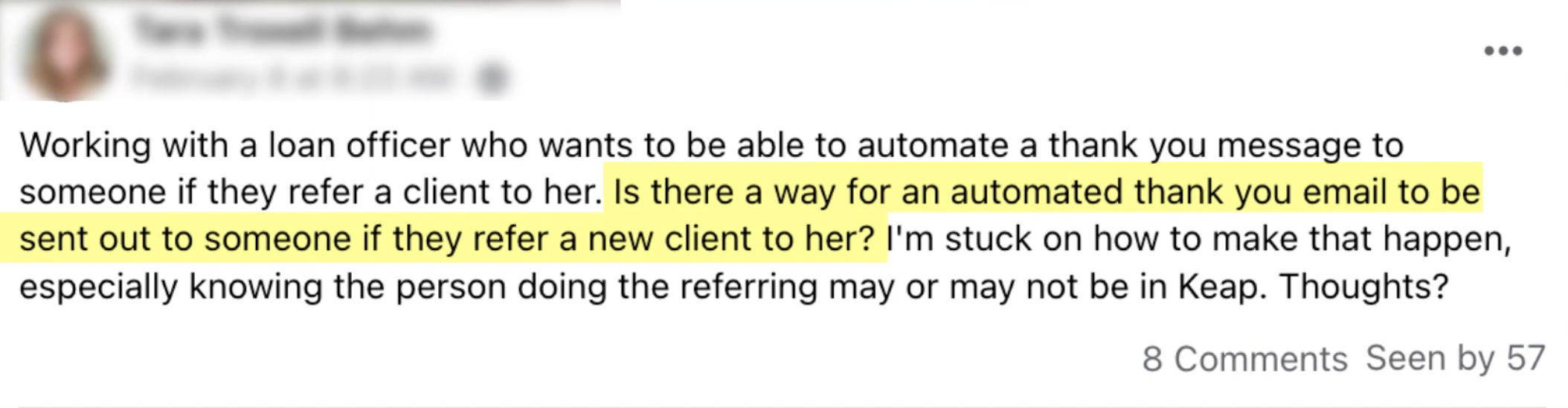
We had an interesting question pop up in the Monkeypod community the other day: How do I automatically send a thank you message when I receive a referral?

Automation on two contacts

This concept sounds straightforward, but it breaks the normal logic for how automation inside Keap works.

Generally we have automation happen on an individual basis – when someone does something, then this other thing happens to them as a result.

But, in this case, we need to be able to send a thank you to Person A when they refer Person B; which makes things a little trickier.

How can we do it?

There are effectively two ways to do it, a simple native way, and a more robust method that involves the Contact Creator tool from PlusThis.

In this video I’ll show you both, and call out the pros and cons for each.

So, the situation in this video is fairly specific to Tara’s question – but there are plenty of use cases where this type of functionality might be useful.

We outlined two methods for solving this, the first was totally native, and the second option uses PlusThis.

If you don’t yet use PlusThis you can start a free trial here.

Thanks for reading – hope you found this valuable. Please feel free to drop any comments or questions below.

Have your own questions?

If you would benefit from a place to ask automation questions when you get stuck, and get ideas and inspiration from other businesses, you can join us in the Monkeypod Membership.

Sending Contact Info to a Keap Landing Page

Sending Contact Info to a Keap Landing Page

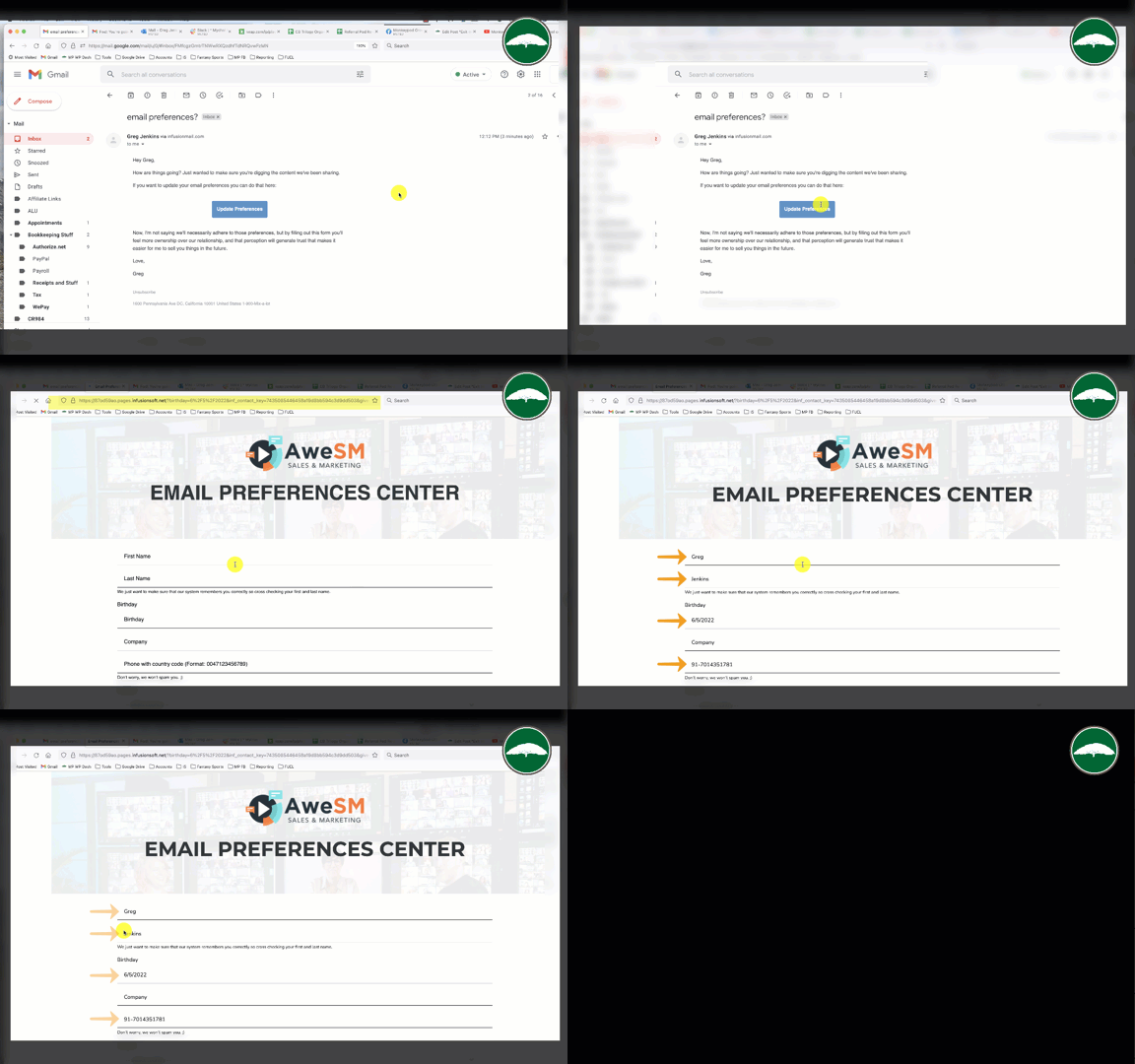
This post covers using a query string to pass contact information from a Keap delivered email through to fields on a landing page.

This will pre-populate the fields on the page with the contact details, so they don’t have to re-enter their info.

Query String

In a perfect world, this would happen automatically (as it does with Keap Web Forms and Legacy Landing Pages), but I’ve seen some inconsistencies with the Keap Landing Pages, so to make sure it works reliably I’ve started building my own query strings.

Which begs the question…

What is a query string?

A query string is basically a way of adding extra info onto a link, to send additional details to the page that the URL is loading.

There are a few different reasons you might want to do this (like using Google UTM parameters or for LeadSource tracking), but in this scenario it’s to tell the page who is visiting it, so that the contact doesn’t have to re-enter information we already have about them, or to fill a hidden field on the page so that new information we capture is tied back to the correct person.

How does it work?

So, normally you’d link a page with the URL for that page – this method still does that, but it adds extra ‘value pairs’ onto the link.

A query string starts with a question mark, indicating the end of the link and start of the extra stuff.

And then you add the ‘value pairs’, which are basically putting info into parts of the page. So, an example value pair might be FirstName=Greg, telling the page to put “Greg” into the field for “First Name”.

Where this gets tricky is figuring out what the page calls each field. The field might have a different name depending on how the page was built (if you used Keap, ClickFunnels, TypeForm, Thrive, etc).

Can I see a demo?

I thought you’d never ask.

Here’s a demo for building the link structure to pass contact details from a Keap email to a Keap landing page:

So, there you have it. We’re all hackers now.

Seriously though, I know this can feel technical. But basically we’re just taking information from the contact record, and passing it through to the resulting page, with instructions for where to put that info.

“Put this person’s name into the name field”, etc.

And if this is outside your technical comfort zone, this is absolutely something you could hire a Keap partner to help with.

Thanks for reading/watching – feel free to drop a comment below with any questions or light bulb moments.