Introducing Keap Ultimate

Introducing Keap Ultimate

Last week was the Let’s Grow Summit and the vibes were great. I attended some great sessions, caught up with some old friends, got to meet a few Monkeypod members in person, and somehow left feeling both exhausted and motivated.

Clate Speaking from Stage

Keap announced a number of exciting updates and improvements to the software, but they also revealed a change that is of particular importance to the Max Classic community (as a reminder, Max Classic is the edition of Keap formerly known as Infusionsoft).

Introducing…Keap Ultimate

What is Keap Ultimate you might ask?

It’s the version we’ve previously known as Max Classic, and before that Infusionsoft.

Simply put – it’s Keap’s most robust edition; and the changes they announced last week can be boiled down into three categories.

Aesthetic changes, functional changes, and a rebrand.

I recorded a quick video to summarize the changes:

Okay, so – let’s summarize.

Max Classic will now be called Keap Ultimate.

Soon you’ll be seeing a toggle that allows you to switch over and try out the Keap Ultimate interface.

Keap Ultimate Toggle

And perhaps most importantly, this change represents massive potential on the infrastructure side of things that will allow Keap’s engineering team to bring new features to Keap Ultimate more easier, reduce the amount of duplicative work they’re doing, and innovate more rapidly.

All in all, I’m excited about this. I’m also excited about the other updates Keap announced, but I’ll have to do a separate post on those.
The Any vs All Tag Goal Update

The Any vs All Tag Goal Update

All campaigns in Keap are a combination of goals and sequences – goals are the triggers, and sequences are what happens as a result.

And perhaps the most popular goal method is the Tag Applied goal (certainly the most versatile).

And recently, this little celebrity was upgraded with some brand new functionality.

Historically the Tag Applied goal could listen for the application of a tag, or any one from a set of tags.

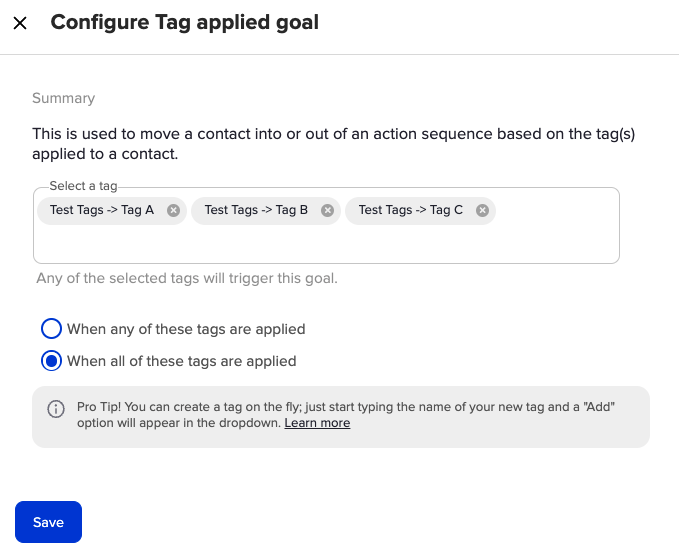
But now, you can set up up the goal so that it’s only achieved once ALL of the tags on a set have been applied to a contact.

Any All Tag Goal Screenshot

This new functionality opens up lots of potential.

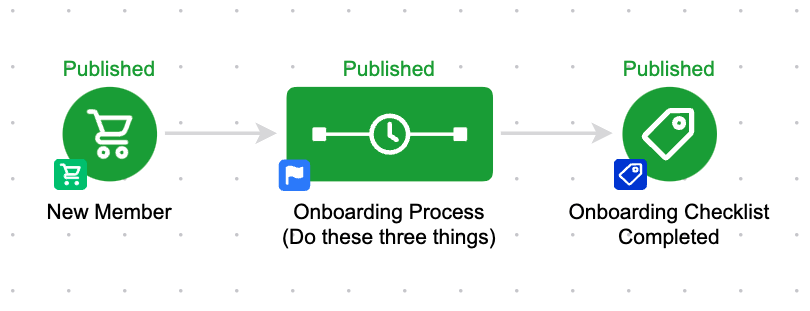
Like – let’s say you have three things you want your new members do to after they purchase:

1. Schedule a call
2. Fill out an assessment
3. Watch an orientation video

With this new functionality, you can structure your automation to continue to remind them until they’ve done all three of those things.

Any All Example Keap Campagin

Previously this would have been tricky, since the tag goal would have been achieved by any one of the tags – but now, it waits until the contact has all three before extracting them from the preceding automation.

Let’s take a look at another example in this video:

And – if you want to take this to another level, you can use Dynamic Content to make sure that the messaging is adjusted along the way.

If they’ve done two of the three things, you could hide those from the email so they’re only being prompted to do the last remaining item from the list.

The utility of this update goes on and on, feel free to share your own use cases in the comments below.

Sending Contact Info to a Keap Landing Page

Sending Contact Info to a Keap Landing Page

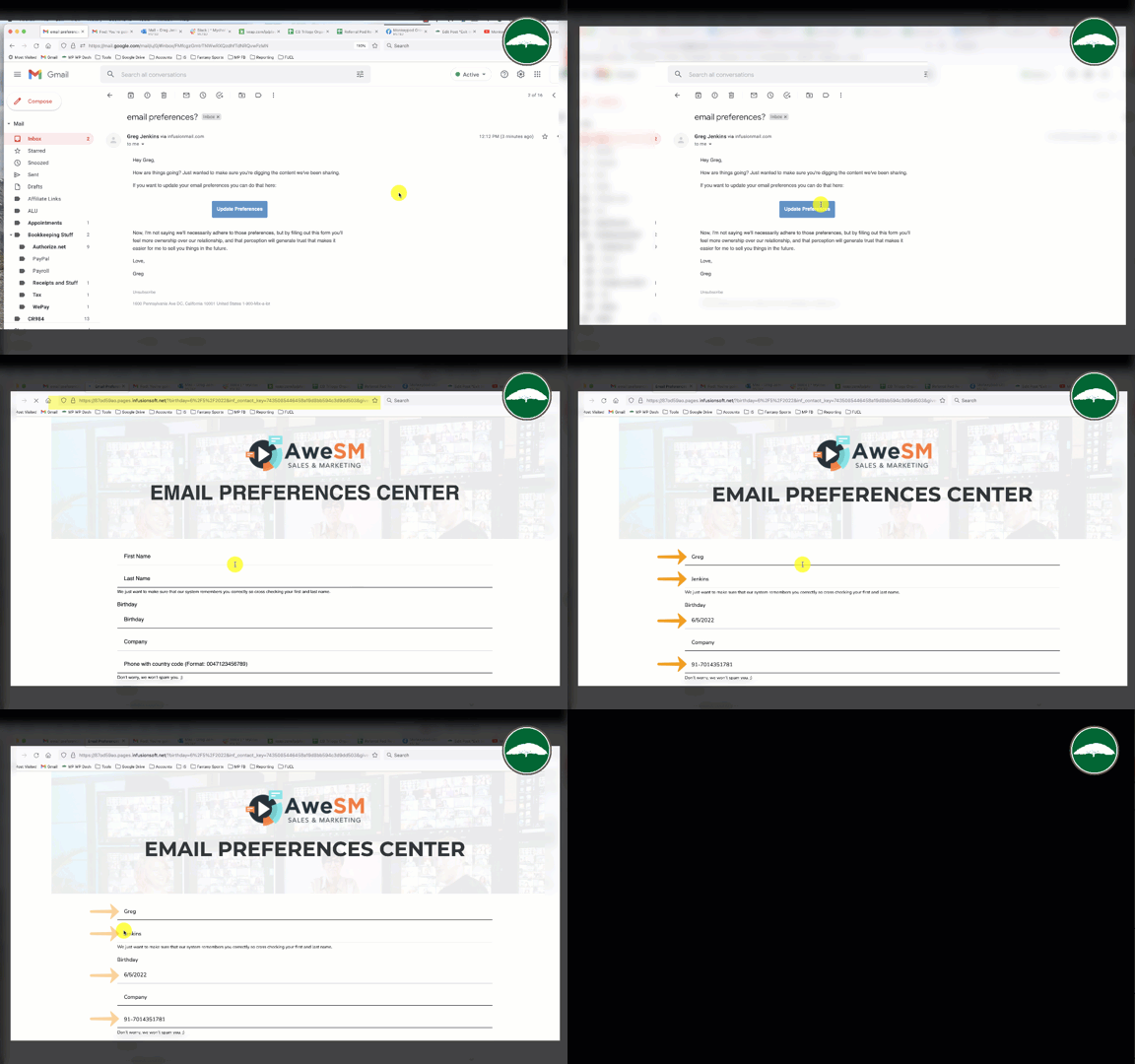
This post covers using a query string to pass contact information from a Keap delivered email through to fields on a landing page.

This will pre-populate the fields on the page with the contact details, so they don’t have to re-enter their info.

Query String

In a perfect world, this would happen automatically (as it does with Keap Web Forms and Legacy Landing Pages), but I’ve seen some inconsistencies with the Keap Landing Pages, so to make sure it works reliably I’ve started building my own query strings.

Which begs the question…

What is a query string?

A query string is basically a way of adding extra info onto a link, to send additional details to the page that the URL is loading.

There are a few different reasons you might want to do this (like using Google UTM parameters or for LeadSource tracking), but in this scenario it’s to tell the page who is visiting it, so that the contact doesn’t have to re-enter information we already have about them, or to fill a hidden field on the page so that new information we capture is tied back to the correct person.

How does it work?

So, normally you’d link a page with the URL for that page – this method still does that, but it adds extra ‘value pairs’ onto the link.

A query string starts with a question mark, indicating the end of the link and start of the extra stuff.

And then you add the ‘value pairs’, which are basically putting info into parts of the page. So, an example value pair might be FirstName=Greg, telling the page to put “Greg” into the field for “First Name”.

Where this gets tricky is figuring out what the page calls each field. The field might have a different name depending on how the page was built (if you used Keap, ClickFunnels, TypeForm, Thrive, etc).

Can I see a demo?

I thought you’d never ask.

Here’s a demo for building the link structure to pass contact details from a Keap email to a Keap landing page:

So, there you have it. We’re all hackers now.

Seriously though, I know this can feel technical. But basically we’re just taking information from the contact record, and passing it through to the resulting page, with instructions for where to put that info.

“Put this person’s name into the name field”, etc.

And if this is outside your technical comfort zone, this is absolutely something you could hire a Keap partner to help with.

Thanks for reading/watching – feel free to drop a comment below with any questions or light bulb moments.

Exit Intent Pop-Up Forms

Exit Intent Pop-Up Forms

The experience someone has when they’re on your checkout page is crucial.

If someone decides not to purchase then they’re likely going to close the tab for the sales page, but that doesn’t necessarily mean they’re gone forever.

You can use a tactic known as an ‘exit intent’ pop-up form to capture leads who might have otherwise vanished.

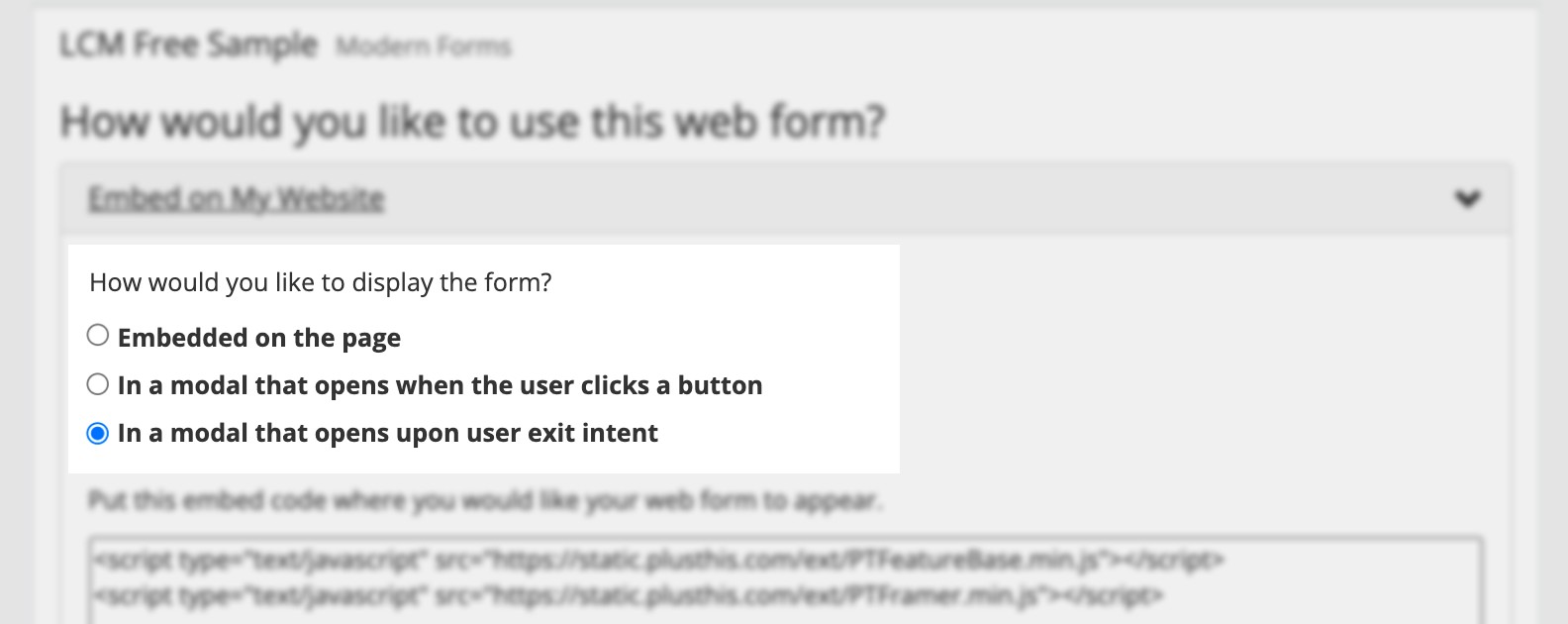
exit intent forms in keap

I’ve been a long timer user (and fan) of the Modern Forms feature from PlusThis.

Originally it was just a tuxedo for Keap web forms – but then they added the ability to put the web form in a pop-up window behind a button, and then just a few weeks ago they added the exit intent functionality.

PlusThis Screenshot img

Now, we’ve never really sought out Exit Intent forms for Monkeypod – because I think it’s easy for them to annoy the website visitor.

But there are definitely use cases where they make a lot of sense – one logical scenario is offering someone a free trial of a course if they start to leave the checkout page they’re on.

Here’s a demo of what this might look like:

If you already have PlusThis, then have a look at this feature, and see if there are opportunities in your business where it could be useful.

But if you don’t yet have PlusThis, it might be time – check out the pricing and tiers here, or take it for a test drive with a free trial.

Questions? Comments? Beard compliments? Drop em below.

Keap Email Builders (New and Old)

Keap Email Builders (New and Old)

Updated: February 2023

If you’ve used Keap for a while, odds are you’ve noticed that there are multiple email builders in different sections of the software.

Keap is actively working to consolidate that (one email builder to rule them all, etc), but for the time being you might have as many as three email builders inside of your advanced automations alone.

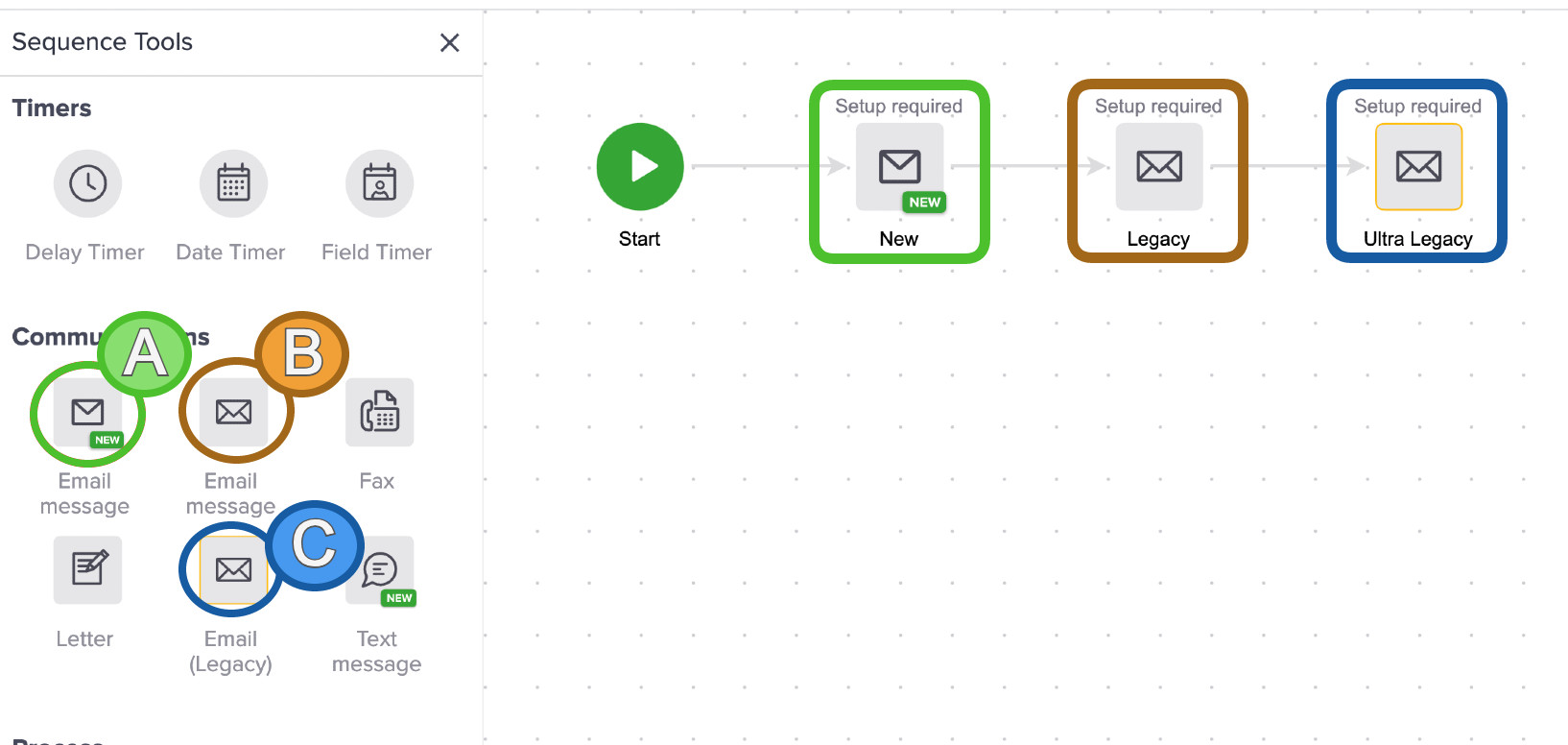
three keap email builders

In the above image, the email builder marked as ‘A’ is the newest one – first released in Q4 of 2021 and currently being rolled out in stages to Keap users.

The email builder marked as ‘B’ is old trusty – that’s the builder we’ve grown to know and love and have had for the last decade or so (here’s a demo of that one pulled from the CB Trilogy course).

And ‘C’, is the actual legacy builder, who’s roots predate the campaign builder itself (newer Keap users may not see this one at all).

So, in summary – A is the builder of the future. B is the one you’ve likely been using. And C is only still around to yell at people to stay off his lawn or whatever.

Why a new builder?

The obvious question is ‘why are we adding another builder’, and it’s a good one – I’ve asked it myself.

The answer is this: They’re standardizing the builder experience throughout Keap.

The reason we’re seeing this new builder roll out is because over time this will be the builder experience we see for landing pages and emails throughout all versions of Keap.

Right now we may feel some turbulence, but in the long run I think the idea of having a streamlined builder tool that is consistent between different types of assets (landing pages and emails) and versions of Keap (pro, max, max classic) is wise.

In the meantime, here’s a quick demo of both builders and some key ways they differ:

A few things worth noting, first – they are actively rolling this out.

If you don’t have access to this email builder yet, stay tuned – it’s likely on it’s way.

The next thing to note is that they’re actively making improvements to this – so it’s entirely possible that by the time you see this video they may have added some of the features I called out as missing, or improved some of the things I felt were clunky.

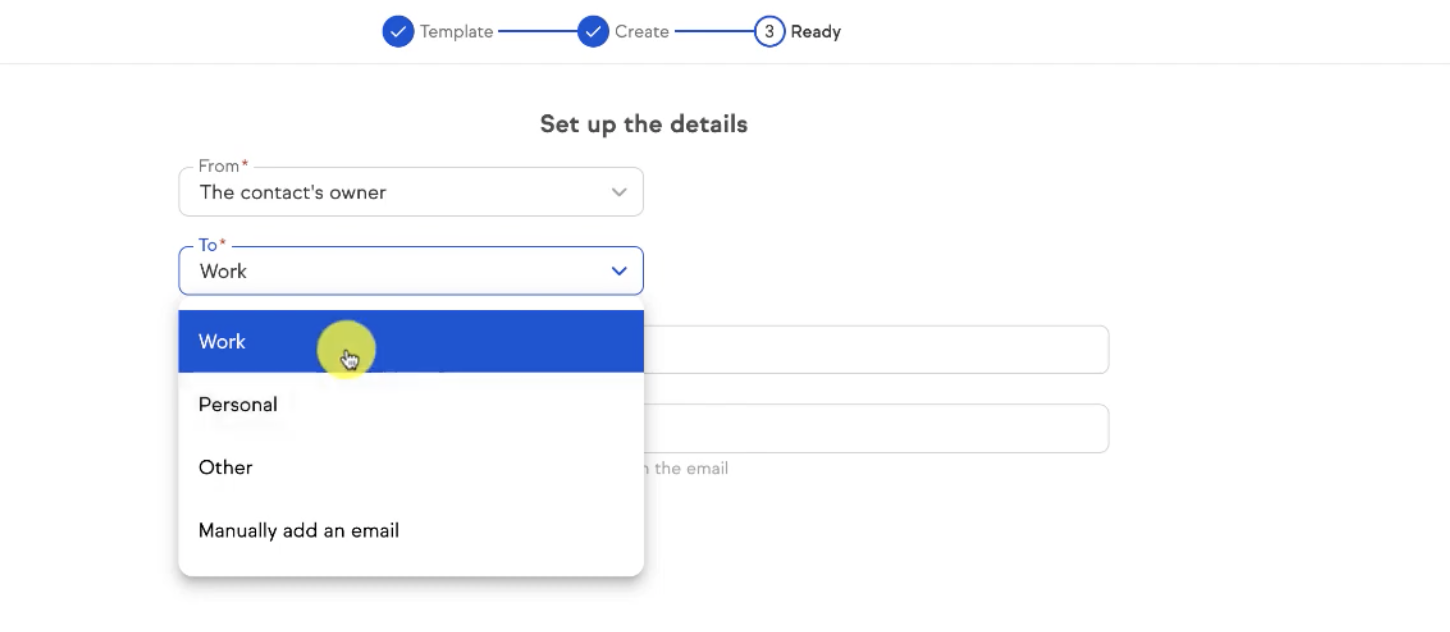
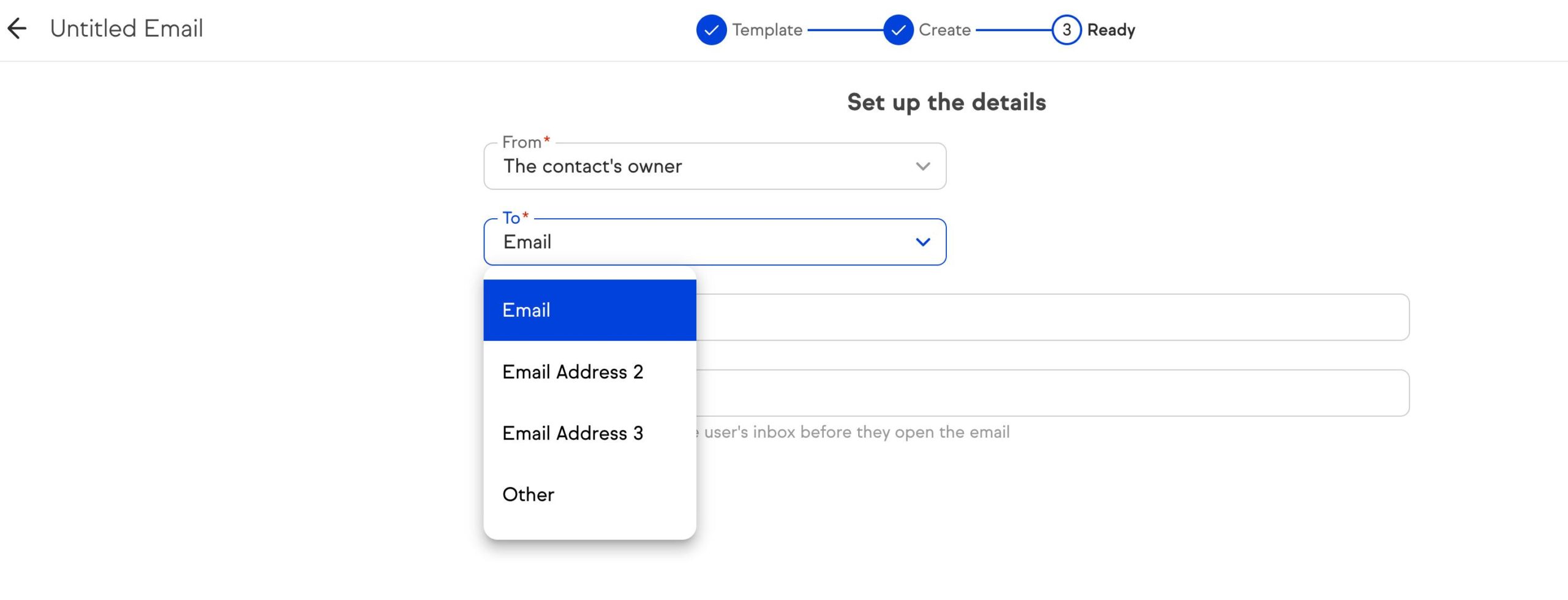
For example, at the time it was rolled out the “to” options were Work, Personal, and Other; which didn’t make a whole lot of sense for Max Classic users who don’t see those designations.

email to options

But, that’s one of the improvements they’ve made since originally rolling this out.

Now, Max Classic users can select Email 1, Email 2, and Email 3 (or other) as they always have.

updated to send options

Here’s a post from Keap’s product team with more details about the plans for adding features and functionality.

And finally, my understanding is that they have no plans to remove the existing email builder – so this new one should only be an upgrade for those who want to start using it.

2/23 Update: This builder is the default for Keap Pro and Max and is now being rolled out to Max Classic (also known as Keap Ultimate) applications in phases.

Okay – enough from me, I’d love to hear what you all think. Do you have the new builder yet? Have you tried it out?

Introducing Field Math

Introducing Field Math

That’s right – field math has been released as a native function inside of Keap.

Historically you’ve been able to set or update a contact field as a step inside your campaigns, but with this update you can now also perform basic math functions (add, subtract, multiply, divide) – which takes things to a whole new level.

There are countless use cases where this can be valuable – but a common scenario is when you want to unlock a bonus for someone after they’ve made a certain number of purchases.

Like, a punch card at a sandwich shop – or any sort of frequent flyer program.

Here’s a demo of how that campaign structure might look using this new feature:

Okay party people – that’s the new field math feature.

This isn’t quite as flexible as PlusThis, Zapier, or some of the other third-party tools that handle this – but it’s nice to have a native option that handles simple use cases.

Here’s a link to the full release notes from the Keap help site.

If you have any questions or comments please leave them below – I’d love to hear the different use cases you might have for this throughout your business.